

Two air purifiers can carry the same particulate matter claim and still behave like different machines in the same 25 square metre bedroom. One clears cooking smoke in about twenty minutes, while the other leaves a visible haze after an hour, even though both labels promise 99 percent removal. The gap usually comes down to three numbers that rarely appear on the box: the particle size used for the efficiency test, the airflow the fan can push through loaded media, and the pressure drop the motor has to fight.
Pick the filter class from the particle size you must remove, then verify it against airflow, sealing and noise. Most other decisions fall into place from there. This guide covers the standards behind particulate matter filters, the decay curves measured in real rooms, and the sourcing questions that separate a workable specification from a marketing figure.
Content
Particulate matter is not one substance. Coarse dust between 2.5 and 10 micrometres settles within minutes and is mostly a cleaning nuisance. Fine particles of 2.5 micrometres and below stay airborne for hours, slip through door gaps and window seals, and reach the deepest parts of the lung when inhaled. Ultrafine particles below 0.1 micrometres behave almost like a gas and carry the highest particle count even when their total mass is small.
That difference decides the media. Fibrous filters are weakest at a most penetrating particle size of roughly 0.1 to 0.3 micrometres, which is exactly where HEPA grades are tested. A filter measured at 5 micrometres can look excellent on paper and still pass most smoke particles.
| Particle class | Typical size | Main indoor sources | Media that works |
|---|---|---|---|
| Coarse dust | 2.5 to 10 micrometres | Vacuuming, textiles, pets | Washable pre-filter, G3 to G4 |
| Fine particles PM2.5 | 0.1 to 2.5 micrometres | Cooking, candles, outdoor traffic | HEPA H13, EPA E11 to E12, MERV 13 |
| Ultrafine particles | Below 0.1 micrometres | Gas stoves, printers, combustion | HEPA H13 with activated carbon |
| Bioaerosols | 0.5 to 10 micrometres | Coughing, mould spores, dust mites | HEPA H13, optional UV stage |
| Smoke and odour | 0.01 to 1 micrometre plus gas | Tobacco, incense, wildfire smoke | HEPA with 1 to 2 kg activated carbon |
Filter claims come from three different systems. ASHRAE 52.2 grades media as MERV, ISO 16890 grades them as ePM1, ePM2.5 and ePM10, and EN 1822 grades high efficiency media as EPA and HEPA. EN 1822 is the strict one: E10 captures at least 85 percent at the most penetrating particle size, E12 reaches 99.5 percent, H13 reaches 99.95 percent, and H14 reaches 99.995 percent. The class and the test particle size belong in the same sentence.
Removal efficiency at 0.3 micrometres, by filter class
The chart uses a linear scale, which is how filter claims are usually presented, and it shows how little a linear view tells you. Between EPA E12 and HEPA H13 the bars look almost identical, yet E12 passes about ten times as many particles at 0.3 micrometres as H13, and H14 passes one tenth of what H13 does. In a 30 cubic metre room running at 200 cubic metres per hour, that tenfold step changes the steady particle count from roughly 5,000 to about 500 particles per litre of air. Efficiency also refers to clean media under laboratory airflow, and once a filter loads with dust the resistance rises and the fan may deliver less air unless the housing compensates. Ask for the test report that names the particle size, the airflow and the media area, and treat any percentage without those three items as unverified.
Efficiency alone does not tell you how quickly a room gets cleaner. What matters is the clean air delivery rate against room volume, which produces a decay curve rather than a single figure. The chart models a sealed 30 cubic metre bedroom starting at 95 micrograms per cubic metre, a realistic level during cooking or heavy traffic ingress.
The blue curve is a correctly sized H13 unit delivering about 120 cubic metres per hour of clean air, and it pulls the room from 95 down to roughly 6 micrograms per cubic metre within the hour. The green curve is an in-duct MERV 13 filter serving the same room at a lower effective delivery rate, and it stalls near 26 micrograms. The third curve shows what happens with the windows closed and no filtration at all, where only settling and leakage remove particles. All three curves flatten after about forty minutes, because cooking, candles and outdoor infiltration keep adding particles while the purifier removes them. The practical lesson is that a modest filter on a strong fan can beat a premium filter on a weak fan, and that holding fine particle levels down through a cooking session usually needs four to six filtered air changes per hour. Sizing therefore starts with room volume and target air changes, not with the filter class.
Fan power rises with airflow and pressure drop together, so a filter that doubles resistance roughly doubles the energy needed to move the same volume of air. The chart compares pressure drop at 300 m3/h across a 0.5 square metre face area, which is typical for a mid-size room purifier.
Moving from MERV 8 at 45 pascals to HEPA H13 at 160 pascals multiplies resistance by about 3.5 times, and the fan must answer with more speed, more noise and more heat. That is why two purifiers rated at the same airflow can sound completely different depending on the filter they carry. Designers recover most of the penalty by increasing media area, because deeper pleats, a V-bank layout or a larger panel reduce face velocity and pull pressure drop back toward 100 pascals without losing efficiency. A washable pre-filter in front of the panel also slows the rise in resistance as dust accumulates. For buyers, the useful question is not only which class is used but how much media carries it, since media area drives both running noise and replacement intervals. Machines such as the AP-02 room purifier pair a washable pre-filter with a deep pleat H13 panel for exactly that reason.
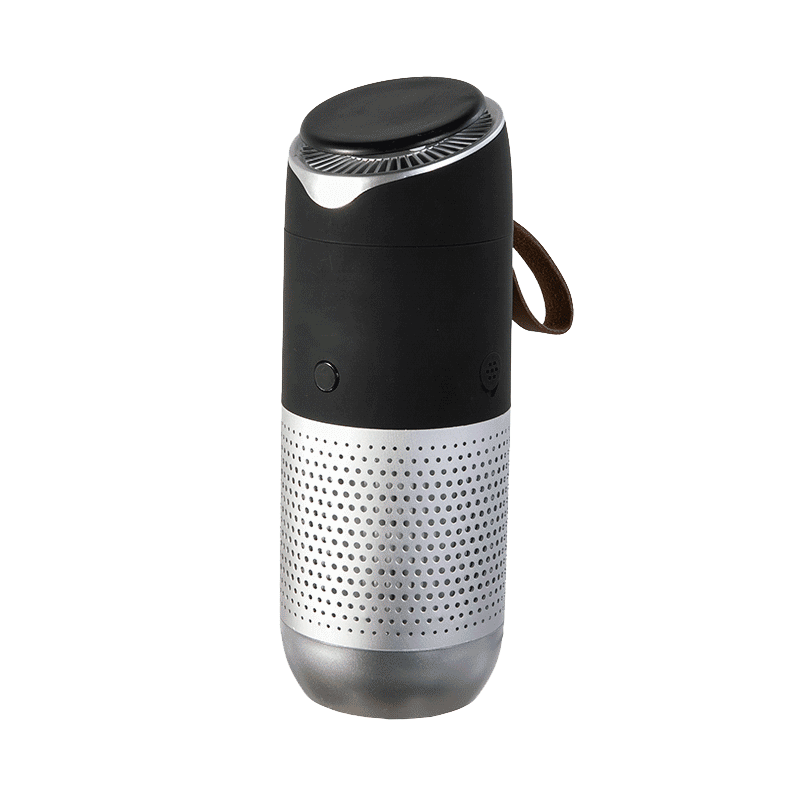 Air Car Purifier Smart From ChinaCixi Xiatian Electrical Appliances CO.,LTD was founded in 2011, professional manufacturer and supplier of Air Car Purifier Smart From China. Workshop is 30,000 square ...View Product →
Room conditions change the right answer more than the standard does. A bedroom near a busy road needs H13 media and a tight housing seal, because most particles arriving from outside sit between 0.1 and 1 micrometre. A kitchen or an open living area benefits more from a washable pre-filter plus 1 to 2 kilograms of activated carbon, since cooking produces particles and odour together. In dry climates an air washer that pulls air through a water curtain adds humidity while catching dust, and it tolerates dusty rooms better than a sealed panel, although its single-pass efficiency on ultrafine particles is lower.
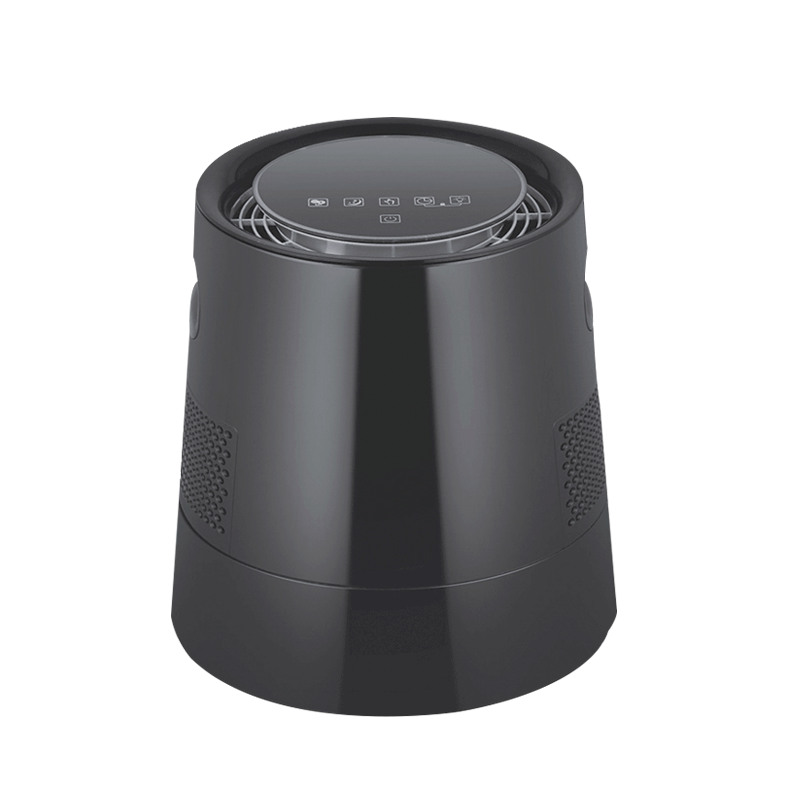 House Portable Ion Airwasher LG-01continuous running timeView Product →
The usual answer for a product line is a three stage stack: pre-filter, H13 or H14 panel, and a carbon layer sized to the odour load. An air washer such as the LG-01 suits bedrooms where a heater runs through winter, and any housing should keep the panel reachable without tools so that aftermarket replacement stays realistic for the end user.
Buyers often have to choose between a sealed H13 portable unit and an in-duct MERV 13 solution with a pre-filter. The radar chart scores both configurations from 1 to 100 across five criteria that matter to end users, and higher always means better for the buyer.
Particle removal is scored on single-pass efficiency at 0.3 micrometres, so the sealed H13 unit leads by a wide margin. Energy and noise favour the in-duct MERV 13 system, because its lower resistance lets a smaller fan do the same work at a quieter speed. Filter life favours the ducted system as well, since a washable pre-filter absorbs coarse dust before it ever reaches the fine media. Value is closer than the shapes suggest, because the sealed unit costs more per filter change but can be moved between rooms and needs no ductwork. Read the chart as a set of trade-offs rather than a ranking, and decide which two or three axes your market cares about most before locking a specification. A market that replaces filters every year will weight filter life differently from one that sells to allergy sufferers.
Most disputes over particulate matter filters trace back to a specification that was never written down. Work through these items before a sample is approved.
Answers to the most common specification and ordering questions, from certification documents to minimum order quantities, are collected in our air purifier sourcing FAQ.
A pre-filter is the cheapest way to protect an expensive panel. In cities with heavy particulate loads, an H13 panel normally needs replacement every six to twelve months, while the same panel in a low dust area can run for two years. Carbon gives up long before the particle media does, and odour breakthrough usually arrives within three to six months in a kitchen. Compact and portable formats carry less media area, so they load faster under identical conditions.
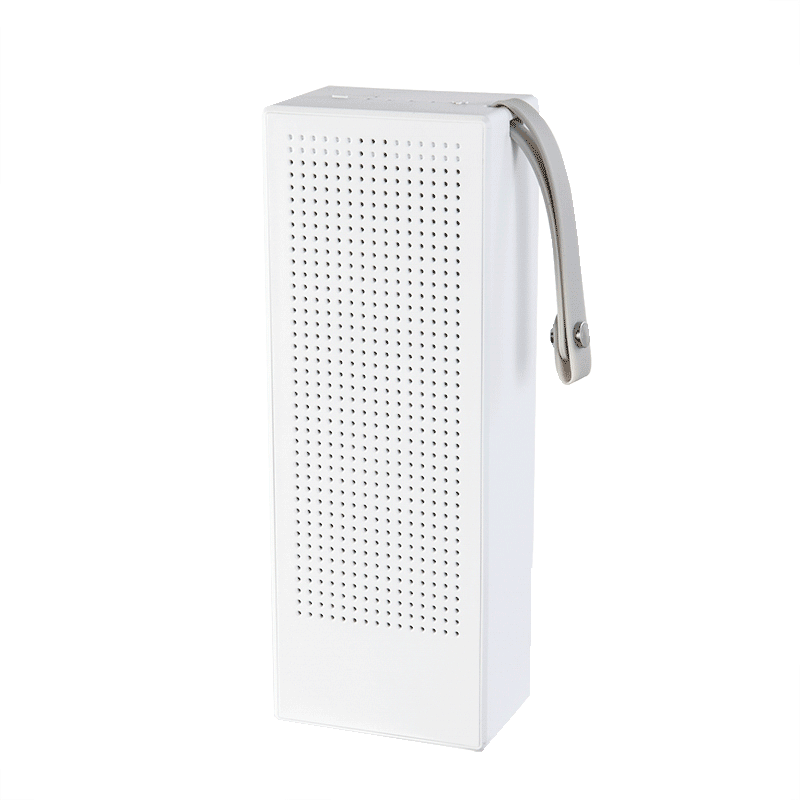 Portable Rechargeable Air Purifier RAP-02Particular Matter CADRView Product →
Replacement cost belongs in the original quotation, because a machine with cheap filters that last three months is not cheaper than a machine with a larger panel. For a closer look at how filtration behaves in everyday use, read this overview of how air purifiers clean indoor air.
Particulate matter filtration is a chain rather than a single component. The particle size sets the required class, the media area sets the pressure drop, the fan and the seal decide how much of that class actually reaches the air, and the housing decides whether the performance survives three years of filter changes. Get those links right and a specification will hold up in the test chamber and in the customer's bedroom. Get them wrong and a 99.95 percent filter can still leave a room hazy.

@2020. CIXI XIATIAN ELECTRICAL APPLIANCES CO.,LTD. All rights reserved. Wholesale High-End Electric Fans Manufacturers

 English
 한국어
한국어