

Three in the morning, a blocked nose, and a nursery that has been closed for eight hours. That is the moment most parents start searching for an air purifier for a newborn. The short answer is that a purifier can genuinely help, but the details decide whether it helps or becomes a 45 dB obstacle in a small room. The wrong filter, an ozone generator or a bright blue indicator light can leave the nursery worse for a sleeping baby.
This guide covers what a newborn actually needs from a purifier, the specifications that matter, where to place the unit, and what to check before buying. A separate section addresses importers and brand owners who need to specify this product for volume production.
Content
Newborns breathe faster than adults, roughly 30 to 40 breaths per minute in the first months. Their lungs and airways are still developing, and the tissue lining the nose and bronchial tubes is thinner and more reactive. Two practical consequences follow. A particle concentration that an adult barely notices can trigger congestion or coughing in a baby, and because a baby spends most of the day close to the floor inside a small closed room, the air quality in a ten square metre nursery matters more than the air quality in the rest of the apartment.
The pollution sources in a nursery are ordinary ones. They include formaldehyde and other volatile organic compounds from new furniture, paint, glue and carpet; fine particles from cooking and candles; pollen and traffic particles entering through window gaps; pet dander; and mould spores from damp corners or from laundry dried indoors.
Not every family needs one, and no purifier replaces ventilation or keeps second hand smoke out of a home. The honest position is this: a purifier reduces the concentration of airborne particles and odours in a closed room, and that reduction is most valuable when there is an identifiable pollution source or a baby with congestion, allergy or a family history of asthma.
A purifier makes the most sense in these situations:
If none of these apply and the room is well ventilated, a purifier is a comfort purchase rather than a necessity.
Marketing pages tend to lead with filter layers and smart features. For nursery use, five parameters decide whether a product is suitable, and they compare easily side by side.
| Specification | Why it matters for a newborn | What to confirm |
|---|---|---|
| Filtration method | Fine particles and odours are the main concern in a small closed room | HEPA H13 plus activated carbon; no ozone generator, no unsealed ioniser |
| Clean air delivery rate | Sets how many times the room air is cleaned each hour | About 3 to 5 air changes per hour for the room volume; a 26 cubic metre nursery needs roughly 100 cubic metres per hour |
| Noise level | Sleep quality between midnight and six in the morning | Sleep mode at or below 30 dB; maximum speed below 60 dB |
| Safety and materials | Hands, mouths and climbing babies meet the product directly | Ozone free, flame retardant housing, stable base, child lock, no sharp edges |
| Maintenance | A saturated filter stops cleaning and can itself become a smell source | Filter life of six to twelve months, replacement price and availability, filter change indicator |
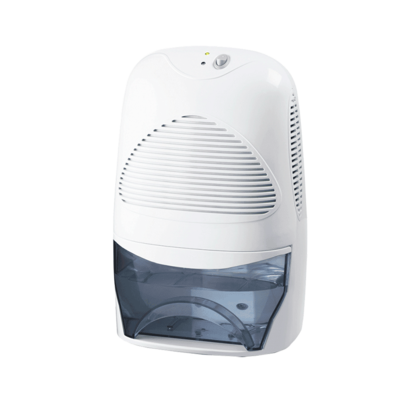
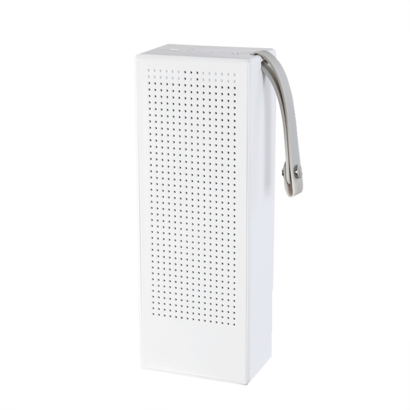
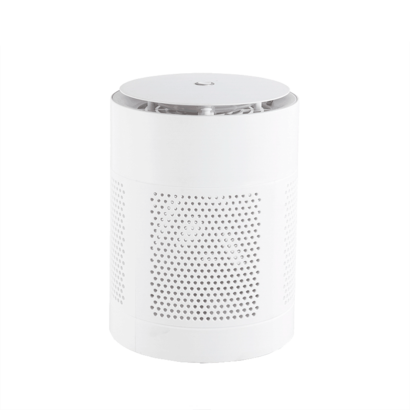
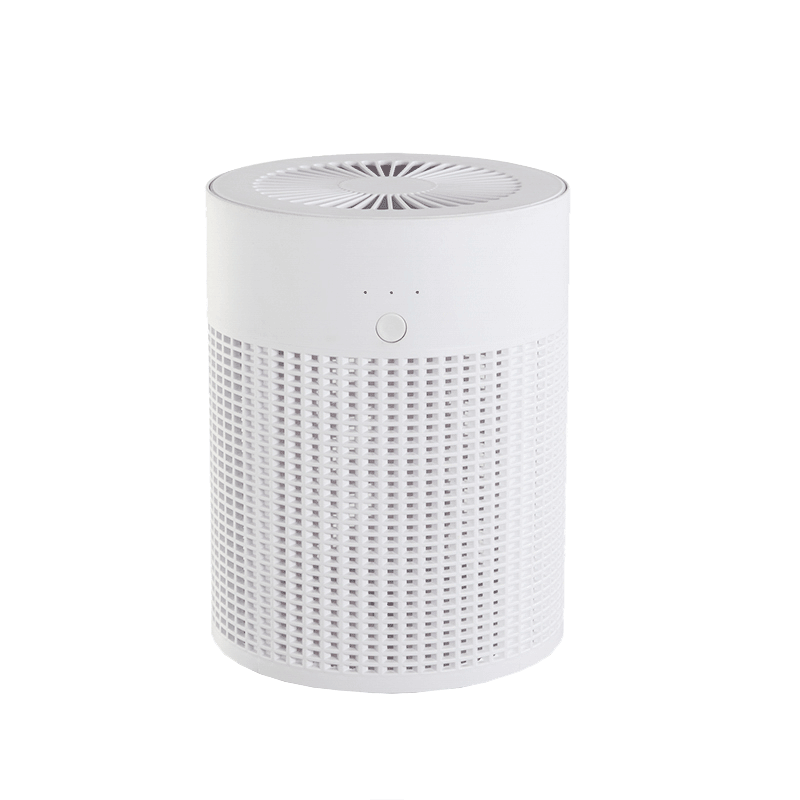 Portable Mini Air Purifier AP-01ACixi Xiatian Electrical Appliances CO.,LTD was founded in 2011, professional manufacturer and supplier of Portable Mini Air Purifier AP-01A. Workshop is 30,000 square ...View Product →
Parents who need a compact unit for a small nursery should compare footprint as well as performance. A small machine running at medium speed is often quieter than a large machine at low speed, and the noise difference at midnight is what families remember.
Decibel numbers need context. A quiet library sits around 30 dB, normal conversation is 50 to 55 dB, and a vacuum cleaner is 70 dB or more. For a sleeping baby, a purifier that stays at or below 30 dB on its lowest setting is effectively silent. Some manufacturers measure noise at half a metre, others at one metre, and the distance changes the reading, so ask for the test distance rather than accepting a single figure.
Light is the other issue. Indicator panels with bright blue LEDs can disturb a baby more than the fan does. Look for a display that dims or switches off completely, and check that sleep mode stays locked instead of jumping back to high speed when the sensor detects a particle spike. Automatic mode is useful during the day, but a fixed low speed is usually better at night.
If the family also uses white noise, keep the purifier and the sound machine at least one metre from the crib and keep the combined sound level below 50 dB.
Placement affects safety and performance, and the rules are simple.
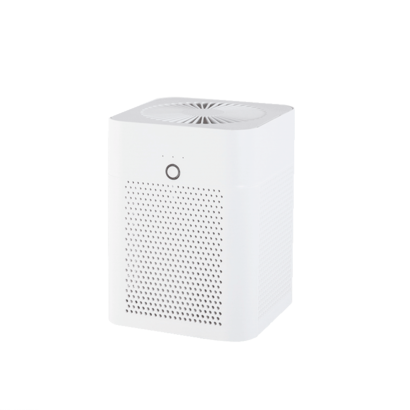
In a small room, a compact unit with a focused outlet cleans the sleeping zone without taking up floor space. For nurseries under twelve square metres, a mini format purifier with a washable pre filter is often the more practical choice.
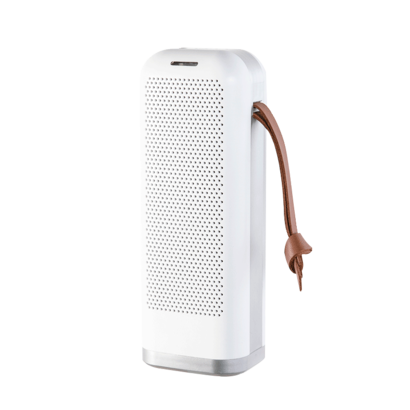
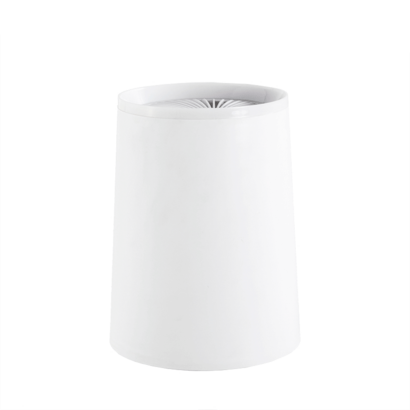
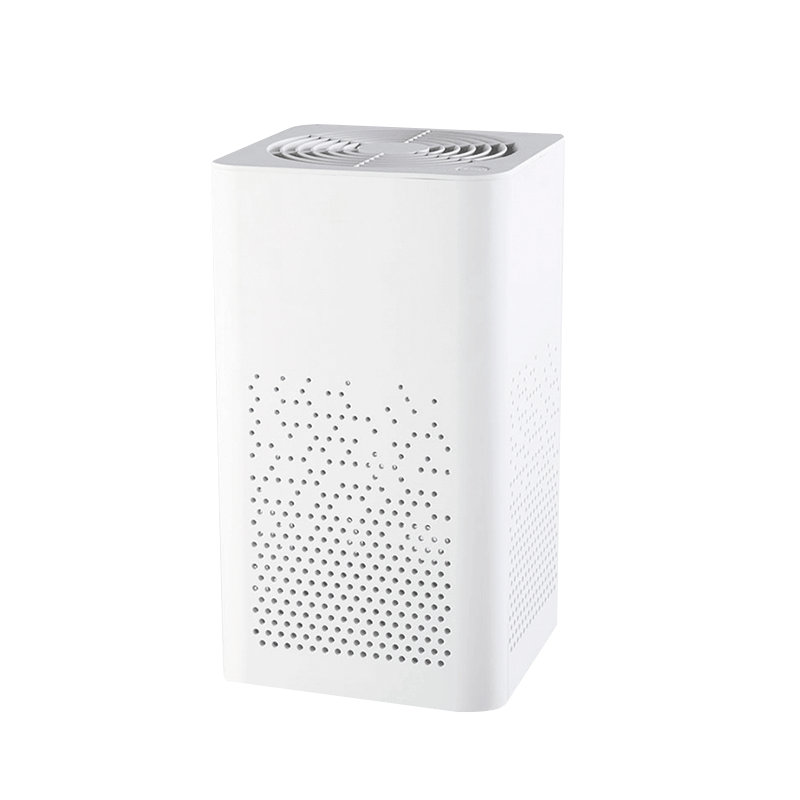 Home Air purifier MAP-01Particular Matter CADRView Product →
Particles are only half of the nursery air problem. Winter heating and summer air conditioning can drop relative humidity below 30 percent, which dries the nasal passages and makes congestion worse. A humidifier set to 40 or 50 percent relative humidity helps, but going above 60 percent encourages dust mites and mould, so a hygrometer is worth the small cost.
Air washers combine a water based filter with a fan and are popular in some markets because they clean and humidify in one unit. They handle larger dust and some odours well, but for fine particle removal a HEPA stage remains the more reliable option. In dry climates many families run a purifier and a humidifier together, with the humidifier kept away from the crib and cleaned weekly.
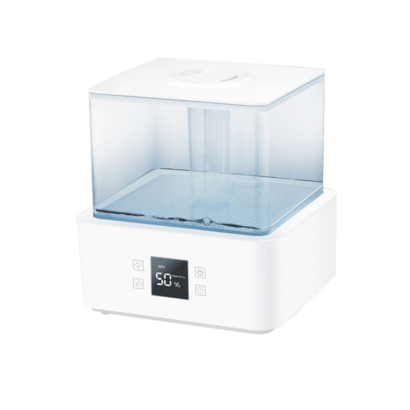
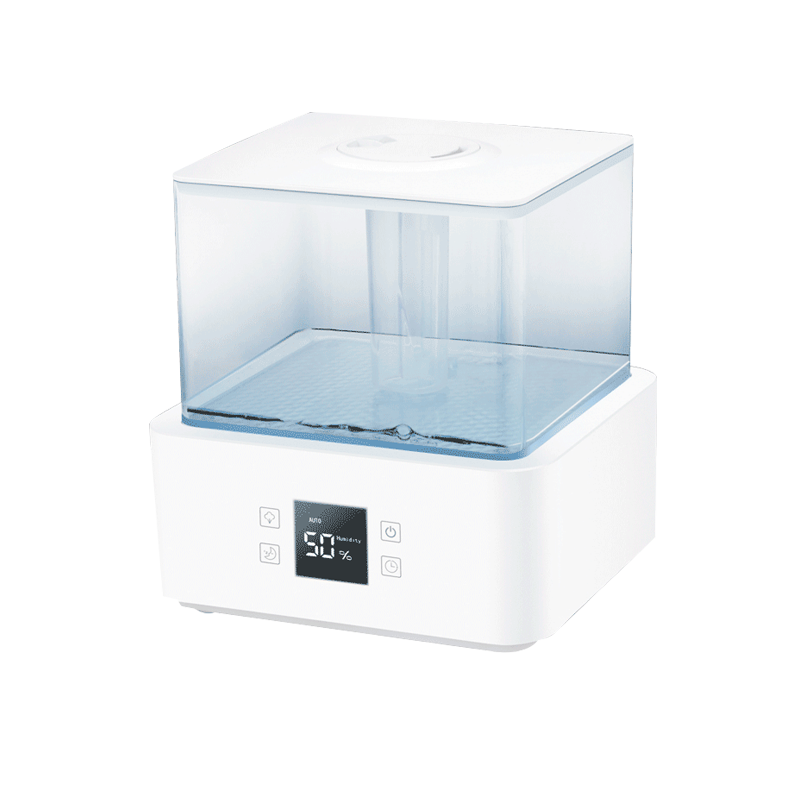 Ultrasonic Portable Humidifier with Certificate HM-01Cixi Xiatian Electrical Appliances CO.,LTD was founded in 2011, professional manufacturer and supplier of Ultrasonic Portable Humidifier with Certificate HM-01. Worksh...View Product →
From a production perspective, a nursery purifier is a different product from a general living room model. The design constraints point in a specific direction: lower maximum airflow in exchange for a quieter fan and a wider low speed range, a sealed filter housing to prevent particle bypass, a light panel that can be fully switched off, and a housing that passes drop and stability testing for a room where children climb.
Plastic selection matters as much as the filter. Low odour ABS and polypropylene grades reduce the chance that the unit itself releases volatile organic compounds during the first weeks of use, and a washable pre filter extends main filter life in dusty environments. For export markets, the practical specification usually includes a mains or 12 volt fan, a filter change indicator, a child lock, and packaging and manuals in the target language.
Suppliers with in house tooling, injection moulding and a testing laboratory can adjust airflow, noise and housing tooling for a specific market without waiting on outside partners. This is the working model at our facility in Cixi, Ningbo, where air purifier capacity reaches one million units per year alongside separate lines for air washers, fans and heaters. Buyers can review the full range in the air purifier category or read more about the factory and its testing capability. Development from a customer drawing or sample is standard practice, which matters when a brand needs a nursery specific enclosure rather than a rebadged living room unit.
Yes, provided it runs on a low speed setting below 30 dB, produces no ozone, and sits at least one metre from the crib. Continuous low speed operation removes more particles over eight hours than a short high speed session.
It can reduce the particle load that irritates the nasal passages, especially during pollen season or in a newly furnished room. It does not treat infection or allergy, and it works best alongside ventilation and a humidity level between 40 and 50 percent.
Most HEPA filters last six to twelve months in normal household use. Polluted areas, pets and continuous high speed operation shorten that interval. Replace the filter when the indicator suggests it, when airflow drops noticeably, or when the unit starts to smell musty.
For dry air and larger dust particles, an air washer or humidifier helps. For the fine particles that reach the deepest part of the lung, a HEPA stage is still the more dependable solution.
The decision comes down to a small number of measurable details rather than brand claims. A newborn nursery purifier should clean the air quietly, produce no ozone, fit safely into a small room, and be cheap enough to run and maintain that the family leaves it switched on. Get those four points right and the purifier becomes one of the more useful purchases in the nursery. Get them wrong and it becomes an expensive night light with a fan attached.
@2020. CIXI XIATIAN ELECTRICAL APPLIANCES CO.,LTD. All rights reserved. Wholesale High-End Electric Fans Manufacturers

 English
 한국어
한국어