

Fry a steak on a gas hob in a closed kitchen and a laser particle counter will often still read 80 to 120 micrograms per cubic meter of PM 2.5 forty minutes later, long after the visible smoke is gone. Those particles are small enough to stay suspended for hours and small enough to pass straight through the loose mesh filters used in cheap tower units, which is why a purifier bought for looks usually fails exactly when it is needed.
The short answer is that PM 2.5 removal is decided by three things: true HEPA grade filter media, a sealed air path that forces every cubic meter of air through that media, and enough clean air delivery for the room volume at the fan speed you will actually leave running. Motor wattage, ion counts and the number of filter layers printed on the box tell you far less. This guide explains what to check, what the numbers mean in practice, and what belongs in a specification if you are sourcing units for a brand.
Content
PM 2.5 means particulate matter with a diameter of 2.5 micrometers or less, roughly one thirtieth the width of a human hair. PM 10 covers the coarser fraction that settles faster, such as dust, pollen and lint. PM 1 covers ultrafine combustion particles. The PM 2.5 band is the practical dividing line because these particles behave almost like a gas in a room: they follow air currents, pass through window gaps in both directions, and are small enough to reach the deepest parts of the lung.
The sources are usually mundane. Frying oil, gas burners, candles, incense, cigarettes, wood stoves, diesel exhaust from the street below a window, and wildfire smoke pushed hundreds of kilometers. Indoor PM 2.5 also spikes when a vacuum without HEPA exhaust is used, and around laser printers during long print runs.
For a filter, size matters in a specific way. Particles near 0.3 micrometers are the hardest to capture, and the PM 2.5 band sits on both sides of that minimum. Mechanical HEPA media catch them by interception, impaction and diffusion rather than by simple sieving. A filter that looks dense but carries no defined efficiency rating is therefore not a PM 2.5 filter at all.
Compare products on these three values before anything else on the datasheet.
Smoke CADR. Clean air delivery rate is measured with a smoke aerosol, and smoke particles fall in the PM 2.5 range, so the smoke CADR figure is the one that matters here. It is quoted in cubic meters per hour (m3/h) or cubic feet per minute (cfm). A unit that publishes no CADR figure has an unknown PM 2.5 removal rate, no matter what the filter is made of.
Filter grade. Class H13 HEPA captures at least 99.95 percent of particles at the most penetrating size, H12 at least 99.5 percent. Media described as HEPA type, high efficiency or around 99 percent has no defined test point and no guarantee behind it.
Air path sealing. An H13 filter inside a housing that leaks at the edges delivers the efficiency of the leak, not of the filter. Gaskets, a compression seal and a single pass efficiency test on the finished unit are what close that gap.
| Specification | What it measures | Practical target |
|---|---|---|
| Smoke CADR | Clean air delivered for PM 2.5 sized particles | At least two thirds of the room floor area in square feet |
| Filter grade | Media capture at the most penetrating particle size | H13 preferred, H12 acceptable |
| Single pass efficiency | Sealing quality of the finished unit | Above 99 percent at 0.3 micrometers |
| Noise at rated speed | Airflow that is actually usable at night | Below 35 dB(A) for a bedroom setting |
| Sensor type | Accuracy of automatic mode | Laser particle sensor, not an odor or gas sensor alone |
Room air purifier platforms built around this specification set are the practical starting point, since the filter grade, gasket design and motor curve have to be decided together rather than added one after another.
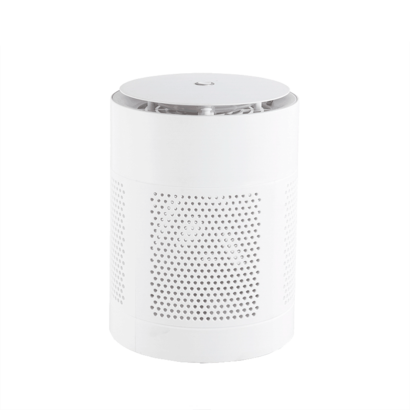
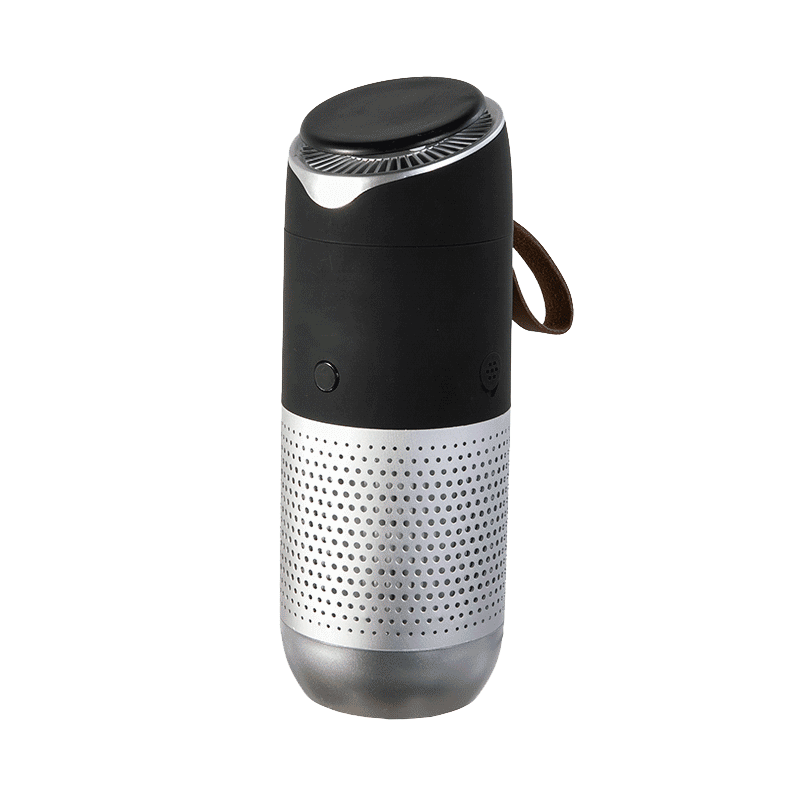 Smart Car Air Purifier with H12 HEPA FiltrationCompact 2.5W car and portable purifier with 25 CFM CADR and three speeds, suited to small spaces where filter grade and airflow are decided together.View Product →
CADR is normally quoted at the highest fan speed with a clean filter, which is rarely the speed anyone leaves running overnight. A quick check: a room of 20 square meters with a 2.6 meter ceiling holds 52 cubic meters of air. Five air changes per hour, a reasonable target for a home with a PM 2.5 problem, needs about 260 m3/h of clean air, which is roughly 150 cfm. If a unit reaches 150 cfm only at top speed, and top speed reads 55 dB, then it is effectively a 75 cfm purifier for a bedroom.
Two further points matter more than most buyers expect. First, the benefit depends on a closed room; an open window next to a busy road can add PM 2.5 faster than a small purifier removes it. Second, one purifier per main room usually beats one large unit placed in a hallway, because PM 2.5 follows air movement and mixes slowly between closed rooms.
Laboratory numbers hold up in a home only when the hardware around the filter is designed for a full service interval.
Not every PM 2.5 problem needs a large appliance. A 10 square meter bedroom with the door closed holds about 26 cubic meters of air, so a unit delivering 100 to 150 m3/h will hold the room at a low particle count through a normal night. Smaller units also run quieter, which matters because a loud purifier gets switched off, and a purifier that is switched off removes nothing.
Portable and rechargeable models cover the gaps a fixed purifier cannot reach: a hotel room, a car during a commute, a desk in a workshop. For those products, check the runtime at the fan speed used for PM 2.5 removal, because two hours of runtime at the lowest setting is not the same product as two hours at a useful airflow.
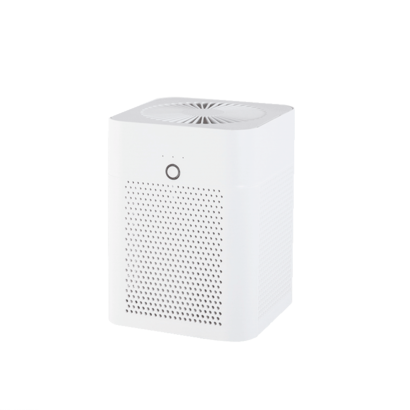
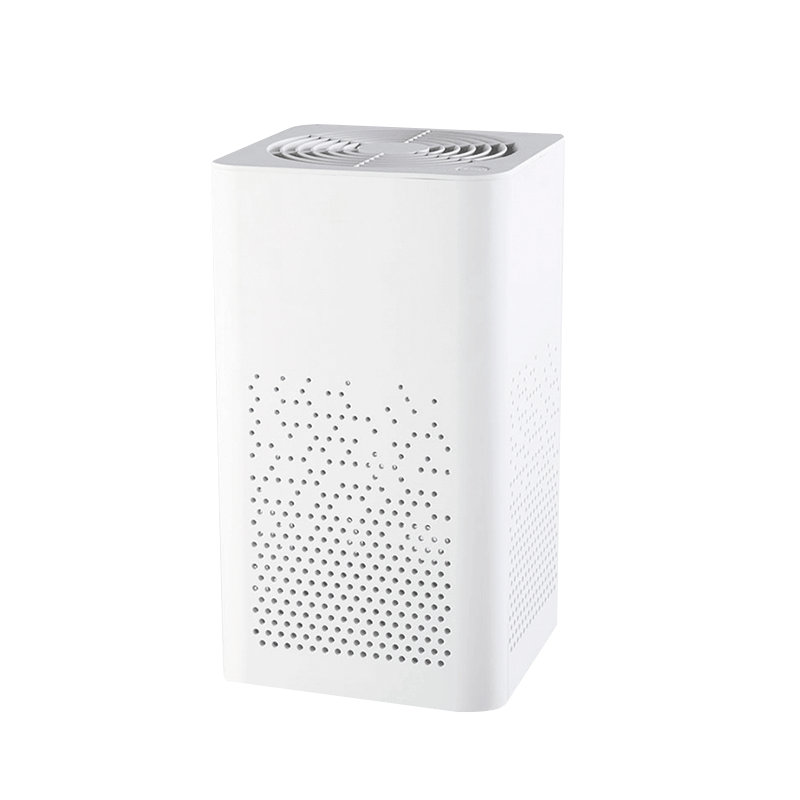 MAP-01 Home Air Purifier with H12 HEPA and Carbon FilterFixed MAP-01 home purifier offers 100 m³/h particulate CADR, H12 HEPA plus carbon filtration, and three speeds for rooms around 10–20 m².View Product →
Worth the cost: a laser particle sensor with an automatic mode that reacts within about a minute, a sleep mode below 30 dB(A) with a dimmed display, a filter life indicator, and a manual speed control that still works if the sensor fails.
Usually not worth the cost: ozone generators, which add a respiratory irritant while trying to remove particles; UV lamps presented as the main PM 2.5 solution, since UV does not trap particles; ionizers sold without a defined ozone test; and efficiency claims that name no standard and no particle size.
For importers and brand owners, the PM 2.5 requirement has to be written into the purchase documents rather than left to the design. A workable request for quotation includes:
We build air purifiers, air washers, dehumidifiers and fans in Cixi, Ningbo, with a 30,000 square meter workshop, in house injection molding, stamping and tooling, and an annual air purifier capacity of about one million units. Development work is typically driven by a customer drawing or a sample unit, and the list above is a normal starting point for that conversation. Current projects cover mini and portable purifiers, mid size room units and rechargeable models.
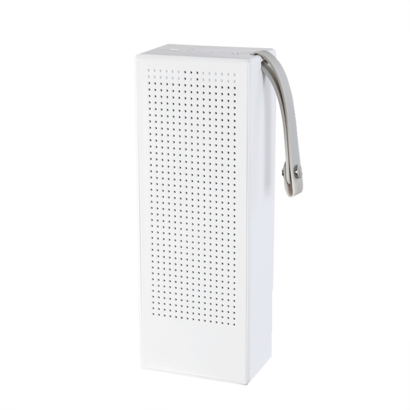 Air Purifier Models for Home, Portable and OEM SupplyBrowse mini, portable, rechargeable and home air purifier models, including MAP-01, with HEPA, dust and carbon filtration for OEM or wholesale programs.View Product →
More detail on our production background is available on the company page, and a specification can be sent directly through the contact form.
PM 2.5 is small, persistent and easy to underestimate, but the buying decision becomes simple once the order of checks is right: smoke CADR first, filter grade and sealing second, noise third, and sensors and convenience features last. A purifier that only wins on the last two will disappoint the moment the cooking smoke or the traffic exhaust arrives.
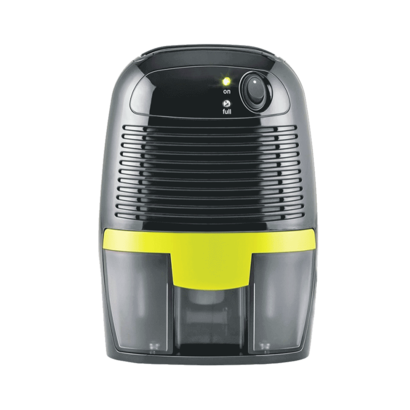

@2020. CIXI XIATIAN ELECTRICAL APPLIANCES CO.,LTD. All rights reserved. Wholesale High-End Electric Fans Manufacturers

 English
 한국어
한국어