

Two air purifiers sit side by side on a quotation sheet. Both use HEPA filtration, both move a similar volume of air, and both carry a similar price. The only visible difference is a small button on the control panel marked anion. That button is usually worth paying for, but only once you know what it does, what it cannot do, and what happens at the emitter while it runs.
The short answer is that the anion function is a supplement to mechanical filtration, not a replacement for it. It gives airborne particles an electric charge so they clump together, settle out of the air, or stick to a collector surface. Two details decide whether it is genuinely useful on a given model: whether the ion stage can be switched off independently, and whether the supplier can produce a third party ozone test report.
Three questions are worth asking before any order is placed:
The answers shape the ownership experience far more than the ion count printed on the box.
Content
An anion is a molecule carrying an extra electron, which gives it a negative charge. Inside a purifier, the anion stage creates these charged molecules and releases them into the airstream. Dust, pollen, pet dander, smoke particles and fine aerosols pick up that charge within a second or two of passing the emitter.
Charged particles then behave in one of two ways. In a two stage electrostatic design they are drawn onto a grounded or positively charged collector plate, where they stay until the plate is washed. In a simpler ion generator with no collector, particles repel one another, form larger clumps and settle on floors, furniture and walls. That second design is cheaper and quieter, but it relocates dust instead of storing it, which is why ion only units often leave a dark patch on the wall beside the outlet after months of heavy use.
The ion stage does not remove gases. Formaldehyde and cooking odors pass straight through, so carbon or a catalytic stage still has to do that work.
Most designs use corona discharge. A needle shaped electrode is held at a few thousand volts, and the intense field at the tip strips electrons from nearby air molecules. The result is a steady stream of negative ions, plus a small amount of ion wind that carries them into the room.
The same high voltage field is where ozone comes from. When oxygen passes through the discharge zone, some molecules split and recombine as ozone. Careful designs keep the discharge current low, shield the emitter and place it after the filter. Careless designs chase a high ion count by raising the voltage, and ozone rises with it.
In a hybrid purifier the mechanical stages come first. A pre filter catches hair and lint, a HEPA filter traps particles at 0.3 microns and below, and the ion generator sits at the outlet to charge whatever is left. Our air purifier range uses this order, with the emitter behind the filter and its own control on the panel.
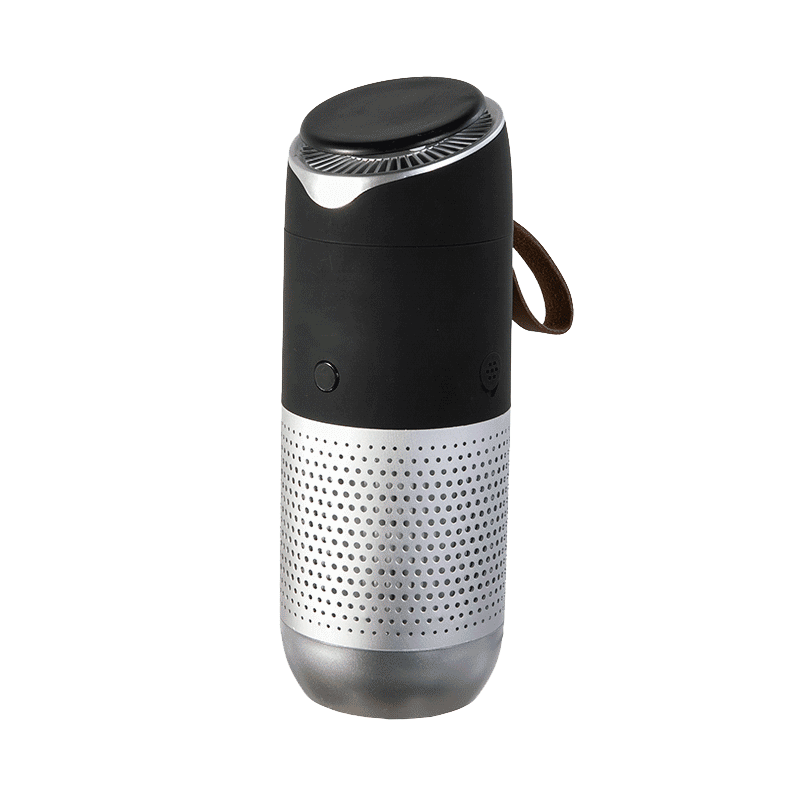 Compact H12 HEPA Car Air Purifier with Three SpeedsCompact H12 HEPA car purifier with three speed settings and low 2.5 W power, suited to in-car or small personal spaces.View Product →
Ionizers have been sold for decades and the technology is well understood. The safety discussion is almost entirely about ozone rather than the ions themselves. California's air cleaner regulation caps ozone emissions from a certified room air cleaner at 0.050 parts per million measured at the breathing zone, and UL 867 for electrostatic air cleaners includes an ozone test.
For a buyer this becomes a simple document request. Ask for the report, note which laboratory issued it, note the measurement distance, and confirm the tested sample matches the production configuration. A supplier holding the report will send it immediately. If the answer is a marketing claim with no measurement behind it, treat the ozone figure as unknown.
It helps to see the ion stage next to the alternatives. The table compares the four approaches most often specified in household air purifiers.
| Method | Main mechanism | Handles well | Weak at | Typical maintenance |
|---|---|---|---|---|
| Ion generator only | Charges particles so they clump and settle | Light smoke, fine dust, static reduction | Gases, heavy dust loads, soiling near the outlet | Clean the emitter needle every one to two months |
| HEPA plus anion hybrid | Filter traps solids, ion stage charges what passes through | Pollen, dander, smoke particles, room dust | Gases without a carbon stage | Replace the filter, clean the electrode |
| Water based air washer | Air passes through a water film that captures particles | Coarse dust, some water soluble odors, adds humidity | Very fine particles, standing water hygiene | Change water, clean tank and discs |
| Activated carbon | Adsorption of gas molecules on a porous surface | Cooking odors, solvents, volatile organic compounds | Particles | Replace carbon at fixed intervals |
This is why hybrid designs dominate the market. No single stage covers both particles and gases, so the ion function earns its place as a low cost addition rather than a standalone solution. If you would rather avoid a high voltage stage altogether, a water based unit is the usual alternative, and a compact model such as the LG series air washer can run quietly overnight while adding a little humidity.
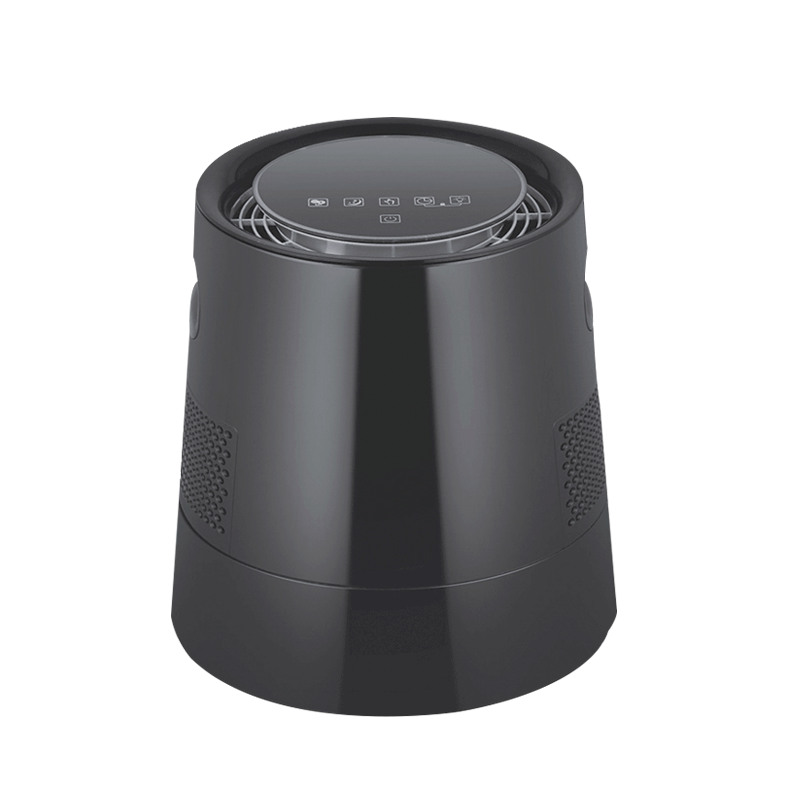 LG-01 Portable Air Washer with Disk Filter and 6.2 L TankWater-based air washer with disk filter, 6.2 L tank, quiet 25 dB operation, humidification, and coverage up to 28 m².View Product →
Some rooms show the effect clearly. A living room with a smoker, a home beside a busy road, or a workshop with fine sawdust all keep particles suspended longer than a filter alone can address. The ion stage works on that suspended fraction.
Small enclosed spaces are where the difference is most noticeable. A bedroom at night, a home office, a car cabin or a hotel room has limited air exchange, so charged particles settle faster and the air feels fresher. Portable rechargeable purifiers are built for exactly that setting, running from a USB supply or an internal battery with the ion stage active at low fan speed.
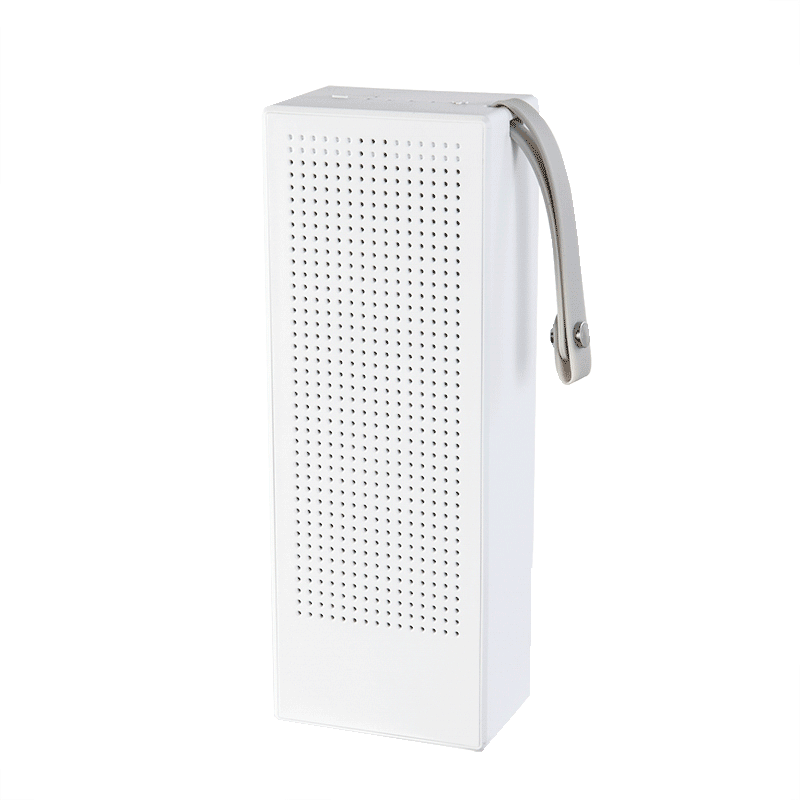 RAP-02 Portable Rechargeable Air Purifier with HEPA and CarbonBattery-powered HEPA and carbon purifier with three speeds for bedrooms, offices, car cabins, or hotel rooms up to 10 m².View Product →
Two situations need a different answer. Renovation dust and formaldehyde released by new furniture are not solved by ions, because gases pass through the stage untouched and heavy particulate loads overwhelm a small emitter. Those projects need carbon, higher airflow and more filter area.
When a brand owner or retailer orders an ion equipped purifier, the specification list should stretch well beyond the ion count. These points most often trigger returns or delay certification.
Custom development is where an experienced factory saves the most time. Our engineers work from customer drawings or samples, and an in house laboratory with full test equipment allows ozone, airflow, noise and electrical safety checks to be completed before tooling is committed. For a modified housing or a new control panel, our engineering team can review the requirement at concept stage.
Ion output drops quietly over time. Dust collects on the needle tip, the discharge field weakens, and the user notices only that the room feels less fresh than it did in the first month. A short routine prevents that.
Service instructions belong in the manual in the language of the end market. One diagram of the emitter assembly is usually enough for a technician.
The anion function is a small, inexpensive stage that improves how a room feels, provided it sits behind proper filtration and can be switched off when the user prefers. When quotations are compared, put the ion count aside and look at the ozone report, the switch design and the serviceability of the emitter. Those three details separate a feature that works for years from one that generates complaints in the first season.
We build hybrid purifiers with independent ion control, along with air washers, dehumidifiers, fans and heaters, in a Cixi factory with 30,000 square meters of workshop space and an annual purifier capacity of one million units. Share the target market, the certification list and the expected retail price, and we will propose a configuration that fits.

@2020. CIXI XIATIAN ELECTRICAL APPLIANCES CO.,LTD. All rights reserved. Wholesale High-End Electric Fans Manufacturers

 English
 한국어
한국어