

The air quality dashboard on your phone reads 162 at seven in the morning. The windows are shut, the kitchen still carries yesterday's cooking smell, and the air purifier in the corner is switched off. That single decision, whether to switch it on at all, is where most households lose the benefit of a machine they already paid for.
Here is the short answer before the detail. Run the purifier as soon as the outdoor AQI passes 101, keep it running continuously once it passes 151, and treat readings below 50 as optional unless someone at home has asthma, seasonal allergies or a heart condition. Sensitive groups should start earlier, at 51. The sections below explain the thresholds, the runtime math, the sizing calculation, placement and the maintenance load that rises with every smoky week.
Content
The AQI is a 0 to 500 scale built around measured particle pollution, mostly PM2.5, the fraction small enough to reach the deepest part of the lungs. The trigger points that matter for a purifier are 51, 101 and 151. Anything below 50 means outdoor particles are unlikely to push a normal indoor space into a problem range. Above 51, sensitive people start to notice effects. Above 101, healthy adults begin to be affected during long exposure, and above 151 the air is officially unhealthy for everyone.
| AQI range | Category | PM2.5 range (micrograms per cubic meter) | What to do with the purifier |
|---|---|---|---|
| 0 to 50 | Good | 0 to 12 | Optional. Use it for cooking, pets or pollen season. |
| 51 to 100 | Moderate | 12.1 to 35.4 | Run 8 to 12 hours on low or medium, especially overnight and while cooking. |
| 101 to 150 | Unhealthy for sensitive groups | 35.5 to 55.4 | Run continuously at medium speed with windows closed. |
| 151 to 200 | Unhealthy | 55.5 to 150.4 | Run 24 hours a day at medium to high speed until the outdoor reading drops. |
| 201 to 300 | Very unhealthy | 150.5 to 250.4 | Run at maximum speed, seal gaps around doors, concentrate the household in one clean room. |
| 301 to 500 | Hazardous | 250.5 and above | Run at maximum speed around the clock, check the prefilter daily and limit outdoor activity. |
Two of those bands deserve a note. Between 51 and 100 the outdoor air is officially acceptable, but fine particles are still present, and continuous low-speed operation helps people who react to small exposures. Above 151, short runs stop making sense. A purifier typically needs 30 to 60 minutes in a closed room to reach its cleanest steady state, so one hour on followed by three hours off simply lets particle levels climb back to where they started.
A closed home is not a sealed box. Typical residential construction exchanges about 0.5 to 1.0 air changes per hour with the outside through gaps, vents and door frames. Measurements from smoke episodes and smog seasons show that, without filtration, indoor PM2.5 usually settles somewhere between 50 and 70 percent of the outdoor level.
Take an AQI of 180, which corresponds to outdoor PM2.5 near 70 micrograms per cubic meter. A closed living room without filtration commonly sits around 35 to 50, still inside the unhealthy for sensitive groups band. Add 30 to 60 minutes of frying, candle burning or vacuuming, and indoor levels can briefly exceed outdoor levels. That is why the purifier decision is driven by the outdoor reading rather than by how the room feels. Fine particles are invisible and largely odorless, so perception is a poor guide.
Runtime is a function of unit capacity and room volume, not of habit. The practical figures that follow work for a unit correctly sized to its room.
One calculation tells you whether a unit can actually do that job. Five air changes per hour is the working target during a smoke or pollen event. Multiply floor area by ceiling height to get room volume, multiply by five, then divide by 60 to convert to cubic feet per minute. A 12 by 14 foot bedroom with an 8 foot ceiling needs roughly 112 CFM of clean air delivery, which corresponds to a CADR rating of about 120 to 150. A 40 CADR desktop unit will not reach that target no matter how many hours it runs.
Three specifications matter more than the marketing copy: clean air delivery rate, filter class and housing seal. Look for a HEPA stage rated to capture 99.97 percent of particles at 0.3 micron, the size range that carries most wildfire smoke, diesel soot and fine dust. A sealed filter frame prevents air from bypassing the media, which is a common reason two units with identical filter paper perform very differently. Activated carbon handles the odor and gas component that HEPA passes through.
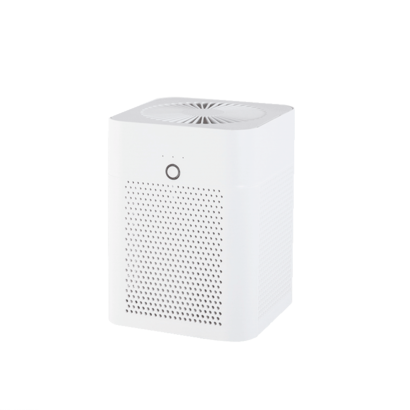
For apartments and rooms up to roughly 250 square feet, a mid-size tower platform is usually the practical starting point for year-round use. The AP series covers this range, and the AP-02 class unit is representative of the format buyers typically specify when one machine has to serve a bedroom by night and a living area by day.
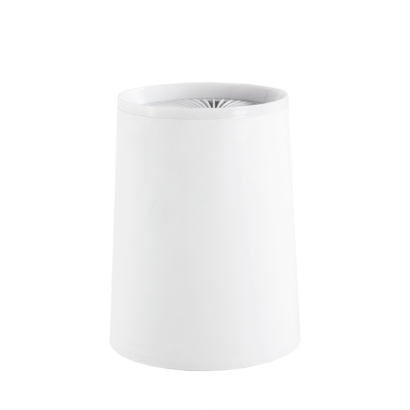
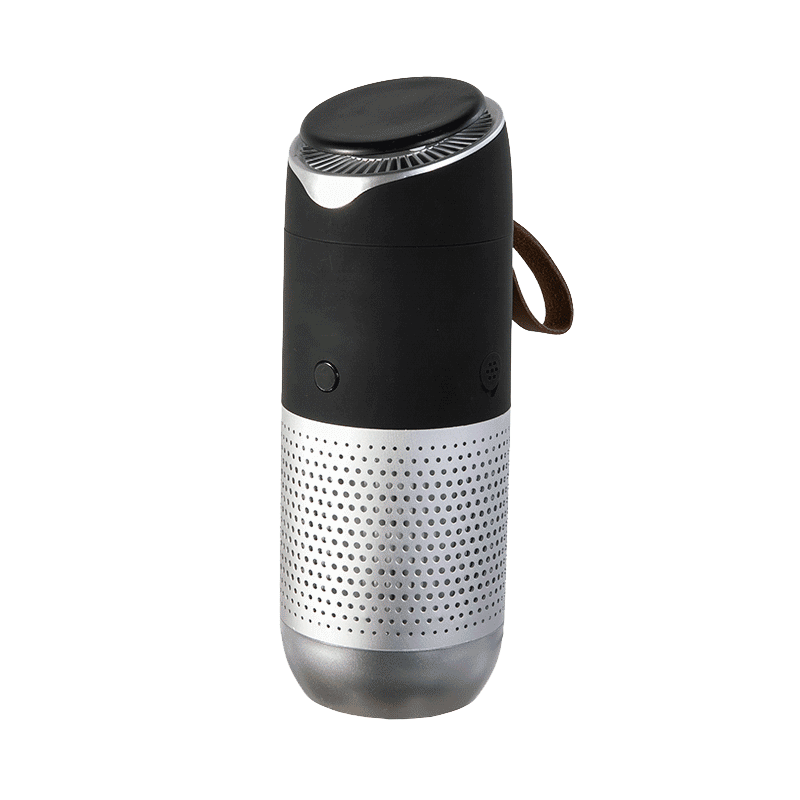 Air Car Purifier Smart for Cars and Small SpacesCompact H12 HEPA purifier with 25 CFM CADR and three speeds, intended for car cabins or areas up to about 40 sq ft.View Product →
For larger living rooms, choose by CADR rather than by the room size printed on the box, and check the noise figure at the speed you will really use at night. Anything above 45 decibels on the sleep setting tends to end up switched off within a month, which is the most expensive possible outcome.
Hardware choice gets most of the attention, but these five habits decide most of the result.
Filter life is consumed by particles captured, not by calendar time. A prefilter on a unit running through repeated days above 150 can load up in one to two weeks and should be vacuumed or rinsed at that interval. A HEPA cartridge rated for 6 to 12 months in normal use often needs replacement at 3 to 6 months in a heavy smoke season.
Watch for four signals rather than waiting for a fixed date: a noticeable drop in airflow, a rise in noise at the same setting, gray discoloration on the media, and a musty smell when the unit starts. Any of them means the filter is restricting airflow and the effective CADR has already fallen below the specification. If you want a picture of how a purifier behaves over months of daily operation instead of a short bench test, this air purifier use evaluation walks through the wear points that show up first.
The bedroom is where people spend seven to eight hours, which makes it the highest-value room in the house during a high AQI event. The complication is noise tolerance. Two approaches work well. The first is a larger unit run on low speed, which moves the same air with less noise. The second is a small portable unit that can follow the person, from the home office during the day to the nightstand after dinner.
Portable and rechargeable formats make sense for rental apartments, dorm rooms and travel, where a full-size tower is impractical. The RAP series is built around that use case, and the RAP-02 class model is representative of the rechargeable format that runs on battery for part of the night before switching to a wall outlet.
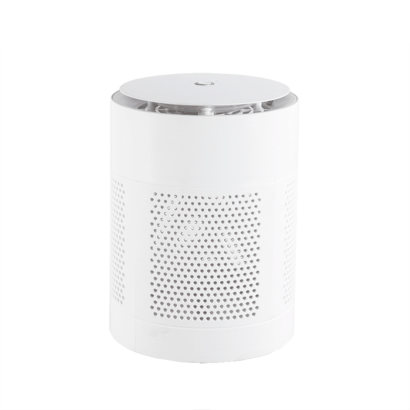
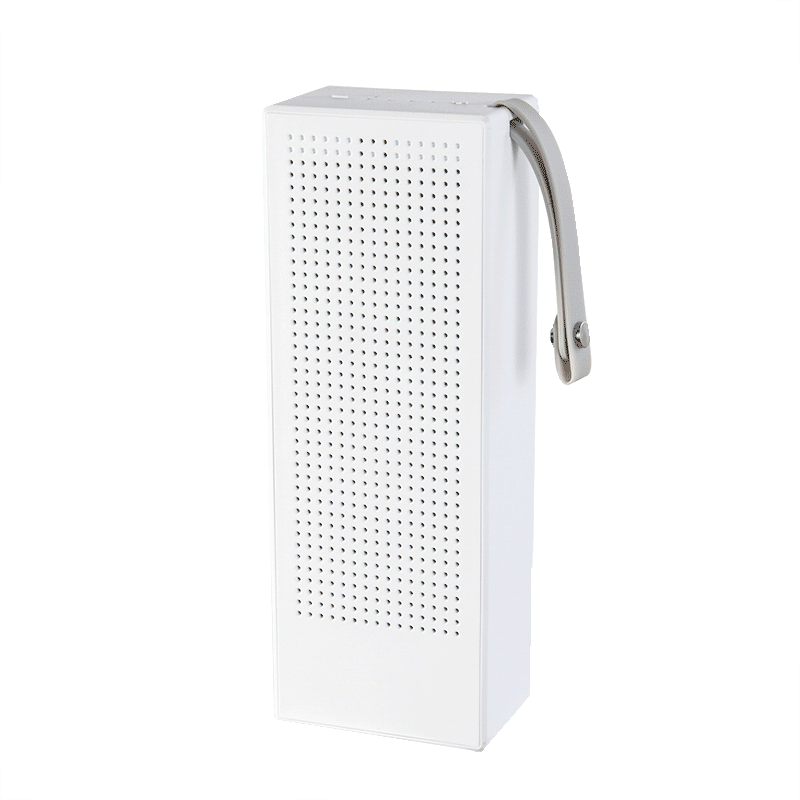 Portable Rechargeable Air Purifier RAP-02 for Small SpacesBattery-powered H12 HEPA and carbon purifier with 50 m³/h CADR and three speeds, suited to dorms, rentals and travel.View Product →
One caution with small units: place them close to the breathing zone, within about three feet of the bed, and never behind a pillow or under a blanket, where the intake is blocked.
Winter high-AQI episodes often arrive with dry indoor air, because heating lowers relative humidity while outdoor particle levels rise. Air that is both dry and dusty irritates the throat and nasal passages, which makes the same particle concentration feel worse. An air washer passes air through a water curtain or wetted media, trapping coarse dust and lint while adding moisture, so one appliance covers both issues in a bedroom or a small office.
Units in the LG series are designed around that combined function, and the LG-01 class air washer is a reasonable reference point for buyers weighing a washer against a purifier plus a separate humidifier.
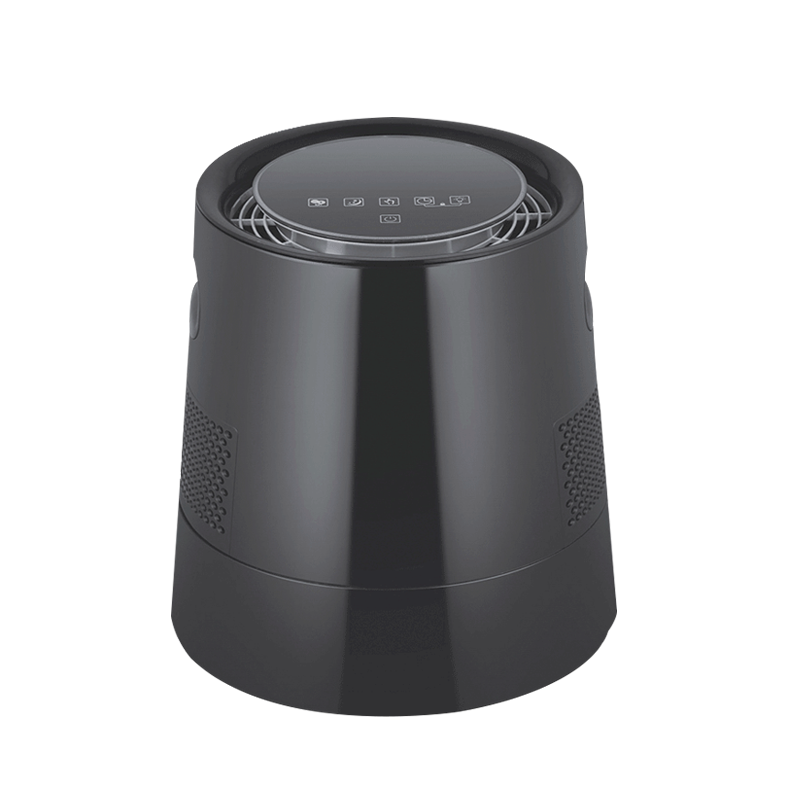 House Portable Ion Airwasher LG-01 for Household UseDisk-filter air washer with 6.2 L tank, 350 ml/h output and ≤25 dB noise, covering up to 28 m².View Product →
Air washers are strongest on coarse dust and dryness. For smoke-scale PM2.5 during a hazardous event, a HEPA purifier remains the more direct tool, and the two are often used in different rooms rather than in competition.
Not for outdoor particles. Indoor sources still matter, including cooking, pets, candles and cleaning. Many households run the unit on low speed during those activities and switch it off afterwards.
During a high AQI event, yes. An open window keeps feeding new particles into the room at a rate most residential purifiers cannot overcome, and the unit will appear to underperform its rating.
No. It only changes the air inside the room it serves. The outdoor figure comes from monitoring stations and will not respond to anything you do indoors.
Yes, for units designed for continuous duty. The practical limit is filter life rather than the motor, which is why checking the prefilter weekly during long events matters more than limiting runtime.
Cixi Xiatian Electrical Appliances has manufactured air purifiers, air washers, dehumidifiers, fans and heaters since 2011, working from a 30,000 square meter facility in Cixi, Ningbo, in China's small appliance manufacturing cluster. Stated annual capacity runs to 1 million air purifiers and 250,000 air washers, with products exported to markets including Korea, Russia, Italy, Spain, Poland, the United Kingdom, Australia and the Middle East. For brand owners and importers building a private label line around high-AQI markets, the company profile lists the production systems, in-house laboratory and OEM or ODM development process behind those figures.
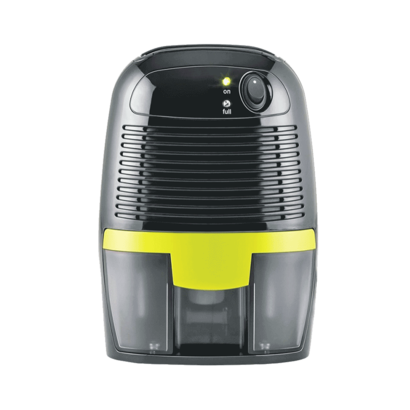

@2020. CIXI XIATIAN ELECTRICAL APPLIANCES CO.,LTD. All rights reserved. Wholesale High-End Electric Fans Manufacturers

 English
 한국어