

Air purifiers can provide meaningful supportive benefit for people with pulmonary fibrosis by reducing airborne triggers that worsen breathing difficulty — particularly fine particulate matter (PM2.5), dust, mold spores, chemical fumes, and smoke — but they cannot treat, slow, or reverse the fibrotic process itself. The benefit is symptomatic: cleaner indoor air reduces the frequency and severity of respiratory irritation episodes, which is practically significant for a condition where any additional lung stress can accelerate symptom deterioration. Pulmonologists increasingly recommend HEPA air purifiers as an environmental management tool alongside medical treatment, not as a medical intervention in themselves.
If you or a family member has pulmonary fibrosis, discuss environmental modifications — including air purification — with your treating respiratory physician as part of an integrated care plan.
Content
Pulmonary fibrosis causes progressive scarring of lung tissue, permanently reducing the lungs' capacity to exchange oxygen and carbon dioxide efficiently. The scarred tissue is also more reactive to irritants than healthy lung tissue — inhaled particles, chemical vapors, and microbial contaminants that a healthy person's airways would clear without significant response can trigger acute exacerbations in people with pulmonary fibrosis.
Indoor air quality is particularly relevant because people with pulmonary fibrosis typically spend more time at home than healthy adults — and indoor air can contain 2 to 5 times higher concentrations of certain pollutants than outdoor air, including cooking fumes, cleaning product chemicals, mold spores, pet dander, and dust. Reducing this indoor pollutant load has direct practical benefit.
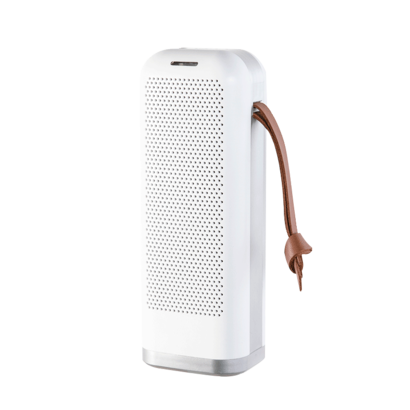
A True HEPA filter captures 99.97% of airborne particles at 0.3 microns and larger — including fine dust, pollen, mold spores, pet dander, and many bacteria. For pulmonary fibrosis patients, the most important particles to remove are those in the PM2.5 range (under 2.5 microns), which penetrate deepest into the lungs and cause the most significant inflammatory response. True HEPA filtration removes the vast majority of these particles from circulating room air. Do not accept "HEPA-type" or "HEPA-like" filter claims — only True HEPA meets the 99.97% efficiency standard at 0.3 microns.
HEPA filters do not capture gaseous pollutants — volatile organic compounds (VOCs) from cleaning products, cooking fumes, paint, furniture off-gassing, and smoke components pass straight through HEPA media. An activated carbon pre-filter or secondary stage adsorbs these chemical vapors. For pulmonary fibrosis patients who are sensitive to strong chemical odors and fumes, activated carbon filtration is an important secondary layer. Look for purifiers with a substantial carbon bed (not merely a carbon-dusted pre-filter) for meaningful gas-phase filtration.
CADR (Clean Air Delivery Rate) measures how many cubic meters of air a purifier cleans per hour. For meaningful air quality improvement, the purifier should provide at least 4 to 6 complete air changes per hour in the room where it is used. As a practical guide: a purifier with a CADR of 200 m³/hour is adequate for a room of approximately 25 to 35 m² with standard 2.4 m ceilings. Undersized purifiers circulate the same air repeatedly without cleaning it fast enough to matter in a real room with a continuously generating pollutant source (cooking, pets, outdoor air infiltration).
People with pulmonary fibrosis often experience sleep disturbance due to breathlessness. Running the purifier in the bedroom overnight on a low setting — where noise is a concern — requires a unit rated below 35 decibels on its lowest speed. Check manufacturer noise specifications for the sleep/low setting specifically, not just the maximum speed rating.
| Feature | What It Does | Importance for PF |
|---|---|---|
| True HEPA filter | Removes 99.97% of particles ≥0.3 µm | Essential — primary protection from PM2.5 |
| Activated carbon filter | Adsorbs VOCs, odors, chemical fumes | Important — gas-phase pollutant removal |
| Pre-filter (dust collection) | Captures large particles, extends HEPA life | Useful — reduces maintenance frequency |
| High CADR rating | Cleans air faster in larger rooms | Essential — must be sized for the room |
| Auto/air quality sensor mode | Adjusts speed when pollutants are detected | Helpful — responds to cooking fumes, dust |
| Quiet low-speed operation | Allows overnight use without sleep disruption | Important — sleep quality is critical for PF patients |
Being clear about limitations is important to set appropriate expectations:


@2020. CIXI XIATIAN ELECTRICAL APPLIANCES CO.,LTD. All rights reserved. Wholesale High-End Electric Fans Manufacturers

 English
 한국어
한국어