

Yes, wall electric fans are genuinely good — and for many homes, offices, factories, and commercial spaces, they are a smarter choice than floor or pedestal fans. By mounting directly onto the wall, they free up valuable floor space, deliver consistent airflow at an elevated angle, operate quietly, and blend into modern interiors without visual clutter. Whether you are cooling a compact bedroom, a busy warehouse floor, or a hotel corridor, a well-made wall fan offers reliable performance, easy installation, and long service life. The sections below break down exactly why they work so well and what to look for when choosing one.
Content
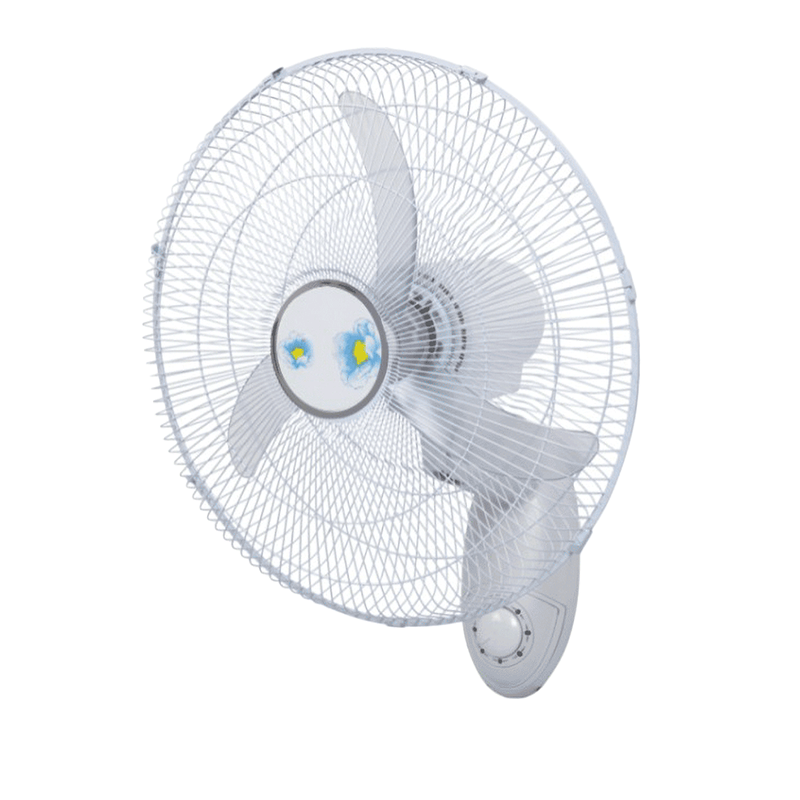
A wall electric fan is a motorized fan unit that mounts flush against — or extends slightly from — a wall surface, either in a vertical or horizontal orientation. Unlike tower fans or pedestal fans that stand on the floor, a wall fan is secured at a chosen height using a bracket system, allowing it to project airflow downward or across a room at an angle that naturally covers a wider area than a ground-level unit.
Inside the unit, an electric motor spins a set of blades — typically two to five blades made from metal or ABS plastic — inside a protective grille cage. The motor converts electrical energy into rotational motion, which accelerates air through the blade assembly and projects it outward. Most wall fans include an oscillation mechanism that sweeps the fan head left and right across an arc of 60° to 120°, distributing airflow across a larger zone rather than blowing in a single fixed direction.
Higher-end models use copper-wound motors with advanced winding technology that maximizes energy conversion efficiency, minimizes heat generation inside the motor, and reduces operational noise — often to below 45 dB at medium speed, which is quieter than a typical conversation.
Wall fans deliver a combination of practical and aesthetic benefits that make them stand out from other fan types. Here is a closer look at the most important advantages:
Because the fan is mounted on the wall, it occupies zero floor space. This matters enormously in compact apartments, narrow corridors, retail counters, and industrial workstations where every square meter of usable space counts. A pedestal fan with a 400 mm blade diameter typically requires a floor footprint of roughly 30 × 30 cm plus a safety clearance zone; a wall-mounted equivalent reclaims that area entirely.
Mounting a fan at 1.8–2.5 m above the floor directs airflow over furniture, workbenches, and obstacles that would block a ground-level fan. In a room of 20 m², a single wall fan positioned in a corner at ceiling height can create comfortable air circulation across the entire space when set to oscillate, where a floor fan in the same corner might only cool the immediate area in front of it.
Wall fans designed for residential or office use typically operate at 35–50 dB depending on speed setting — comparable to a quiet library (30 dB) at the low end and a normal office environment (50 dB) at the high end. This makes them practical for bedrooms, study rooms, and meeting rooms where a noisy fan would be disruptive.
A standard wall electric fan consumes between 35 W and 75 W depending on blade size and motor rating — a fraction of the 900–1,500 W drawn by a window air conditioner. Running a wall fan for 8 hours per day uses roughly 0.28–0.6 kWh, making it one of the most cost-effective cooling solutions available for moderate climates or as a supplement to air conditioning.
Modern wall fans are designed with clean lines and a compact profile that blends into contemporary interiors. Many models are available in multiple color options — classic white, matte black, metallic silver, and other finishes — allowing them to complement rather than clash with room décor. Their sleek appearance makes them suitable not just for utility spaces but also for living rooms, hotel rooms, and retail environments where visual presentation matters.
Wall fans are versatile, but they genuinely excel in certain environments. The table below summarizes typical use cases and the specific benefits they deliver in each setting:
| Setting | Primary Benefit | Recommended Fan Type |
|---|---|---|
| Bedroom / Living Room | Silent operation, space saving, aesthetic design | Oscillating wall fan with remote control |
| Office / Meeting Room | Low noise, wide coverage, no floor obstruction | Medium-diameter oscillating wall fan |
| Factory / Warehouse | High airflow, durable metal blades, box-type construction | Industrial box-type wall fan (400–500 mm blade) |
| Hotel / Hospitality | Elegant appearance, quiet, multiple color options | Slim-profile decorative wall fan |
| Hospital / Clinic | Easy to clean grille, minimal floor contact, hygienic | Wall fan with removable grille and smooth surfaces |
| Retail / Restaurant | Space efficiency, stylish look, customer comfort | Oscillating wall fan with timer function |
Understanding how wall fans compare with common alternatives helps clarify when they are the right choice:
| Feature | Wall Fan | Pedestal Fan | Ceiling Fan | Tower Fan |
|---|---|---|---|---|
| Floor Space Used | None | Medium | None | Small |
| Installation Required | Yes (wall bracket) | No | Yes (ceiling mount + wiring) | No |
| Airflow Height | Adjustable (1.8–2.5 m) | Low–Medium (0.5–1.5 m) | High (ceiling level) | Low–Medium |
| Portability | Low | High | None | High |
| Typical Noise Level | 35–50 dB | 40–60 dB | 30–45 dB | 35–55 dB |
| Suitable for Industrial Use | Yes (box type) | Partially | Partially | No |
The ceiling fan is the only type that matches the wall fan's zero-floor-space footprint, but ceiling installation is far more complex, requires electrical work inside the ceiling, and is impossible in rooms with low ceilings or exposed concrete slabs. A wall fan, by contrast, can be mounted with basic tools in under 30 minutes using a standard wall bracket and power outlet.
Not all wall fans are built equally. The durability and performance of a unit over years of use depend heavily on the quality of its core components. Here is what to evaluate:
The motor is the most critical component. High-efficiency copper-wound motors outperform aluminum-wound alternatives in terms of heat dissipation, energy conversion rate, and operational lifespan. A quality motor in a wall fan should be rated for continuous operation and carry thermal protection against overheating. Well-manufactured motors can deliver a service life of over 3,000 operating hours before any significant performance degradation.
Residential wall fans typically use ABS plastic blades, which are lightweight, corrosion-resistant, and sufficient for home airflow volumes. Industrial or warehouse applications benefit from long-lasting metal blades, which withstand higher RPM, heavier continuous use, and physical contact risks in working environments without warping or cracking.
The outer grille serves both a safety function and a structural one. A well-designed grille allows maximum airflow with minimum restriction — wire spacing of 10–15 mm strikes a good balance between safety and airflow efficiency. The housing should be impact-resistant and UV-stabilized if the fan will be installed in areas with sun exposure, such as covered patios or sunlit factory floors.
The oscillation motor and gear assembly should operate smoothly without grinding noises or jerky movement. Units with sealed gear assemblies resist dust ingress and maintain consistent oscillation angles across thousands of cycles.
Modern wall fans come with a range of features that significantly improve day-to-day usability. Prioritizing the right features for your specific setting will make a noticeable difference in comfort and convenience:
One of the most common hesitations about wall fans is the perceived complexity of installation. In practice, most modern wall fans are designed for straightforward DIY mounting. The typical process involves:
The entire process typically takes 20–40 minutes for a single person with basic tools. No electrical wiring work is required as long as a standard wall outlet is within reach of the power cord, which is usually 1.5–2 m long on residential models.
Beyond residential models, a distinct category of wall fan — the box-type industrial wall fan — is purpose-built for factories, warehouses, logistics centers, and large open-plan office buildings. These units differ from residential fans in several important ways:
Manufacturers with annual production capacity of 3 million electric fan and heater units — including a full range of residential and industrial wall fans exported to Europe, North America, Japan, South Korea, and the Middle East — demonstrate the scale and quality control systems needed to consistently deliver products that perform reliably across diverse climate conditions and application environments.
Wall fans are not without limitations. Being aware of these helps you make an informed purchase and manage expectations:
A wall fan that is cleaned and serviced regularly will maintain its airflow performance and low noise characteristics far longer than one that is neglected. Follow these straightforward maintenance steps:
For anyone who values space efficiency, consistent airflow coverage, low operating costs, and a clean aesthetic, wall electric fans are absolutely worth it. They excel in bedrooms, living rooms, offices, hotel rooms, hospitals, and industrial spaces alike — each benefiting from the unique combination of elevated mounting, quiet operation, and reduced floor clutter. The installation commitment is minimal, and with proper maintenance, a quality wall fan will deliver years of reliable performance through multiple cooling seasons.
The key is choosing a fan with a well-engineered motor, appropriate blade size for the space, and the control features that suit your daily routine. Whether you opt for a slim residential model in a classic color or a heavy-duty box-type unit for a commercial workspace, the wall-mounted format consistently outperforms floor-standing alternatives in terms of coverage efficiency, safety, and long-term convenience.

@2020. CIXI XIATIAN ELECTRICAL APPLIANCES CO.,LTD. All rights reserved. Wholesale High-End Electric Fans Manufacturers

 English
 한국어
한국어