

Picture this: you smoke a cigarette near the window, close it, and come back an hour later. The visible haze is gone, but the room still smells like an ashtray, and the air feels heavy. That lingering mix of fine particles, gases, and odor is why choosing an air filter for smoking indoors is different from picking a simple dust filter.
Here is the conclusion up front. An air filter for smoking indoors needs three things working together: a true HEPA layer to capture fine particles, a thick activated carbon section to absorb gases and odors, and enough airflow to exchange the whole room volume 4 to 5 times per hour. If any of those three is weak, the device will disappoint you. The rest of this article explains why each one matters, how to size the unit, and what to check before buying.
Content
Cigarette smoke is not a single pollutant. It is a mixed stream of solid particles, sticky tars, and gaseous compounds. The solid fraction includes fine particles in the PM2.5 range, particles small enough to reach deep into the lungs. The gaseous fraction includes formaldehyde, benzene, and nicotine vapor, which behave nothing like dust.
This difference matters at the point of purchase. A filter that is excellent at catching dust can still let smoke odor pass right through, because gas molecules are thousands of times smaller than solid particles. That is why you should look at the filter stack as a whole, not just at the HEPA label on the front.
| Component | Form and size | How it behaves | Removal method |
|---|---|---|---|
| Fine particles (PM2.5) | Solid, about 0.1 to 2.5 micrometres | Stays suspended for hours, carries the smoky smell | True HEPA or electrostatic media |
| Tar and visible smoke | Solid, about 2.5 to 10 micrometres | Settles on walls, curtains, and furniture | Pre-filter plus HEPA |
| Volatile organic compounds | Gas molecules, far smaller than particles | Spreads quickly, creates the long-lasting chemical odor | Activated carbon or other adsorbents |
| Odor residue | Gas molecules trapped in fabrics | Re-enters the air when the room warms up | Carbon adsorption plus ventilation |
The practical result is simple. You need a filter that removes both sizes of solid particles and a large amount of odor-causing gas. The chart below shows how much activated carbon different filter designs usually carry, because carbon weight is one of the best indicators of odor control.
The chart compares typical activated carbon weights found in consumer air purifiers. HEPA-only units carry no carbon at all and will do almost nothing for smoke odor. Filters with a thin carbon sheet, often called carbon pre-filters, usually contain only 150 to 250 grams, enough for light use but quick to saturate. Smoke-focused models carry 400 to 600 grams and absorb odor for months under normal home smoking. Heavy-duty units for dedicated smoking rooms exceed 1000 grams and behave more like professional gas filters. For a room where someone smokes indoors daily, aim for at least 400 to 500 grams of carbon as a starting point.
The most reliable setup for indoor smoke is a three-layer stack. The first layer is a washable pre-filter that catches tars and larger particles before they clog the main filter. The second layer is a true HEPA filter that captures fine smoke particles. The third layer is a thick bed of activated carbon that adsorbs gases and odor molecules.
In this stack, the carbon does the part most people forget. When reviewers say that a purifier only removes particles or does not touch the smell, they are usually describing a unit with little or no carbon. The radar chart below shows how four common filter technologies compare across five criteria that matter for smoking indoors.
The radar chart compares four technologies used in air cleaners: a true HEPA filter combined with an activated carbon layer, a carbon-only filter, an ionizer, and a washable filter. The HEPA plus carbon combination scores highest overall because it handles both fine solid particles and smoke gases. Carbon-only units are good with odor but mediocre at capturing ultrafine smoke particles. Ionizers are cheap to run, but their particle capture is inconsistent and they do almost nothing for gas odor. Washable filters reduce recurring cost, yet they cannot adsorb the molecular compounds that make smoke smell. For smoking indoors, the HEPA plus carbon combination is the only option that covers every part of the problem at the same time.
A filter can capture smoke perfectly, but it only works on the air that actually reaches it. That is why the clean air delivery rate, or CADR, matters as much as filter quality. For smoke, test standards and practical experience recommend a unit that can deliver at least 5 air changes per hour, roughly double what is needed for ordinary dust control.
You can estimate the minimum CADR with a simple formula. Multiply the floor area by the ceiling height to get the room volume, then multiply by 5 air changes per hour. A 20 square metre bedroom with a 2.5 metre ceiling needs about 250 cubic metres per hour. The table below shows common room sizes and the ratings that make sense for them.
| Room size | Ceiling height | Air changes per hour | Minimum CADR in cubic metres per hour |
|---|---|---|---|
| Small bedroom, 12 square metres | 2.4 to 2.6 metres | 5 | 150 to 160 |
| Living room, 20 square metres | 2.5 to 2.8 metres | 5 | 250 to 280 |
| Open plan area, 35 square metres | 2.6 to 3.0 metres | 4 | 390 to 420 |
| Dedicated smoking room, 10 square metres | 2.4 to 2.5 metres | 6 | 150 to 160 |
Running a purifier at maximum speed all day is noisy and wasteful, so choose a unit that can reach the needed CADR on a mid speed. The line chart below shows how the air change rate changes the speed of cleanup after a cigarette.
The line chart shows the concentration of fine smoke particles in a 20 square metre room after one cigarette, with the filter running at three different air change rates. At 2 air changes per hour, the particle level falls slowly and still sits above 40 micrograms per cubic metre after 40 minutes. At 4 air changes per hour, the level drops below 20 micrograms in about 30 minutes. At 6 air changes per hour, which is what a dedicated smoking area should aim for, the concentration falls below 10 micrograms within 20 minutes. The shape of the curve also shows why a high CADR matters more than a clever filter at the beginning of the cleanup. A small unit running on low speed will keep the room hazy for the whole hour, while a correctly sized unit clears the air in less than half the time.
If you smoke one or two cigarettes a day in a compact bedroom, choose a small air purifier with a true HEPA filter and a carbon layer of at least 200 grams. The unit should still achieve 5 air changes per hour for that room, so measure the floor area first. A compact machine placed near the bed keeps nighttime air cleaner without turning the room into a wind tunnel.
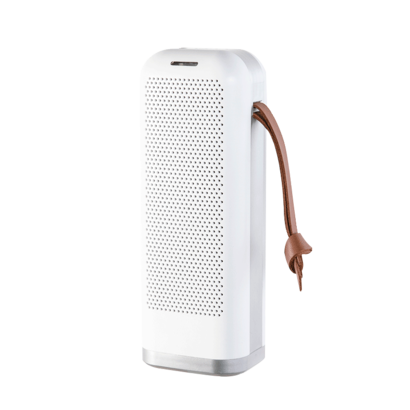
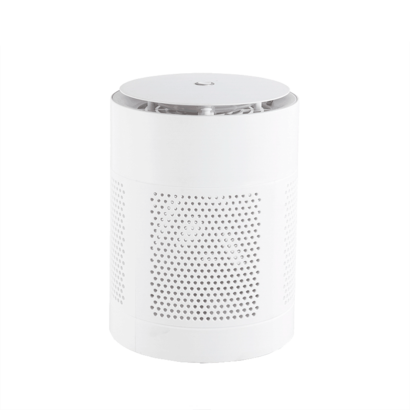
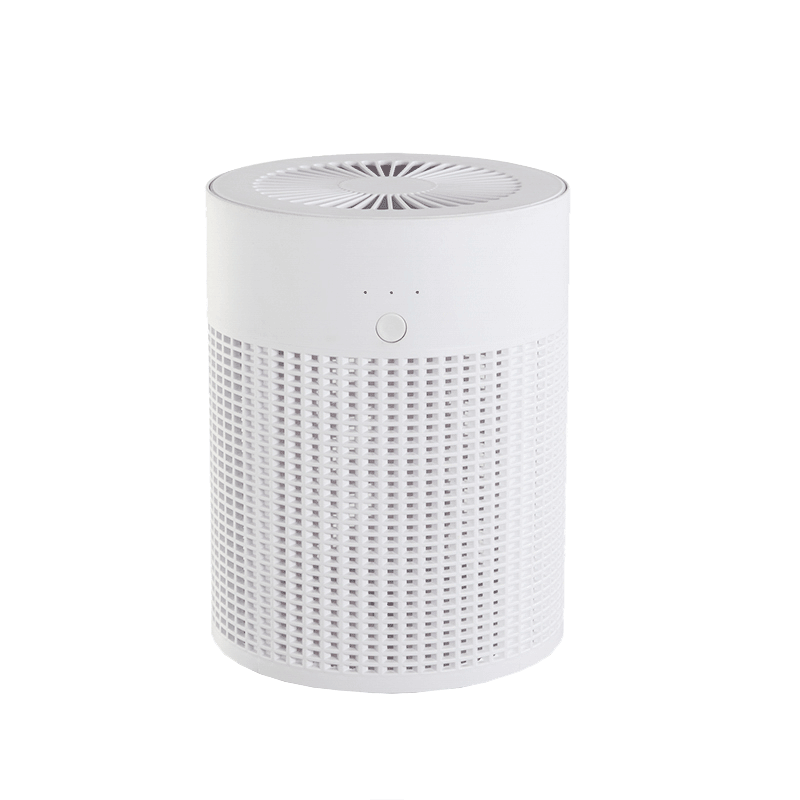 Compact Mini Air Purifier for Light SmokeThis portable unit suits a small bedroom where one or two cigarettes are smoked daily. Its compact size and filter setup align with the advice for a low-load room, keeping nighttime air cleaner without excessive airflow.View Product →
In a living room or home office where several cigarettes are smoked each day, the filter load is much higher. You need a unit with a stronger fan, a larger HEPA surface, and 400 grams or more of activated carbon. The CADR should be at least 250 cubic metres per hour for a typical 20 square metre room, and the unit should run continuously while people are present.
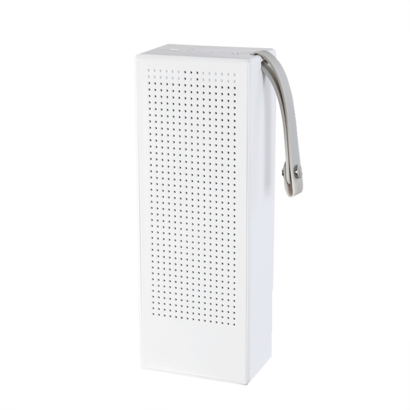
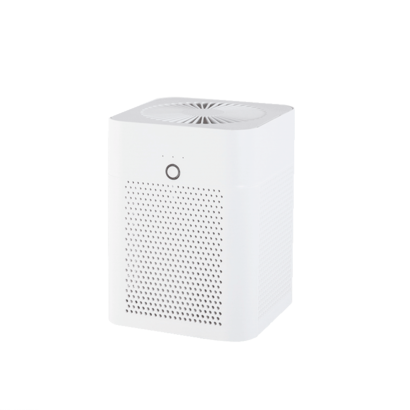
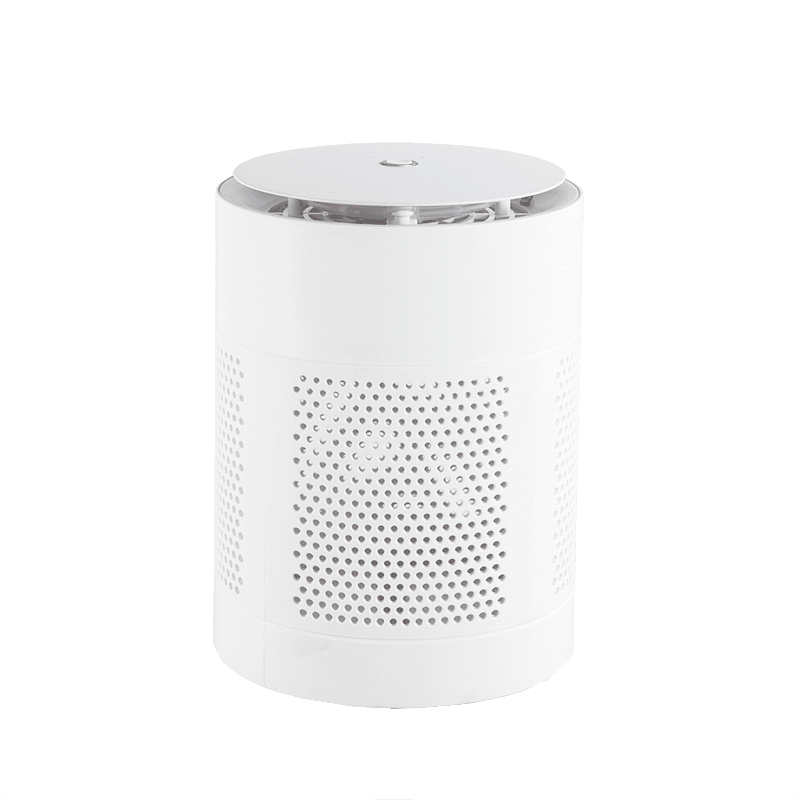 Portable Home Mini Air Purifier for Heavier UsePositioned where heavier daily smoking demands stronger filtration, this mini purifier offers a portable option for living areas. It may serve as a practical choice when space is limited but consistent air cleaning is still needed.View Product →
An air washer pulls air through a wet disc stack and traps particles in the water, rather than in a dry filter. In a smoking household, this approach has a specific advantage: tar and larger smoke particles end up in the water tank, which you can simply rinse out. The cleaning routine is straightforward, and there is no clogged HEPA to throw away every few months for those large particles.
Still, water alone does not remove most gas-phase odor. An air washer works best when it includes a carbon section or is paired with a HEPA purifier. If the main problem in your home is heavy smoke and the smell that sticks to fabrics, treat the air washer as a supplement that handles the heavy particles.
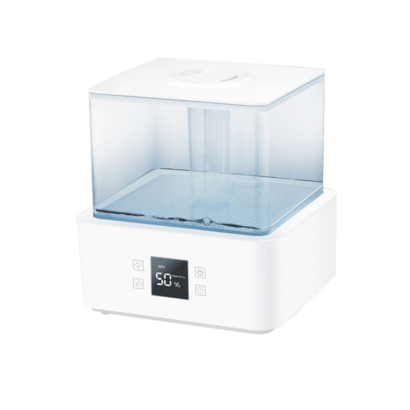
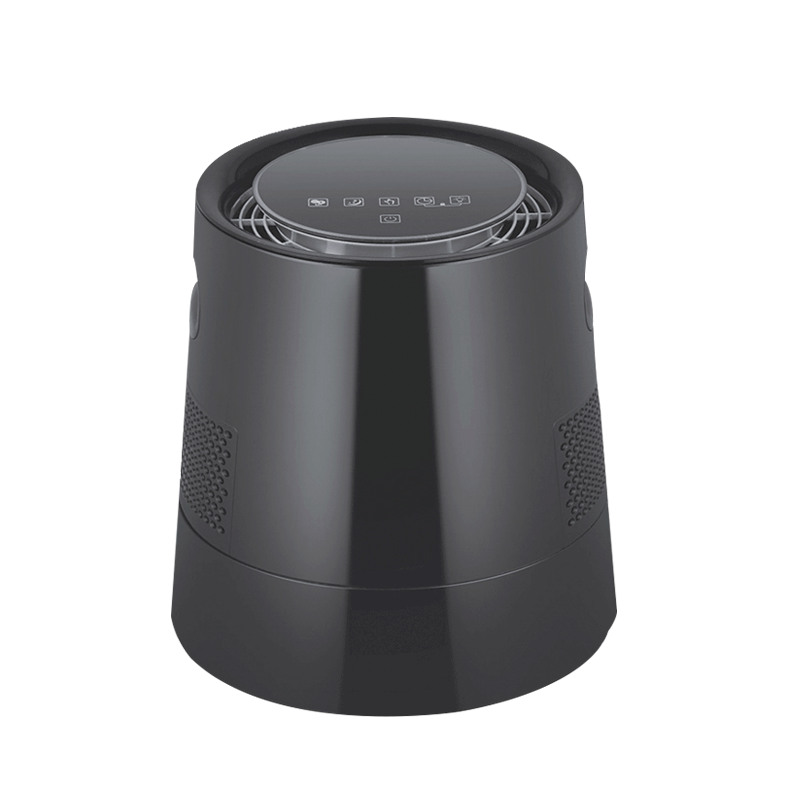 Household Ion Air Washer for Smoke ParticlesThis ion-based air washer captures larger smoke and tar particles in water, easing filter maintenance. It works best when paired with a carbon or HEPA unit, since water alone does not remove most gas-phase odors.View Product →
Smoke is brutal on filters. The tars and fine particles clog HEPA media faster than ordinary dust does, and the carbon saturates much sooner than the 12 months printed on many boxes. Plan your maintenance interval around your smoking frequency, not the manufacturer's generic schedule.
The horizontal bars show realistic service intervals in a home where someone smokes indoors regularly. A washable pre-filter should be cleaned every one to two months, because trapped tar turns it brown and reduces airflow. A separate carbon module typically needs replacement every three to four months, which is the most frequent and most forgotten expense. The HEPA filter can last six to twelve months if the pre-filter is doing its job, but heavy smoking can shorten that to six months. An air washer requires weekly water changes and a disc rinse, yet its large-particle workload is exactly what keeps the HEPA alive longer. When you add up the consumables, the yearly running cost can equal 40 to 60 percent of the machine price, so compare replacement part prices before committing to a model.
This is also where buying from an established manufacturer matters. Filter availability, delivery lead time, and consistent quality directly affect your long-term satisfaction. Importers and private-label buyers often raise these questions in the manufacturer's FAQ before placing the first order, because a purifier without a replaceable carbon supply loses its usefulness in smoke conditions.
Use this list when comparing air filters for smoking indoors. Each point prevents a specific disappointment.
For a broader look at how air purifiers keep a home clean, our guide on choosing the best air purifier for your home walks through the same issues in more detail.
The takeaway is consistent: particles, gases, and airflow. A true HEPA filter handles the particles, a generous activated carbon layer handles the gas odor, and a fan with enough capacity moves the cleaned air through the room quickly. If you are buying for a home, match the unit to the smoking pattern and the room size, then budget for filter replacements. If you are buying as an importer or retailer, apply the same logic to the supplier selection, because a good filter design only works when the replacement parts remain available at a reasonable cost.

@2020. CIXI XIATIAN ELECTRICAL APPLIANCES CO.,LTD. All rights reserved. Wholesale High-End Electric Fans Manufacturers

 English
 한국어
한국어