

You finished painting a bedroom a day ago, left the window open all night, and the odor still hits you the moment you walk in. That strong, sweet chemical smell is not just unpleasant; it is a sign that volatile organic compounds, or VOCs, are still being released from the paint film. These gases do not vanish after a few hours of airing out. Some keep off-gassing for days, and in humid or poorly ventilated rooms, the smell can linger for weeks.
Here is the short answer: the only type of air purifier that genuinely removes paint smell combines a particle filter with a substantial activated carbon layer. HEPA alone removes dust and particulate matter, but it does nothing to gas molecules. Activated carbon adsorbs those gas molecules and holds them inside a porous structure. If you want measurable relief after painting, you need to prioritize carbon weight, clean air delivery rate, and correct placement.
That conclusion shapes everything below. I have spent years working in the air treatment appliance industry on air purifier development, production, and OEM projects, so the advice here is based on how these machines are actually designed, tested, and used, not on marketing claims.
Content
Paint odor comes from several VOCs: benzene, toluene, xylene, ethylbenzene, and formaldehyde are among the most common. They are released at different rates. Some pour out during the first 24 to 72 hours, while lower-molecular-weight compounds continue curing and outgassing for much longer. This is why the smell can seem to fade, then return when temperature or humidity rises.
Gas molecules are extremely small. A typical HEPA filter is designed to capture particles down to 0.3 microns, but individual VOC molecules are several orders of magnitude smaller. Activated carbon solves this through physical adsorption: the large internal surface area inside each carbon pellet traps gas molecules and holds them. The key word is "lots." A thin carbon-impregnated cloth or a lightly coated foam will saturate quickly and stop working. Many low-cost purifiers ship with only a token amount of carbon, so once it is saturated, the paint smell passes straight through.
The chart below compares the main air cleaning technologies against paint VOCs. The differences are dramatic, and they explain why so many purifiers fail at odor removal.
Scores represent relative effectiveness at removing the VOC gases responsible for paint smell. Activated carbon ranks highest because it adsorbs gas molecules directly. Photocatalytic oxidation can help under specific airflow and humidity conditions but works slowly. HEPA filters capture particles, not vapors, which is why they score so low here. Negative ions and UV light offer very limited odor reduction.
| Filter technology | Particles and dust | Paint VOCs | Typical maintenance |
|---|---|---|---|
| HEPA | Removes over 99.97 percent of particles at 0.3 microns | Not effective | Replace every 12 to 18 months |
| Pelleted activated carbon | Not designed for particles | Effectively adsorbs VOCs | Replace every 3 to 6 months |
| Photocatalytic oxidation | Limited | Partially breaks down VOCs | Catalyst degrades over time |
| Negative ions | Some particle agglomeration | Very limited | Minimal replacement parts |
Consumers usually focus on the brand or the outer design. For paint fumes, the internal specifications matter far more. These five numbers will tell you whether a machine can actually handle the job.
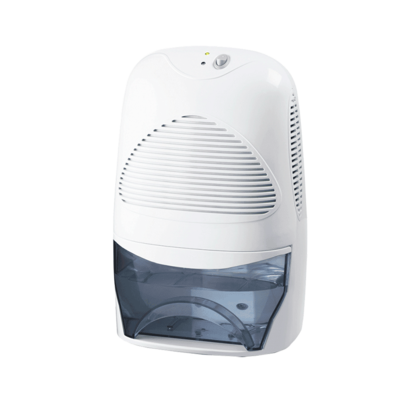
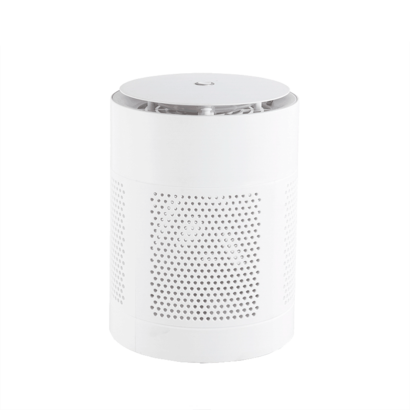
For a typical bedroom that will be occupied again within a day, a compact AP-01 air purifier with a well-balanced carbon layer can handle the job without taking up too much floor space.
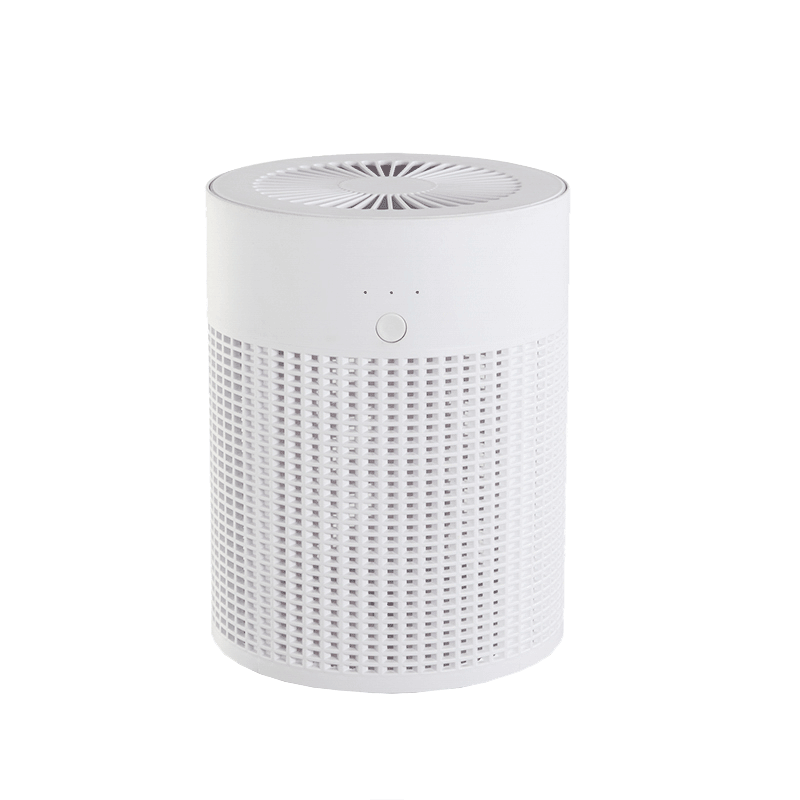 Portable Mini Air Purifier AP-01A Suppliers, FactoryCixi Xiatian Electrical Appliances CO., LTD is China Portable Mini Air Purifier AP-01A suppliers and factory, power 5W CADR 25...View Product →
The relationship between carbon weight and room size is direct: more carbon means faster gas removal and a longer time before the filter saturates. The chart gives practical estimates for closed rooms with normal ceiling height.
Carbon weight directly affects how much paint VOC a purifier can absorb before the filter becomes saturated. A 0.5 pound carbon bed suits a compact bedroom but may need replacement after one full painting project. A 1.5 to 3 pound carbon load roughly doubles the usable area and stretches the service interval. A 5 pound carbon bed is better for open living spaces and attached kitchens. These are practical estimates, since actual performance also depends on fan airflow and room tightness.
Even a powerful purifier will underperform if it is pushed into a corner behind furniture. Placement and runtime are just as important as the filter itself.
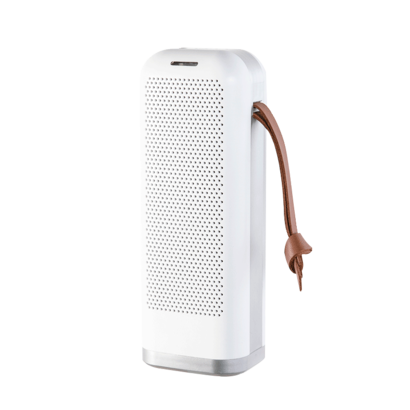
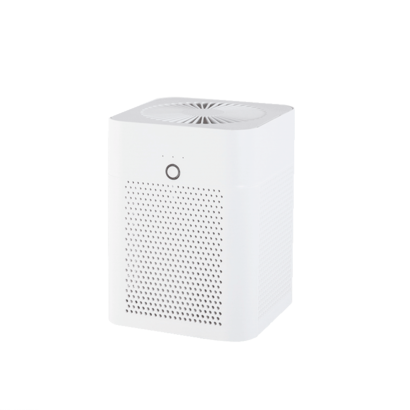
If the painted room is large, especially an open plan living area or a staircase hall, choose a machine with more airflow and a heavier carbon cartridge such as the MAP-01 air purifier. A bigger fan moves more cubic meters of air per hour, which gives the carbon layer more chances to capture the VOCs before they reach you.
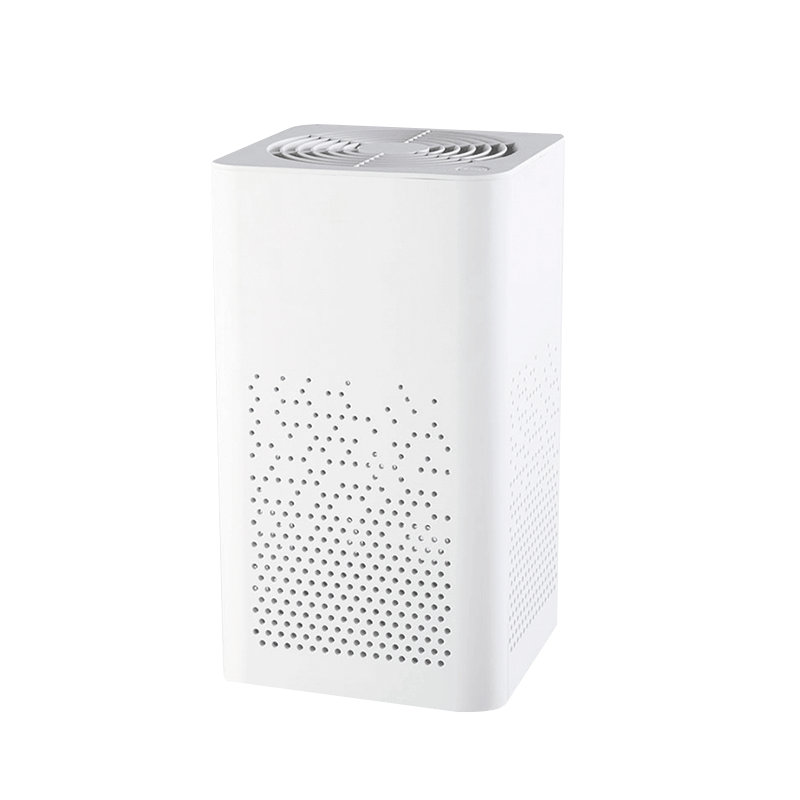 Home Air purifier MAP-01 Suppliers, FactoryCixi Xiatian Electrical Appliances CO., LTD is China Home Air purifier MAP-01 suppliers and factory, power 9.5W frequency DC 1...View Product →
The chart below shows the difference between running a strong carbon-based purifier and doing nothing beyond normal ventilation.
This curve represents typical VOC decay in a closed bedroom during the first 24 hours after painting. With a carbon-based purifier running on high, the concentration drops by roughly half within four hours and approaches a barely noticeable level within a day. Without a purifier, natural ventilation and surface curing reduce VOCs much more slowly. The gap explains why people often say the paint smell disappears faster when a machine is working. Keep the purifier running for at least 24 hours, and continue on a lower speed for several more days.
A good purifier is a powerful tool, but it has limits. If you painted an entire house or used oil-based enamel and epoxy coatings, the VOC load may overwhelm even a high-capacity carbon filter. In these cases, combining mechanical ventilation with a purifier is essential.
Children, pregnant women, and people with asthma or chemical sensitivities should stay out of freshly painted rooms until the odor is faint. An air purifier can speed up recovery, but it cannot eliminate every molecule from a strong solvent-based coating. If paint was applied with a sprayer, very fine particles may also settle on surfaces; those need damp wiping, not just air cleaning. You can learn more about how air purifiers can help you breathe easier in everyday conditions, but for heavy industrial coatings, ventilation remains the primary solution.
Another common mistake is stopping the purifier as soon as the smell fades. VOCs often rebound when the room warms up or when the heating system starts. Plan on running the machine for at least one full week after a significant paint job.
As an experienced OEM air purification manufacturer, we see two repeated mistakes among importers and private label buyers. The first is choosing a general-purpose purifier and hoping it removes heavy VOCs. The second is ignoring the replacement carbon filter cost, which can exceed the unit price within two years.
For renovation, painting, and studio applications, we recommend specifying a carbon filter that accounts for at least 20 to 30 percent of the total filter volume. We also tell customers to run the purifier at maximum fan speed for a full day before judging performance, because carbon adsorption is not instant. These rules come from real prototype testing for buyers in Europe, Asia, and the Middle East.
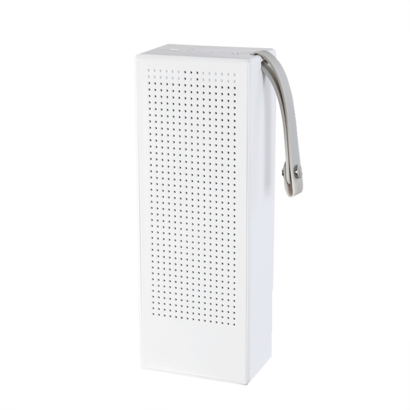
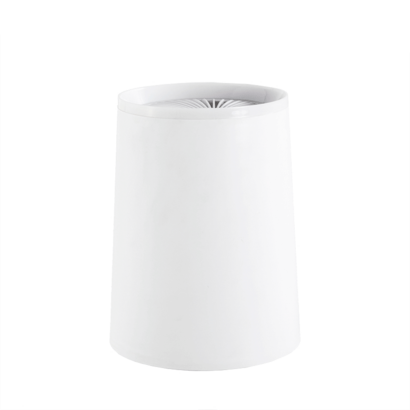
For a small studio or a car interior where no wall outlet is close, the RAP-02 rechargeable air purifier can sit on a workbench or seat and keep operating during a break. Battery-powered units cannot match the airflow of a plugged-in machine, but they help a lot in tight spaces where extension cords are inconvenient.
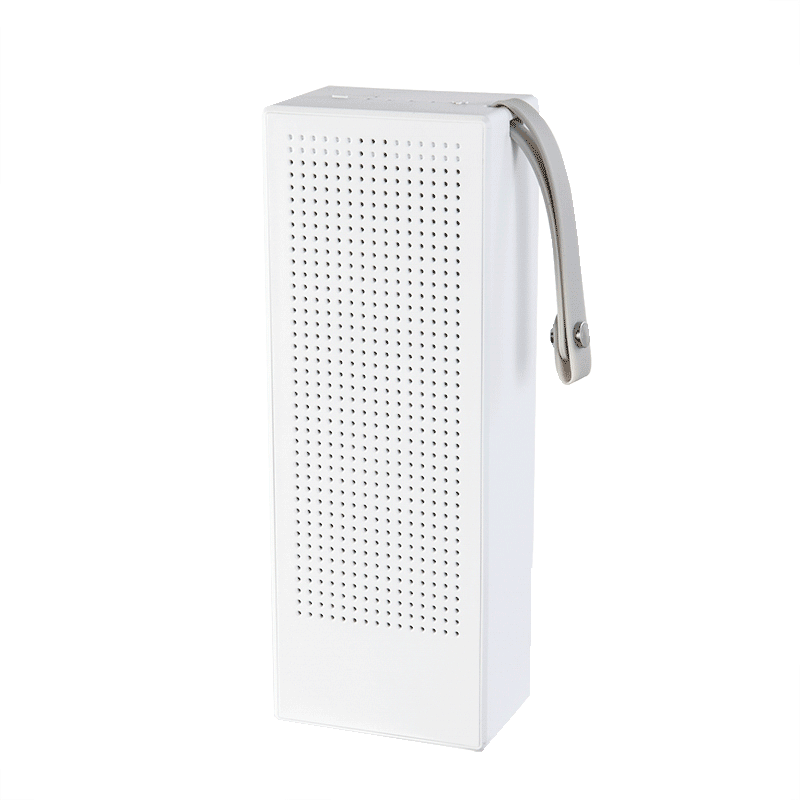 Portable Rechargeable Air Purifier RAP-02 Suppliers, FactoryCixi Xiatian Electrical Appliances CO., LTD is China Portable Rechargeable Air Purifier RAP-02 suppliers and factory, power 3.5W ...View Product →
Before placing a bulk order, check how an air purifier pulls air through its filter stack and compare that airflow path with the carbon volume in the proposed model. A compact unit with a tiny carbon cartridge will not satisfy a customer who wants quick paint fume removal.
The radar chart below summarizes how a VOC-focused purifier differs from an entry-level model across six practical criteria.
This radar chart shows six criteria that matter when selecting an air purifier for paint fumes. A VOC-focused unit scores far higher on carbon load and airflow, which are the two factors that drive gas removal. Entry-level models often look acceptable on noise and energy efficiency because they run smaller fans and lighter filters. Filter life and maintenance cost also favor the larger unit, since a deeper carbon bed does not need replacement as often. This profile is useful for buyers who want to compare specifications quickly before requesting a sample.
If your goal is to remove paint smell, buy an air purifier with a generous pelleted activated carbon filter, not just a HEPA stage. Check the carbon weight, choose a model sized for a room slightly larger than yours, run it on high for the first day, and keep it running for at least a week after painting.
Use ventilation as a partner, not a replacement. Fresh air removes a portion of VOCs immediately, while carbon adsorption cleans the air that stays in the room. With the right machine and realistic expectations, you can make a freshly painted room noticeably more comfortable in less than 24 hours.

@2020. CIXI XIATIAN ELECTRICAL APPLIANCES CO.,LTD. All rights reserved. Wholesale High-End Electric Fans Manufacturers

 English
 한국어
한국어