

You come home, open the door, and the stale tobacco smell hits you immediately. The smoke from last night's gathering has settled into the upholstery, the curtains, and the walls. Opening a window clears the air temporarily, but the odor keeps returning because the particles and gases are still in the room. An air purifier for tobacco smoke solves this properly. The challenge is that a generic air purifier is usually not enough; the machine must be engineered to handle both smoke particles and odorous gases.
Content
Tobacco smoke is not a single pollutant. It contains roughly 30 percent particulate matter, such as tar, ash, and PM2.5 particles, and about 70 percent gases and volatile organic compounds, including formaldehyde, nicotine vapor, and acetaldehyde. A standard air purifier that only uses a HEPA filter captures the particles but lets most of the gas phase pass through. That is why the smell lingers even when the visible haze disappears. To remove both phases, you need a HEPA filter for particles and a substantial activated carbon bed for gases.
The carbon weight matters more than most consumers realize. A thin carbon-coated sheet will saturate quickly, while a deep bed of granular carbon can adsorb odor for months. This is the most common specification people overlook when they buy an air purifier for smoke.
The chart above compares filter layers by their relative contribution to removing tobacco smoke from a room. Deep activated carbon ranks the highest because smoke odor is mostly a gas-phase problem. True HEPA filtration is close behind because it removes the fine particles that carry tar and other harmful compounds. A washable pre-filter protects the main filters and adds moderate value by capturing large dust and ash particles. Ionizers and UV-C lamps contribute little by themselves, which is why air purifiers built on those technologies alone tend to disappoint smoke users. These numbers are relative performance ratings, not absolute efficiency measurements, but they reflect how experienced product engineers prioritize filter design for smoke.
Instead of trusting marketing terms, compare these three numbers when evaluating an air purifier for tobacco smoke.
| Specification | Useful threshold for smoke | Why it matters |
|---|---|---|
| True HEPA filter | H13 grade, captures 99.97 percent of particles at 0.3 microns | Removes tar, ash, and PM2.5 from the air stream |
| Activated carbon mass | 1 kg or more for a living room | Adsorbs VOCs and odor; more mass lasts longer before saturation |
| Smoke CADR | 200 to 400 CFM depending on room size | Higher CADR means faster room cleanup and fewer lingering odors |
CADR, or Clean Air Delivery Rate, is the industry standard for measuring how many cubic feet of air a purifier cleans per minute. For tobacco smoke, the Association of Home Appliance Manufacturers guidance suggests a CADR at least two-thirds of the room area in square feet. For instance, a 300-square-foot living room needs about 200 CFM. Add more capacity if the room has high ceilings or if smoking happens regularly throughout the day.
Before you buy, measure the room where the purifier will run. The column chart below shows the minimum smoke-rated CADR for common room sizes, assuming 8-foot ceilings and 5 air changes per hour, which is the level most public health guidance suggests for smoke-affected spaces.
The chart above shows recommended smoke CADR values for rooms from 150 to 750 square feet. A 150-square-foot bedroom only needs about 100 CFM, which many compact air purifiers can deliver. A 300-square-foot living room needs roughly 200 CFM, and a 450-square-foot open-plan area needs 300 CFM or more. Buyers who choose a unit with a smaller CADR will see slow cleanup and longer-lasting odor. The relationship is linear: double the room area, and you need double the airflow. This is why a mini or portable purifier, often rated under 100 CFM, is not the right solution for a large living space.
The speed of cleanup depends on how many air changes per hour the purifier can achieve in a specific room. The line chart below models particle concentration decay over one hour in a 300-square-foot room with 8-foot ceilings. One unit delivers 200 CFM, or 5 air changes per hour, which is the recommended level for smoke. The other delivers only 100 CFM, or 2.5 air changes per hour.
The modeled decay curves show a significant gap between 200 CFM and 100 CFM units. With the higher-CADR unit, particle concentration drops below 10 percent of the starting level within about 28 minutes. The lower-CADR unit takes roughly 56 minutes to reach the same point, meaning the smoke feeling and odor persist for nearly twice as long. In real rooms, this difference is very noticeable to occupants: the space feels fresher much faster, which matters when smokers and non-smokers share a household. The model assumes perfect mixing, so in practice, running the purifier on a higher fan speed improves mixing and reduces the cleanup time further. These are calculated curves, not measured test results, but the physical relationship between airflow and cleanup speed is well established.
Two mainstream approaches dominate the market for smoke air purifiers. One uses True HEPA plus a deep activated carbon filter. The other relies on ionizers or UV-C and avoids filter replacement cost. The radar chart below scores both approaches across six practical criteria.
The radar chart compares two air purifier configurations across six practical criteria. The HEPA plus carbon configuration scores higher in particle removal, odor removal, and cleaning speed, which are the requirements that matter most for tobacco smoke. Ionizer-based units score better on filter lifetime and energy efficiency because they have no consumable filter media. However, their weaker particle and odor scores mean smoke lingers in the room longer, especially after a heavy smoking session. Some buyers choose an ionizing unit as a supplement rather than a standalone solution, and that is a reasonable strategy. For tobacco smoke, the HEPA plus carbon approach remains the balanced choice. Buyers who want low maintenance must accept a real trade-off in smoke performance.
Once the CADR and filter type are clear, the decision narrows down by usage pattern. For a bedroom where smoking happens occasionally, a compact unit around 150 to 200 CFM is quiet enough for sleep. For a living room or home office with daily smoking, choose a higher CADR and a larger carbon bed. For cars, workshops, or small enclosed spaces, a portable unit can help, but treat it as a supplement to the main purifier. In every case, look for a washable pre-filter because tobacco smoke turns filters dark quickly; a pre-filter reduces how often the main HEPA and carbon layers need replacement.
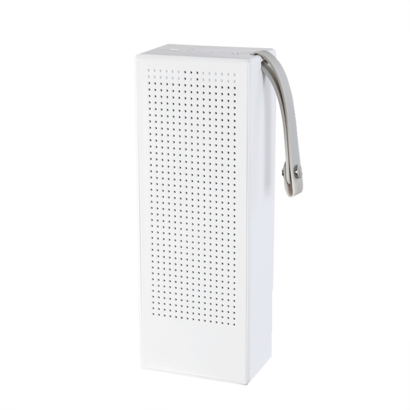
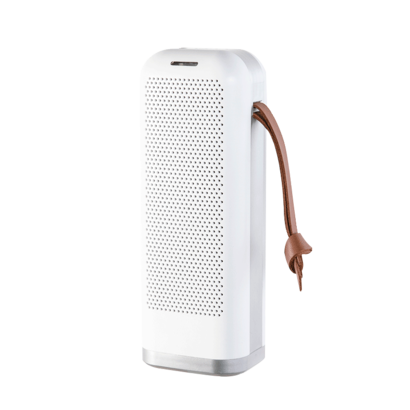
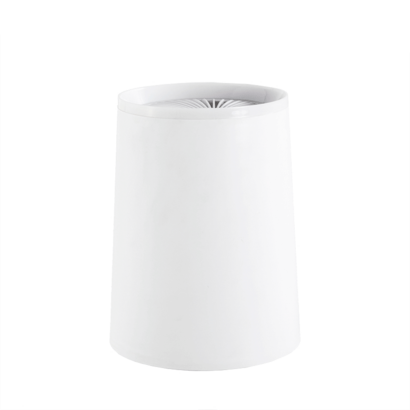
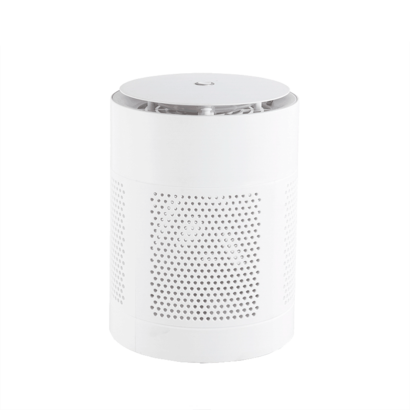
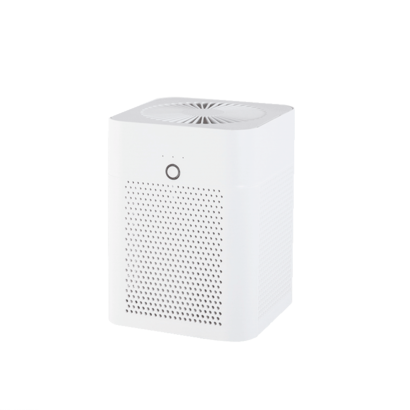
You can see this distinction in an actual product range. The compact air purifier AP-01 is designed for bedrooms and small offices where smoke exposure is occasional. The mid-size air purifier AP-02 adds more airflow and carbon capacity for daily smoking in living areas. And the portable rechargeable air purifier RAP-02 covers cars, workbenches, or tight corners where a larger unit cannot fit. Matching the unit size to the room area and smoking frequency is the single best way to avoid disappointment.
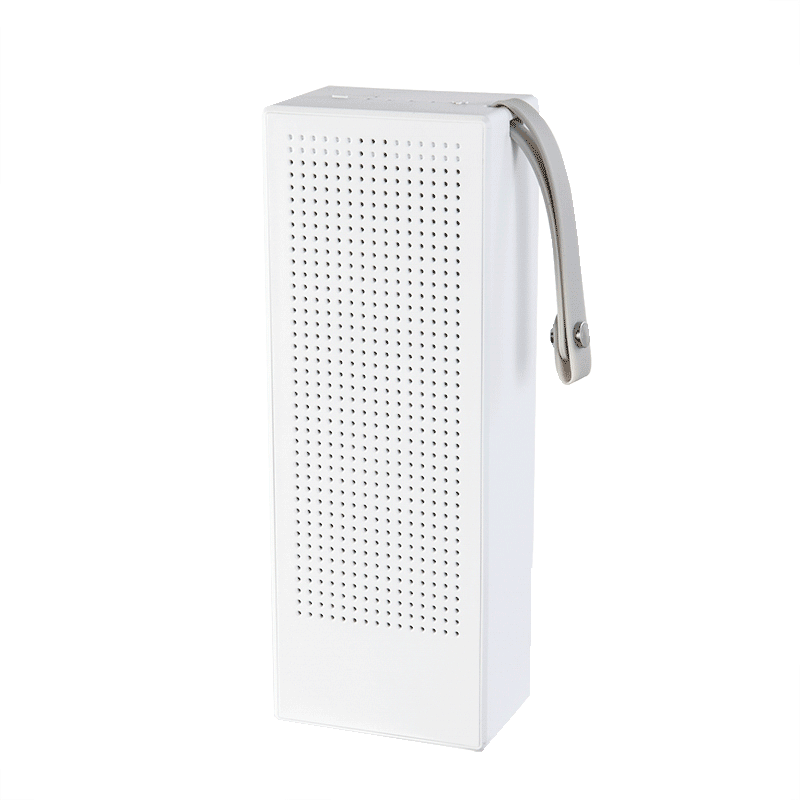 Portable Rechargeable Air Purifier RAP-02 Suppliers, FactoryCixi Xiatian Electrical Appliances CO., LTD is China Portable Rechargeable Air Purifier RAP-02 suppliers and factory, power 3.5W ...View Product →
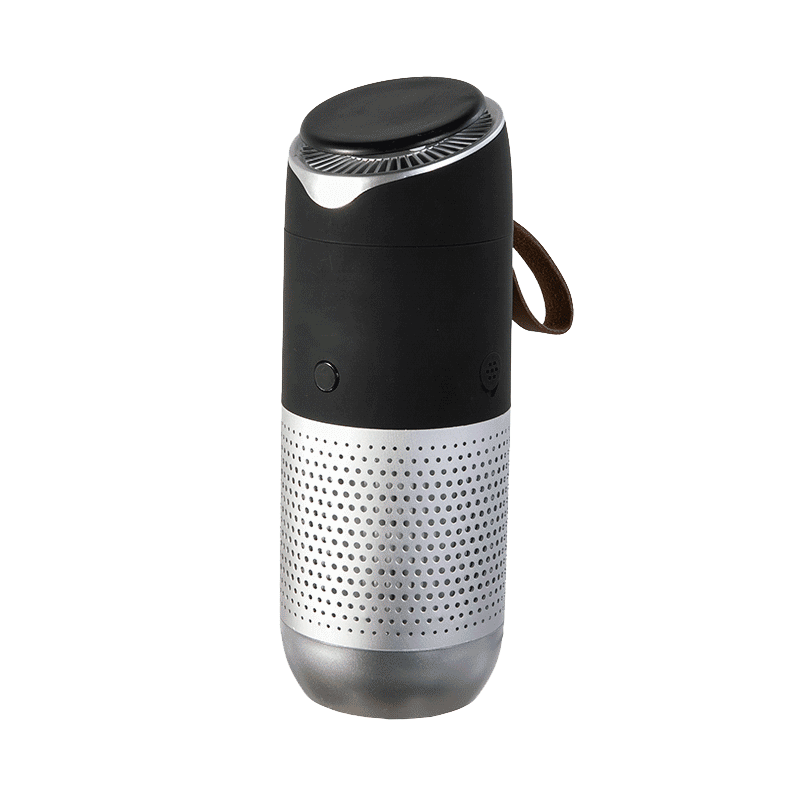 Air Car Purifier Smart From China Suppliers, FactoryCixi Xiatian Electrical Appliances CO., LTD is China Air Car Purifier Smart From China suppliers and factory, power 2.5W CADR ...View Product →
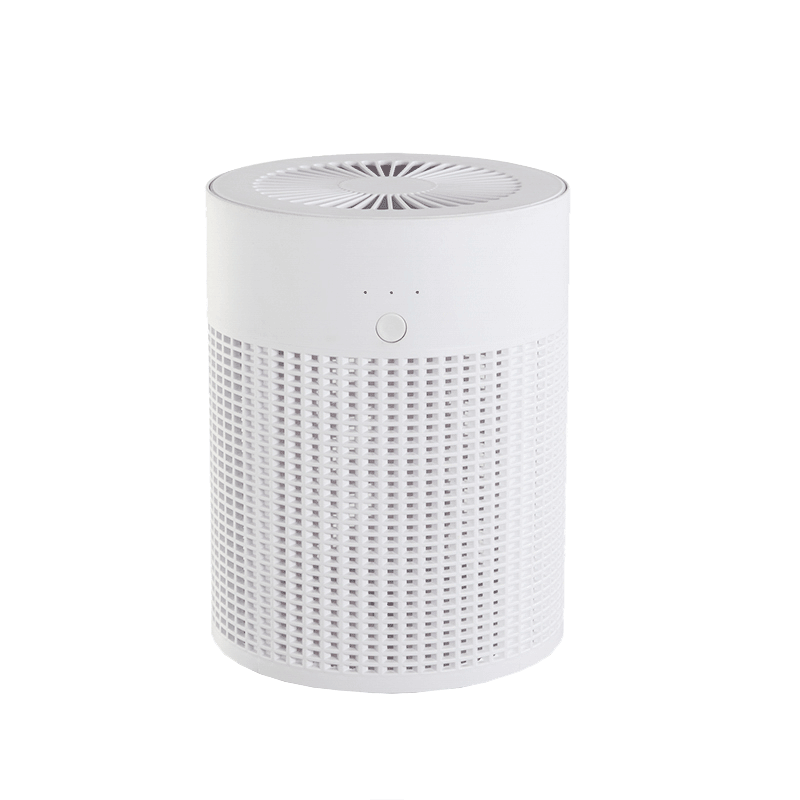 Portable Mini Air Purifier AP-01A Suppliers, FactoryCixi Xiatian Electrical Appliances CO., LTD is China Portable Mini Air Purifier AP-01A suppliers and factory, power 5W CADR 25...View Product →
A smoke air purifier works hard and consumes its filters faster than a unit used only for dust. HEPA filters in smoky homes often need replacement every six to nine months. Activated carbon beds saturate faster still, especially when the smoking volume is high. Before purchase, check the replacement filter price and whether the carbon is built into the HEPA, because combined filters cost more per change. Add filter cost to electricity consumption and you get the true annual cost. A unit that looks cheap at the checkout counter can become expensive over three years if replacement filters are costly. For a deeper look at how air purifiers handle continuous indoor use, see this overview of how air purifiers clean indoor air.
What should you expect from a well-built smoke purifier? A sealed filter path that prevents unfiltered air from bypassing the media, a motor rated for continuous operation, and a housing that does not rattle at higher fan speeds. These details are hard to evaluate from a spec sheet alone. That is why working with an experienced air purifier manufacturer matters for businesses buying in volume or under a private label. A factory with in-house tooling, injection molding, and assembly can control quality from the first part to the finished unit. It also responds faster when you need custom filter configurations or revised airflow ratings. For tobacco smoke products, the difference between a sealed filter path and a loose one shows up within weeks of use.
The right air purifier for tobacco smoke combines True HEPA, a deep activated carbon filter, and a smoke-appropriate CADR. Without all three, either particles remain, odor remains, or both. Measure the room, calculate the CADR, and prioritize carbon mass over extra features like app control or ionization. If you are buying in bulk or under your own brand, work with a manufacturer that can document the filter media, test the seal, and match the specifications to real smoke conditions. That combination turns a purchase into a long-term solution.

@2020. CIXI XIATIAN ELECTRICAL APPLIANCES CO.,LTD. All rights reserved. Wholesale High-End Electric Fans Manufacturers

 English
 한국어
한국어