

A 120-room hotel that orders 150 purifiers can lose more money through noisy units, unavailable filters, and customs delays than through the purchase price. That is why the shortlist for bulk air purifier suppliers for hotels should be built around evidence, not catalog claims. The strongest supplier is the one that can match models to room types, prove noise and clean air performance, keep filter part numbers stable, and deliver export-ready units on schedule.
This guide sets out the checks that matter most to hotel procurement, engineering, and housekeeping teams. It also explains how to compare suppliers when the order mixes standard rooms, suites, public areas, and back-of-house offices.
Content
Hotels deal with four common air quality problems: bacteria and viruses brought in by guests, mold in bathrooms and carpet, dust mites in bedding, and lingering tobacco smoke. A purifier that captures particles well but has little carbon media may leave odors behind. A unit with strong odor control but low clean air delivery may run at high speed all night, which guests hear.
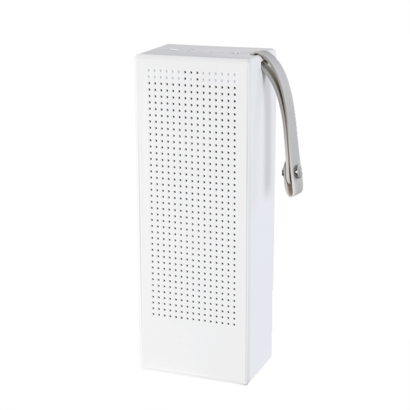
Map the property before comparing prices. Standard rooms, suites, corridors, gyms, smoking rooms, and lobby lounges have different volumes, occupancy patterns, and noise limits. A single model for every space usually leads to oversizing in some rooms and undersizing in others. For standard guest rooms, start with a compact unit such as the AP-01 and check its CADR against your actual room schedule rather than the supplier area claim.
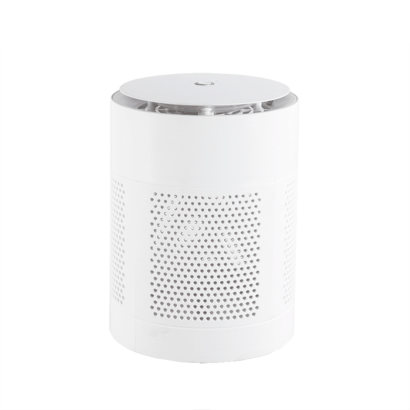
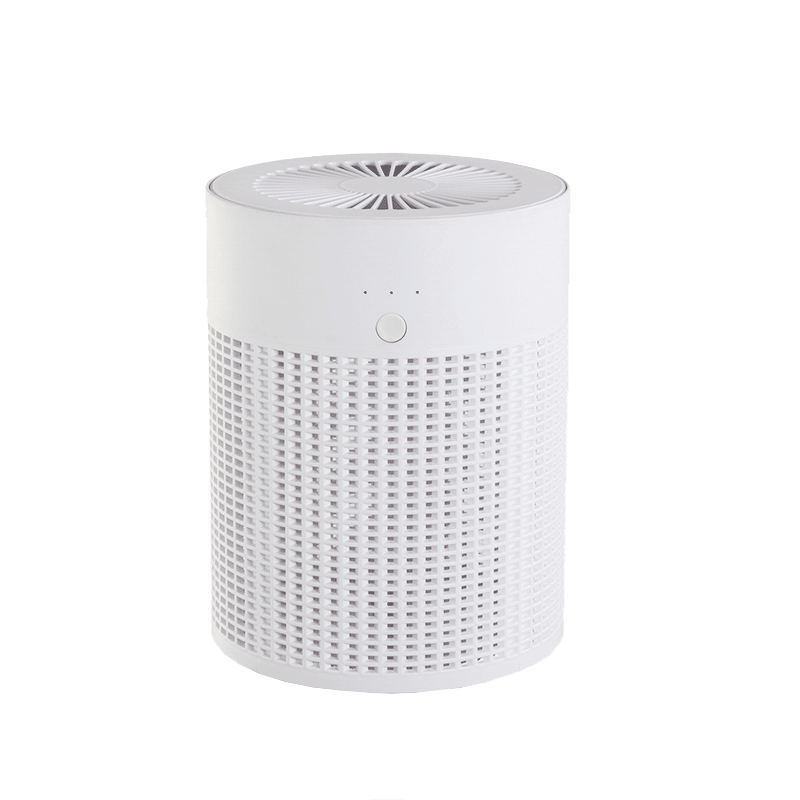 Portable Mini Air Purifier AP-01A for Small RoomsCompact 5W purifier with H12 HEPA filter and 25 CFM CADR; compare its stated 5 m² coverage with standard guest-room needs.View Product →
For rooms facing busy roads or internal courtyards, ask for a model with a higher carbon load and a sealed filter frame. For interior rooms with little ventilation, confirm that the unit can deliver the target air changes at a speed that remains acceptable at night.
Put the same six questions to every supplier. The answers should be written, dated, and tied to the exact model and voltage you plan to buy. Verbal assurances are difficult to enforce when a container arrives.
| Check | Hotel impact | Evidence to request |
|---|---|---|
| Room sizing and CADR | Undersized units run loud and leave hot spots. | CADR report at rated voltage, room volume calculation, and air changes per hour. |
| Noise at the night setting | Fan noise causes complaints and room moves. | Sound pressure at one meter at each speed, with a target around 30 dB(A) or lower at sleep mode. |
| Filter grade and cost | Cheap filters can raise three-year costs and service load. | HEPA grade, carbon weight, filter price, replacement interval, and part number. |
| Market compliance | Missing documents can stop delivery at customs. | CE, UKCA, ETL or UL, GS, PSE, or KC as applicable, plus RoHS and REACH reports. |
| Build and serviceability | Housekeeping needs fast, safe filter access. | Tool-free cover, filter lock, motor life data, warranty terms, and spare parts lead time. |
| Packaging and documentation | Bulk shipments suffer damage and missing manuals. | Drop test report, barcode and carton marks, multilingual manuals, and agreed inspection level. |
Size by clean air delivery rate and air changes, not by the room area printed on the box. A 30 square meter room with a 2.6 meter ceiling holds 78 cubic meters of air. At four air changes per hour, the unit needs to deliver about 312 cubic meters per hour of clean air. Many compact purifiers only reach that figure at their highest speed, where noise rises. Run the calculation at the night setting you expect guests to use.
Noise is a hotel issue, not a technical footnote. Ask for sound pressure at one meter at every speed. For guest rooms, many hotel operators target around 30 dB(A) or lower at the sleep setting. Confirm whether the figure is sound pressure or sound power, because the two are not the same. A unit that is quiet on low speed but rattles at medium speed will still generate complaints.
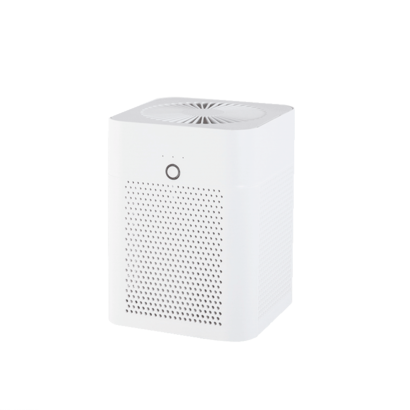
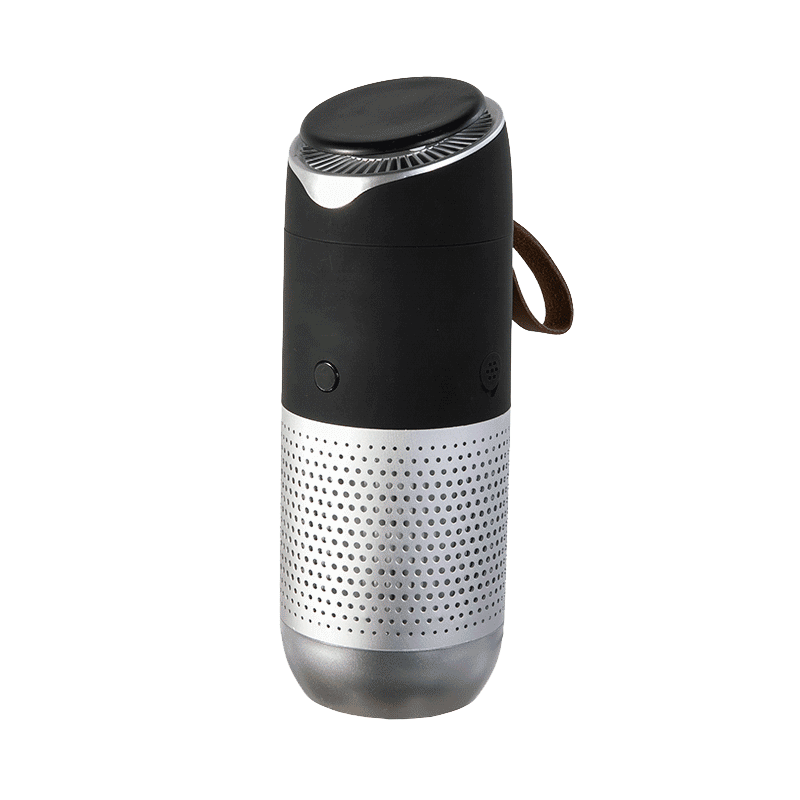 Smart Car Air Purifier with H12 HEPA FilterCompact 2.5W car purifier with 25 CFM CADR and three speeds; review its noise and coverage claims before applying it to hospitality spaces.View Product →
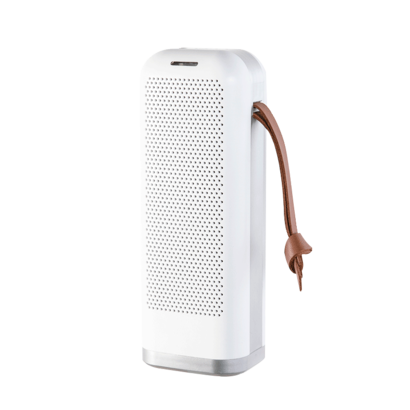
Larger suites, meeting rooms, and club lounges may need a different model with higher output. The AP-02 is one option to benchmark for those spaces, subject to the CADR and noise data for the exact version ordered.
Then calculate the three-year cost: unit price, filter price and replacement interval, spare parts, freight, and inspection. A low-cost purifier with a proprietary filter can become expensive if the filter is out of stock or only sold in large packs. Ask for the filter part number, the expected replacement interval in months, and the price for a service pack of filters. For hotel use, a practical plan is to hold 10 to 15 percent of the filter quantity as buffer stock, depending on lead time and occupancy.
Factory depth matters, but only when it is tied to your order. A supplier that can mold its own cabinets, stamp metal parts, and assemble the finished unit has more control over fit and finish than a supplier that buys every component. That control should show up in consistent panel gaps, stable filter fit, and fewer color variations between batches. The manufacturer background on this site describes a 30,000 square meter workshop and an annual air purifier capacity of 1 million units. Those figures are useful starting points, but verify them against your delivery window, audit report, and peak season schedule.
For hotel groups, customization usually covers logo and color, packaging, manuals in local languages, voltage and plug type, filter grade, and control panel labels. Confirm which items are truly customizable and which are fixed by the tooling. A new color may require a minimum order quantity and a longer lead time. A new filter frame may require a new mold or a revised certification.
Export compliance should be listed by market. A unit for the United Kingdom may need UKCA marking, while a unit for North America may need ETL or UL listing. European buyers often ask for CE, RoHS, and REACH documentation. Japan and Korea have their own requirements. Do not accept a generic certificate that does not name the model, the rated voltage, and the factory. Ask for the test report and check that the model number matches the purchase order.
Approve a golden sample before the bulk order starts. The sample should be signed, dated, and kept by both sides. It should include the final filter, packaging, manual, and any logo treatment. Photos are not enough for color matching; use a physical standard and agree on a tolerance under defined lighting.
Mixed orders need extra attention. If the container combines purifiers, air washers, and fans, confirm carton dimensions, pallet count, and loading plan. A mixed container can reduce freight cost, but only if the supplier can keep the models separate and label every carton correctly. Check that the same quality system covers each product line, not just the air purifier.
Send a short request for quotation with room types, room volumes, target air changes, noise limits, market certifications, and annual volume. Ask each supplier to quote the purifier, the first filter set, a three-year filter pack, and spare parts separately. That format makes the comparison honest and shows which supplier understands hotel operations.
Shortlist two or three suppliers, order samples, and test them in a real room before committing to a bulk order. Put the units in a standard room, a suite, and a public area. Run them at the setting guests will use, measure the sound, and check how easily housekeeping can reach and change the filter. The best bulk air purifier suppliers for hotels are the ones that make those checks easy and keep the same answers after the order is placed.
If you are building a mixed program for guest rooms, suites, and dry-climate spaces, send your room list and target markets through the contact page. A clear brief shortens the path from sample to bulk delivery and reduces the risk of a specification that looks good on paper but fails in the room.

@2020. CIXI XIATIAN ELECTRICAL APPLIANCES CO.,LTD. All rights reserved. Wholesale High-End Electric Fans Manufacturers

 English
 한국어