

A neighbor who smokes on the balcony below, a week of wildfire haze drifting through the window, or a kitchen that still smells of last night's frying: these are the three situations people most often buy an air purifier for, and they behave quite differently. The short answer is yes, a purifier helps with smoke, but how much it helps depends almost entirely on whether the unit was built for smoke or merely marketed for it.
In a closed bedroom of roughly 30 square meters, a correctly sized unit with a true HEPA stage and a substantial carbon stage will usually reduce visible haze and particle readings within 30 to 60 minutes of running at high speed. It will not make the room smell as if nothing happened, and it cannot stop new smoke from arriving while the source is still active. Understanding those two limits before you spend money saves a lot of disappointment.
Content
Smoke is not one pollutant. Burning tobacco, wood, or cooking oil releases fine particulate matter, mostly below one micron, together with a gas phase that includes aldehydes, benzene, acrolein, and the compounds your nose reads as odor. A HEPA filter handles the first part very well and does close to nothing for the second.
True HEPA media is rated at 99.97 percent capture for particles at 0.3 microns, the size that is hardest to trap mechanically. Efficiency actually rises for both larger and smaller particles, because ultrafine particles move by diffusion and stick to the fibers. That is why a HEPA stage clears visible haze and the respirable fraction so effectively, and why a unit with HEPA plus a paper-thin carbon pad can leave a room looking clean while it still smells like an ashtray.
Odor is an adsorption problem, and adsorption depends on how much carbon is present and how long the air stays in contact with it. A thin non-woven pad with a light carbon dusting may weigh under 100 grams and can be exhausted in weeks in a smoking household. A granular or honeycomb carbon cartridge holding one to three kilograms has far more capacity, costs more, and adds airflow resistance. When someone asks whether an air purifier works for smoke, the honest answer is that the HEPA part is easy and the carbon part is where products really separate.
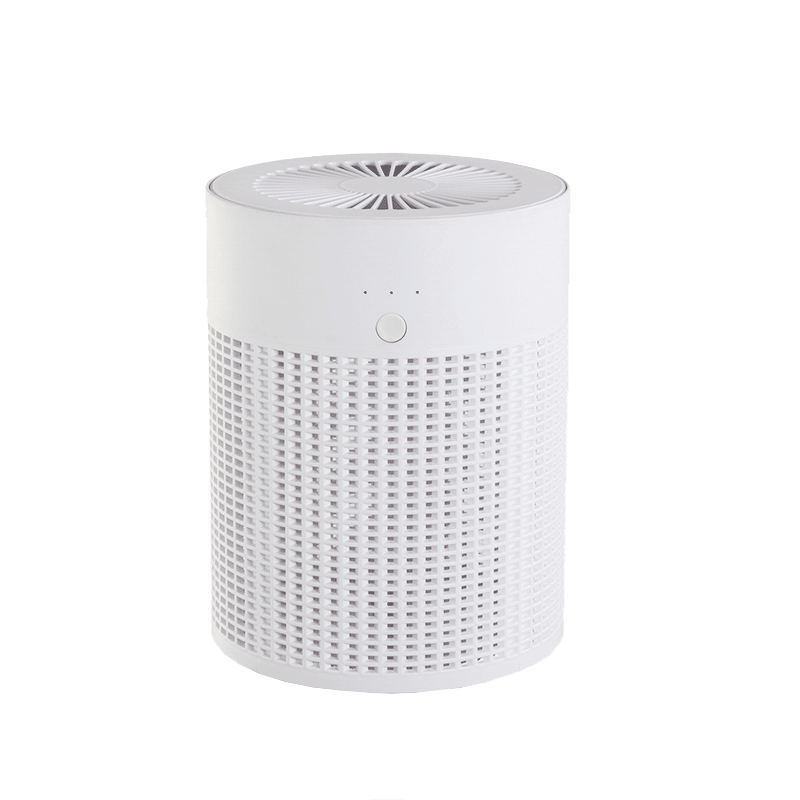 Portable Mini Air Purifier AP-01AThis 5W portable H12 HEPA unit offers three speeds and LED indication for very small spaces, with a rated 40 sq ft coverage.View Product →
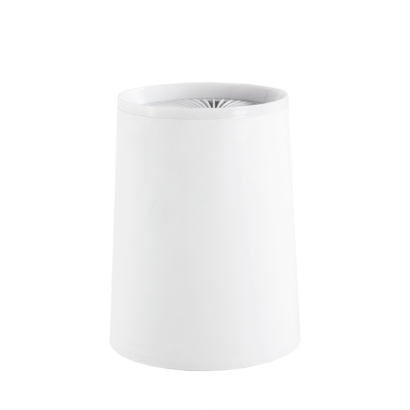
Format matters here. Floor-standing bodies generally leave room for a deeper filter stack than slim towers, which is why a conventional cabinet format is often the safer choice for a household with a daily smoker.
One caution before anything else: any unit that generates ozone on purpose should be excluded from a smoke plan. Ozone does react with some smoke compounds, but it is itself a respiratory irritant, and that trade is a poor one in a room people occupy for hours.
The table below summarizes how common configurations perform against the two halves of the problem. The pattern is consistent: particle performance plateaus quickly, while odor performance keeps improving with carbon mass.
| Filter configuration | Particle removal | Odor and gas removal | Practical fit |
|---|---|---|---|
| HEPA only | High, 99.97 percent at 0.3 micron | Almost none | Dust, pollen, wildfire ash, no smell complaints |
| HEPA with thin carbon pad | High | Low and short lived | Occasional cooking, light use, low budget |
| HEPA with granular carbon cartridge | High | Moderate to high | Daily smoking, neighbors, long wildfire seasons |
| Electrostatic or ionizer only | Moderate, varies with design | None | Not recommended for smoke, ozone risk on some models |
If odor is the complaint rather than haze, carbon mass is the specification to compare, not the filter count printed on the box. A unit advertising three or four stages with a combined filter weight of 300 grams is not the same product as one with a 1.5 kilogram carbon cartridge, even if both say HEPA and carbon on the label.
Clean air delivery rate, usually written as CADR, is the figure to compare. It expresses how much filtered air the unit delivers in cubic feet per minute, and for smoke you want a smoke CADR of at least two thirds of the room's floor area in square feet. A 12 by 25 foot living room is 300 square feet, so it needs roughly 200 CFM of smoke CADR, not the 100 CFM a small bedroom unit provides.
Another way to check is air changes per hour: multiply CADR by 60, then divide by room volume in cubic feet. Smoke control generally needs four to five air changes per hour to feel effective, and the table below assumes an eight foot ceiling.
| Room area | Room area in square meters | Suggested smoke CADR | Air changes per hour |
|---|---|---|---|
| 150 square feet | About 14 | 100 CFM | About 5 |
| 300 square feet | About 28 | 200 CFM | About 5 |
| 500 square feet | About 46 | 350 CFM | About 5.2 |
| 700 square feet | About 65 | 470 CFM | About 5 |
Two practical caveats. First, CADR is measured at maximum fan speed, which is usually the noisiest setting, and sleep mode can halve the delivered clean air. Second, furniture, curtains, and door gaps reduce effective performance, so it pays to choose one step above the calculated minimum.
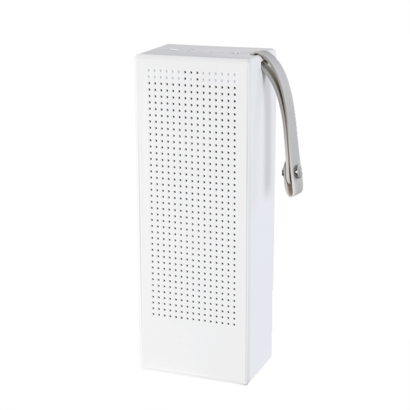
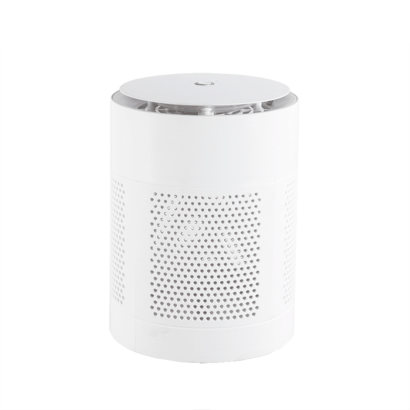
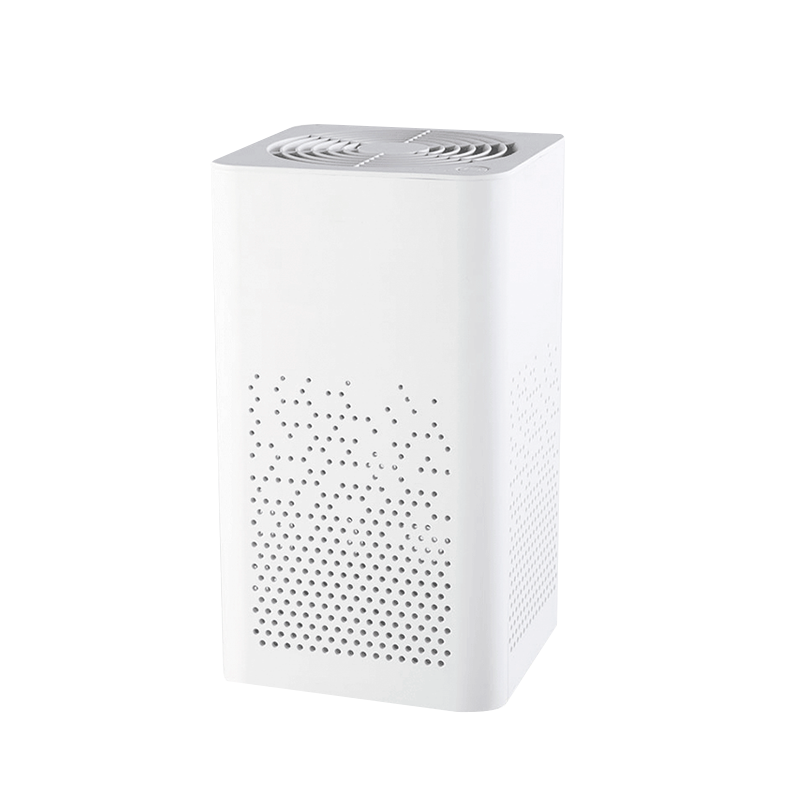 Compact Home Air Purifier MAP-01Rated for 10–20 m² with 100 m³/h particulate CADR, this H12 HEPA and carbon purifier offers three BLDC speeds for small rooms.View Product →
For a desk, a small study, or a hallway where a full cabinet unit will not fit, a compact body is a reasonable compromise, provided the rated CADR still matches the space it serves.
Two identical purifiers in the same apartment can produce visibly different results depending on where they sit and how they are run. The habits that matter most:
Auto mode is convenient for dust but unreliable for smoke, because particle sensors respond to visible haze and may drop the fan to low while odor-causing gases are still present. If the household smokes indoors, a manual medium setting during and after smoking is often more effective.
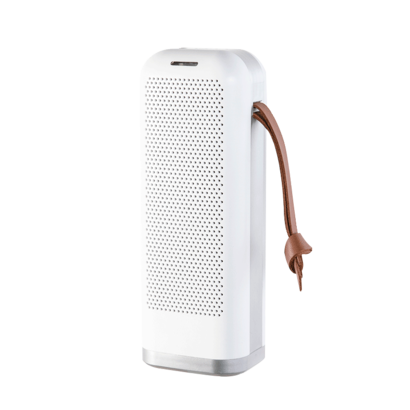
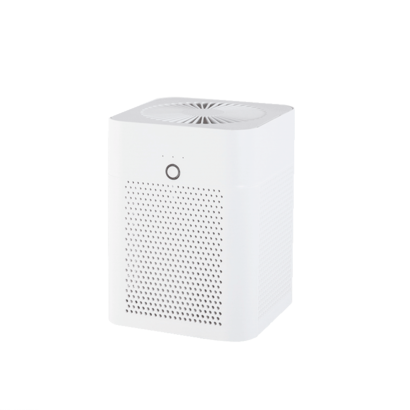
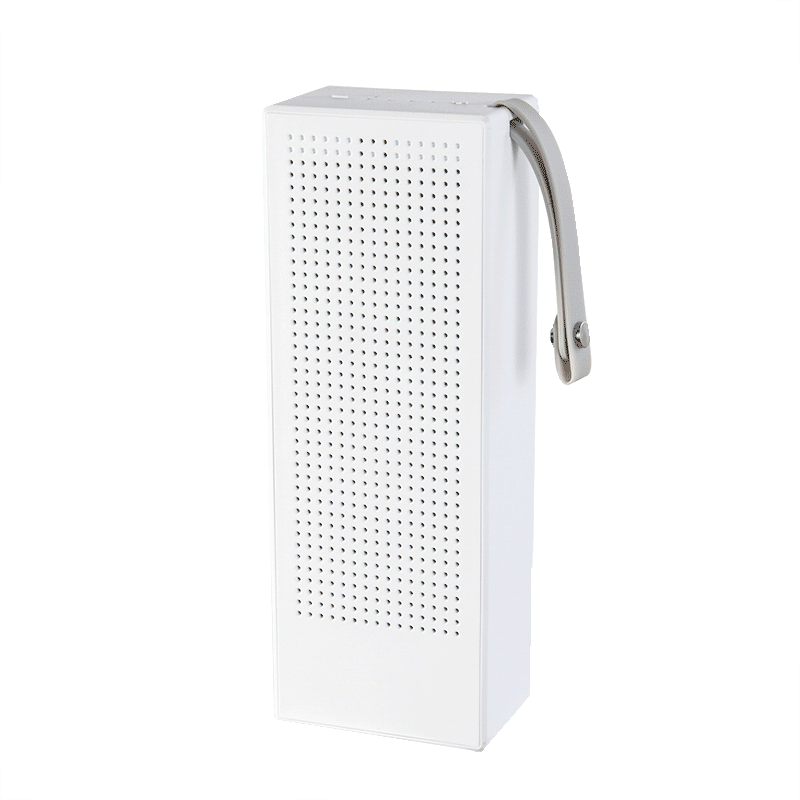 Portable Rechargeable Air Purifier RAP-02With a 4400 mAh battery and 50 m³/h particulate CADR, this 0.8 kg H12 HEPA and carbon purifier suits small 8–10 m² spaces.View Product →
Portable rechargeable formats suit a room that changes during the day, such as a home office in the morning and a bedroom at night, but check the CADR before assuming a small body can carry a large room.
In a smoking household, carbon is the consumable that runs out first, and it usually announces itself. If the smell returns while the fan still runs quietly and the pre-filter is clean, the carbon is saturated even though the HEPA media may have months of life left. Typical replacement intervals in a daily-smoking room are two to four months for carbon and six to twelve months for a combined cartridge, compared with the twelve months often quoted for general dust use.
Washable pre-filters should be cleaned every two to four weeks. A loaded pre-filter reduces airflow, which reduces CADR, which is the same as buying a smaller purifier. Before purchase, price a full set of replacement filters and confirm they are stocked locally, because a unit with expensive or unavailable consumables becomes a fan within a year. More background on how filtration fits into everyday indoor air management is covered in this article on how air purifiers support easier breathing.
Buyers comparing formats can review the full air purifier range to match cabinet size, CADR, and filter depth against the room that needs protection. For buyers sourcing for retail programs, the same three specifications, smoke CADR, carbon mass, and consumable cost, are also the ones that generate the fewest after-sales complaints.
It will not stop smoke entering from a neighbor's unit, and it will not clear a whole apartment from one corner. It also will not remove the smell of smoke from upholstery, curtains, and walls, which is where a large share of lingering odor actually lives; textiles need washing and surfaces need wiping. Used alongside source control, brief ventilation, and reasonable expectations, a well specified purifier makes an indoor smoking or wildfire situation noticeably more tolerable, and that is a realistic goal rather than a marketing one.

@2020. CIXI XIATIAN ELECTRICAL APPLIANCES CO.,LTD. All rights reserved. Wholesale High-End Electric Fans Manufacturers

 English
 한국어