

A litter box that gets scooped every morning can still announce itself the second you open the front door. That gap between the effort you put in and the smell that lingers is exactly why so many cat owners end up searching for an air purifier. The honest answer is that a purifier helps, but it is a second line of defense rather than a cure, and the models that solve litter odor are not always the ones sold for pollen and allergies.
What follows is what a purifier can realistically do about cat litter smell, which specifications actually decide the outcome, and how to arrange a box and a machine so they work together instead of against each other.
Content
A purifier with a mechanical filter and a properly sized carbon stage will pull litter dust out of the air and will reduce, though rarely eliminate, the ammonia and sulfur compounds that drift away from the box. What it cannot do is treat the source itself. Odor control follows a fixed order: remove waste often, control litter depth and moisture, ventilate, then filter. Skip the first three steps and you are asking a fan and a filter to do work that belongs to a scoop.
In practice, a purifier earns its place in three situations. The box sits in a small room with poor airflow, such as a bathroom or laundry corner. Litter dust is tracking across the floor and settling on surfaces. Or a guest notices the smell before you do, which usually means the airborne load is higher than your nose has adapted to. In a well-ventilated home with a box cleaned twice a day, expect a modest improvement rather than a transformation, and that is worth knowing before you spend money.
Litter odor is not one substance, and that matters when you read product claims. Four components usually combine:
That last point explains a common disappointment. A unit with excellent particle filtration and a token carbon sheet will clear dust and leave the ammonia untouched.
Setting expectations by scenario is more useful than any single efficiency number.
| Scenario | What the purifier contributes | Why it works that way |
|---|---|---|
| Litter dust kicked up after digging | Clear reduction | Clay and silica particles are large enough for a mechanical filter stage to capture. |
| Ammonia that has spread into the room | Partial reduction | Requires sufficient impregnated carbon and several passes of the same air volume. |
| Odor at the box opening | Very little | Concentration at the source is far higher than the airflow of a room appliance can dilute. |
| Box inside a closed closet or tiny bathroom | Moderate, if the unit runs in that same space | Filtration only affects air that actually reaches the intake. |
| Scented litter and plastic box fumes | Slow, uneven reduction | Carbon capacity differs by compound, so some volatiles pass through longer than others. |
| Multi-cat home with daily scooping | Noticeable improvement | A lower source load lets the filter keep pace instead of saturating early. |
A unit advertised as having an activated carbon filter may carry 30 grams of thin mat or well over a kilogram of pellets. The first is a formality that saturates in weeks; the second can last a season. For a multi-cat household, look for a stated carbon weight and, ideally, chemically impregnated carbon formulated for ammonia rather than plain coconut shell carbon, which holds ammonia poorly.
Gas removal depends on how long air spends inside the carbon bed. A deep filter running at a moderate speed usually outperforms a thin filter pushed to maximum, which is why a quiet medium setting running all day beats a turbo burst for ten minutes.
Check the clean air delivery rate for dust or smoke and size it generously. For odor work, a reasonable starting point is a clean air delivery rate in cubic feet per minute of roughly 1.5 times the room area in square feet, because gas molecules need more passes than dust. Keep low-speed noise under about 30 decibels, or the machine will be switched off within a week.
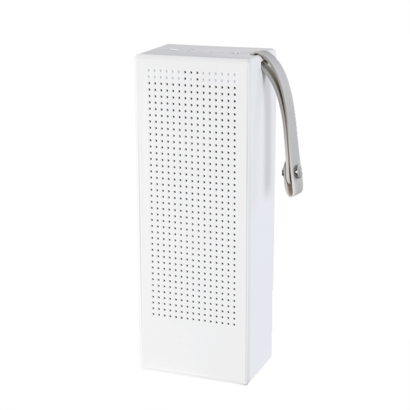
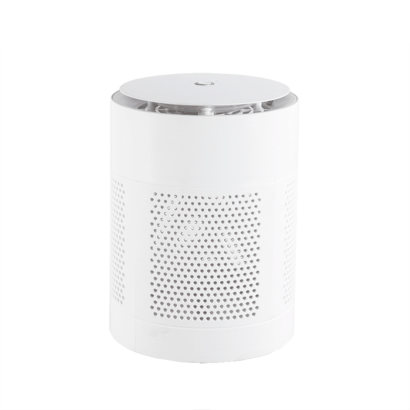
One example of this balance is the AP series room unit, which pairs a washable prefilter with a replaceable carbon stage, so the cheap layer absorbs lint and litter dust before the carbon is asked to handle gas.
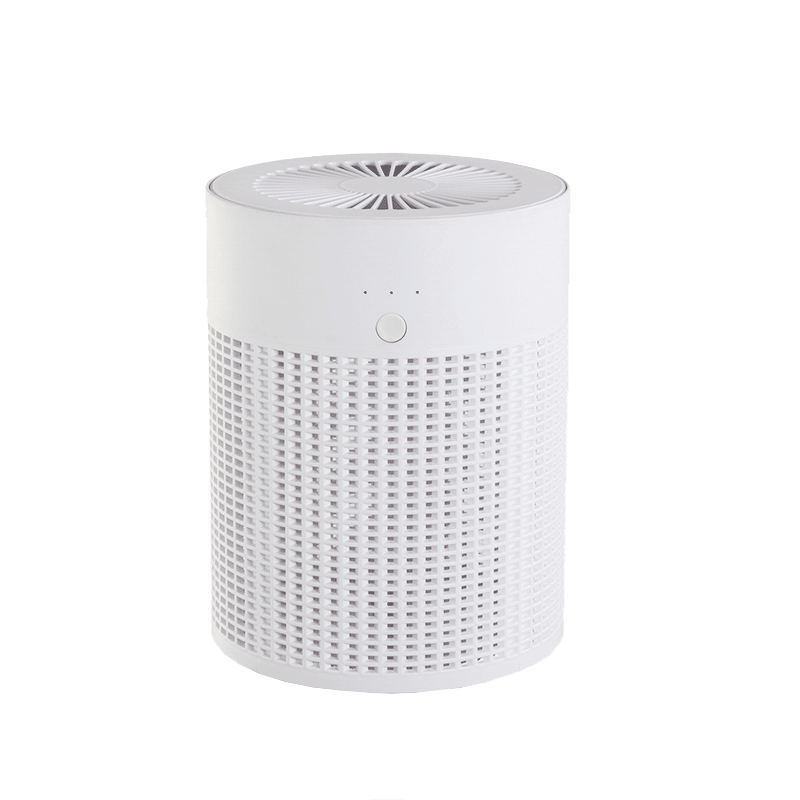 AP-01A Portable Mini Air PurifierCompact AP-01A pairs a washable prefilter and replaceable carbon stage with H12 HEPA filtration for small-room dust and odor, with three speeds.View Product →
Position matters as much as filtration. Place the unit one to two meters from the box, on the floor, with the intake facing open space rather than a wall or a cabinet door. Ammonia is lighter than air and rises, while sulfur compounds tend to settle, so a unit that mixes room air rather than only treating the layer near the ceiling will perform better. Avoid aiming the exhaust across the box toward a sofa or bed, which simply moves the smell to where people sit.
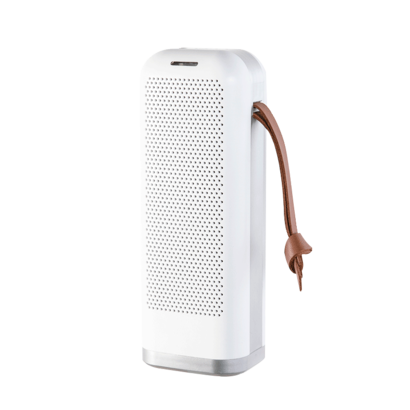
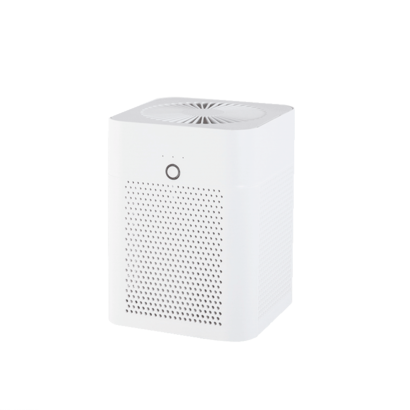
For a single box in a small bathroom, a compact unit is enough and a large tower is wasted money. A mid-size purifier such as the MAP series suits a laundry room or an open-plan corner where the box shares space with daily life.
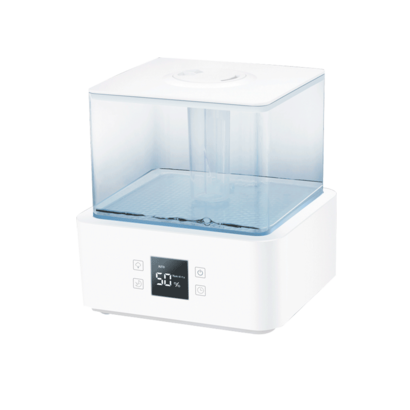
Water-based air washers deserve a mention because ammonia is highly water soluble. A washer with a large wetted surface can absorb some ammonia while also trapping dust, though the tank must be cleaned frequently or it becomes a source itself. A mini washer sitting beside a box in a tight room is a practical compromise when space is short.
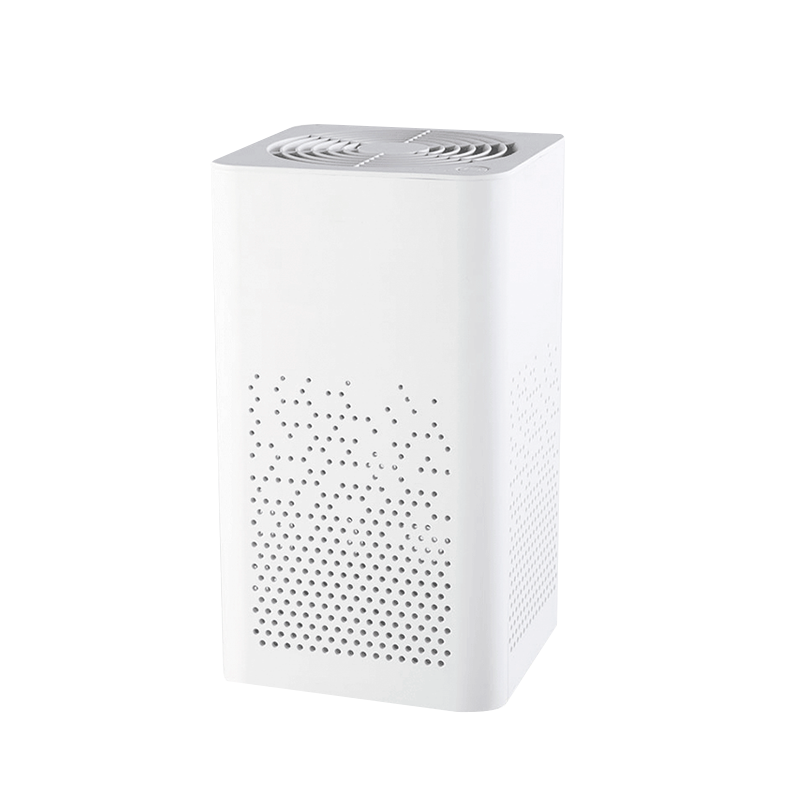 MAP-01 Compact Home Air PurifierCompact MAP-01 combines H12 HEPA and carbon filtration with three-speed BLDC operation for 10–20 m² rooms, with optional gas or infrared sensors.View Product →
 LG-05 Mini Airwasher with Disk FilterLG-05 mini airwasher pairs a 2.2 L reservoir and disk filter for dust and water-soluble odors in rooms up to 20 m² at ≤25 dB(A).View Product →
Pet odor is one of the few categories where the filter specification, not the housing design, decides whether a product earns repeat sales. When briefing a manufacturing partner, state the target gas, the carbon mass in grams, the expected replacement interval in a two-cat household, and the low-speed acoustic figure. Ask for chamber test data at one meter rather than at the outlet, because that is the distance a customer actually experiences.
Cixi Xiatian Electrical Appliances has produced purifiers, air washers and dehumidifiers in Ningde and Cixi since 2011, with in-house tooling, injection and a test laboratory, which makes it possible to adjust carbon depth and airflow for a specific retail market rather than shipping one global configuration. More detail sits in the air purifier range, and specification questions are covered in the frequently asked questions.
So do air purifiers help with cat litter smell? Yes, in a measurable but limited way: they clear dust, they blunt ammonia and sulfur compounds that have already escaped into the room, and they keep a small, closed space livable. They do not replace the scoop, the ventilation or a properly sized carbon bed. Get those three right and the purifier stops being a hopeful purchase and starts being the reason the hallway smells neutral again.

@2020. CIXI XIATIAN ELECTRICAL APPLIANCES CO.,LTD. All rights reserved. Wholesale High-End Electric Fans Manufacturers

 English
 한국어