

Yes, an air purifier can help with pet odor, but it will not make a pet household smell clean on its own. The useful result comes from three parts: source control, a sealed HEPA filter for dander and hair, and enough activated carbon to adsorb odor gases. A HEPA filter alone removes particles, not the gas molecules that most people recognize as pet smell.
That distinction matters before you buy. An undersized unit, a thin carbon layer, or a leaking filter frame can run all day and leave the room smelling like a dog bed. A well matched unit, placed near the odor source and maintained on schedule, can lower the odor load. It works best with daily litter removal, regular bedding washes, and fresh air.
Content
Pet odor is a mixture, not a single substance. Fur and dander settle on floors and soft furnishings, while urine, feces, saliva, skin oils, and litter release gases into the air. Soft surfaces act as reservoirs: a sofa or pet bed can keep releasing odor after the visible mess is gone. A purifier can only clean air that reaches its filter, so it cannot compensate for a wet patch under a rug or a litter box that is cleaned once a week.
A true HEPA filter captures at least 99.97 percent of particles at 0.3 microns under test conditions. That makes it effective for dander, hair, dust, and pollen. It does not remove ammonia from urine or the sulfur-bearing gases from waste; those pass through the media. Activated carbon adsorbs many odor gases, but performance depends on carbon mass, surface area, humidity, and contact time. A thin carbon sheet may handle light cooking odors for a few weeks. It is a weak answer to a litter box in a small apartment.
For a pet household, look for a sealed HEPA stage, a washable pre-filter, and a substantial carbon stage. The air purifier range from Cixi Xiatian includes compact formats that can be specified for residential use. The practical test is not the word carbon on the box. It is how much carbon the air passes through and how easily the filter can be changed.
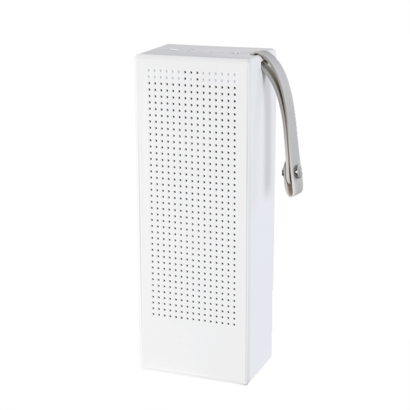
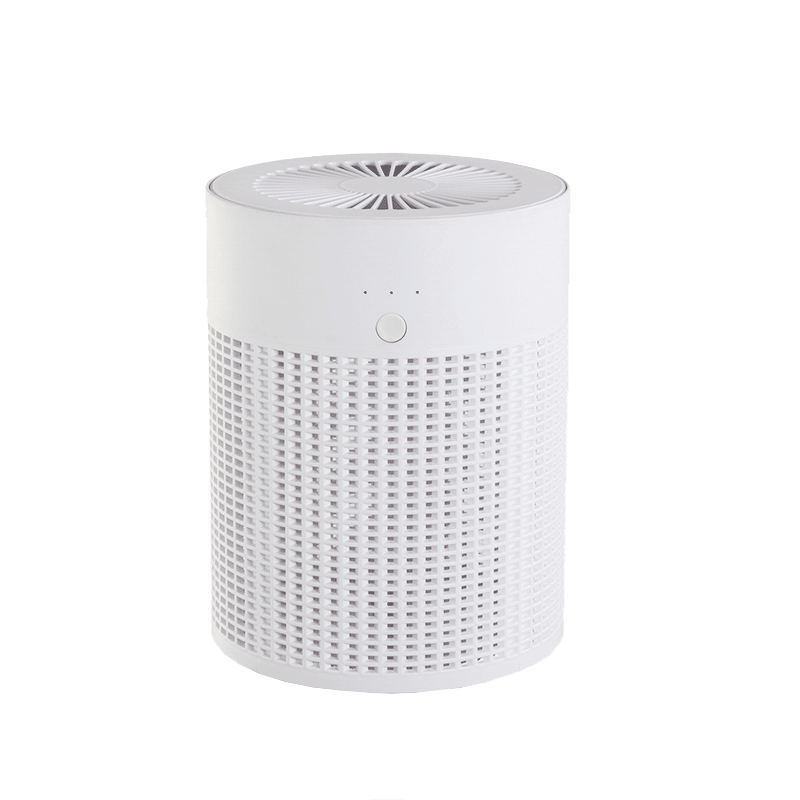 Portable Mini Air Purifier AP-01ACompact 5W purifier with H12 HEPA and 25 CFM CADR for small spaces; useful for matching low-area filtration to real air-exchange needs.View Product →
| Filter stage | Main target | Role in pet odor | Limitation |
|---|---|---|---|
| Pre-filter | Hair, fur, lint | Protects HEPA and carbon stages | Does little for gases |
| True HEPA | Dander, dust, pollen | Removes particles that carry odor and allergens | Does not adsorb odor gases |
| Activated carbon | Odor molecules, ammonia, VOCs | Main odor-control stage | Thin layers saturate quickly |
| Ionizer or plasma | Charged particles | May reduce some airborne particles | Not a replacement for carbon; ozone risk must be controlled |
A purifier is a dilution machine. Its useful capacity is the clean air delivery rate, or CADR, not the room size printed on the box. Match CADR to room volume and aim for a practical air exchange rate. Four to five air changes per hour is a reasonable target for general room cleaning. A room with a litter box may need more, but only if the higher fan speed is quiet enough that you will use it.
To estimate, multiply CADR in cubic feet per minute by 60, then divide by room volume in cubic feet. A unit delivering 150 cfm in a 1,000 cubic foot room gives nine air changes per hour at top speed, not at the quiet setting. Leave a 10 to 20 percent margin for furniture, open doors, and carbon loading. Larger floor-standing units with deeper filter media usually suit open living areas better than compact units.
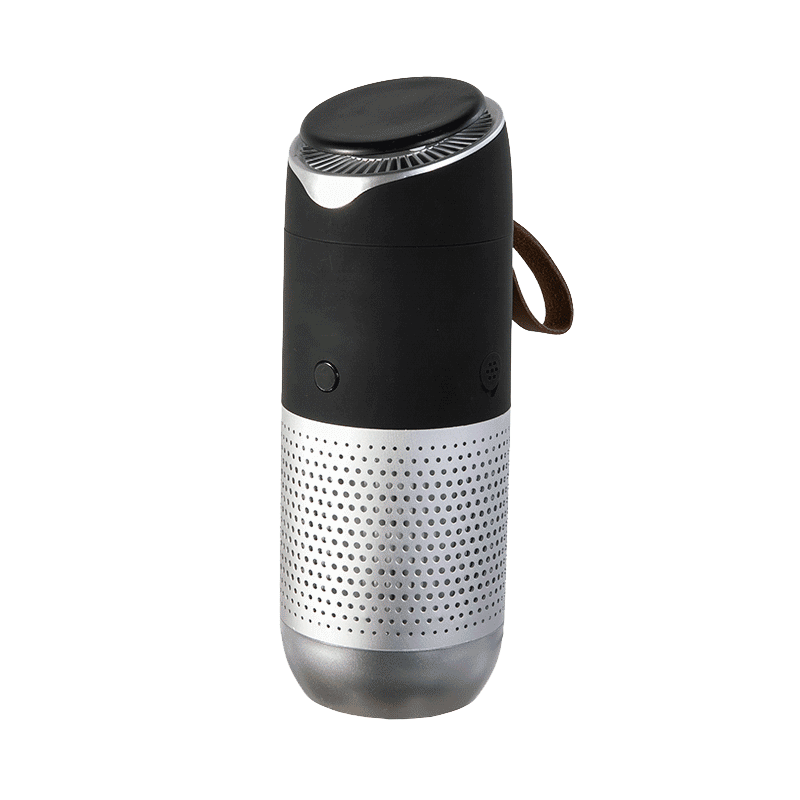 Smart Car Air Purifier with H12 HEPACompact 2.5W car purifier with H12 HEPA, 25 CFM CADR and three speeds; worth viewing for small-space or cabin filtration needs.View Product →
No filter can keep up with a wet urine patch. Clean litter daily, replace absorbent litter, wash pet bedding weekly, and use washable covers on furniture. Ventilate during cleaning. Place the purifier near the odor source but not against a wall or inside a cabinet. Keep at least 6 to 12 inches of clearance around the intake and exhaust. Run it continuously on a low setting instead of blasting it for an hour after guests arrive. Carbon has more contact time at lower airflow, and steady operation keeps particle levels down. If the unit has an auto mode, check whether its sensor measures particles only; many low-cost sensors do not measure odor gases.
Portable rechargeable units are useful for small rooms and pet sleeping areas, but they do not replace a full-size unit in an open living area.
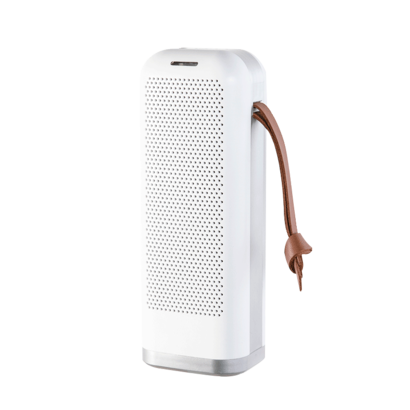
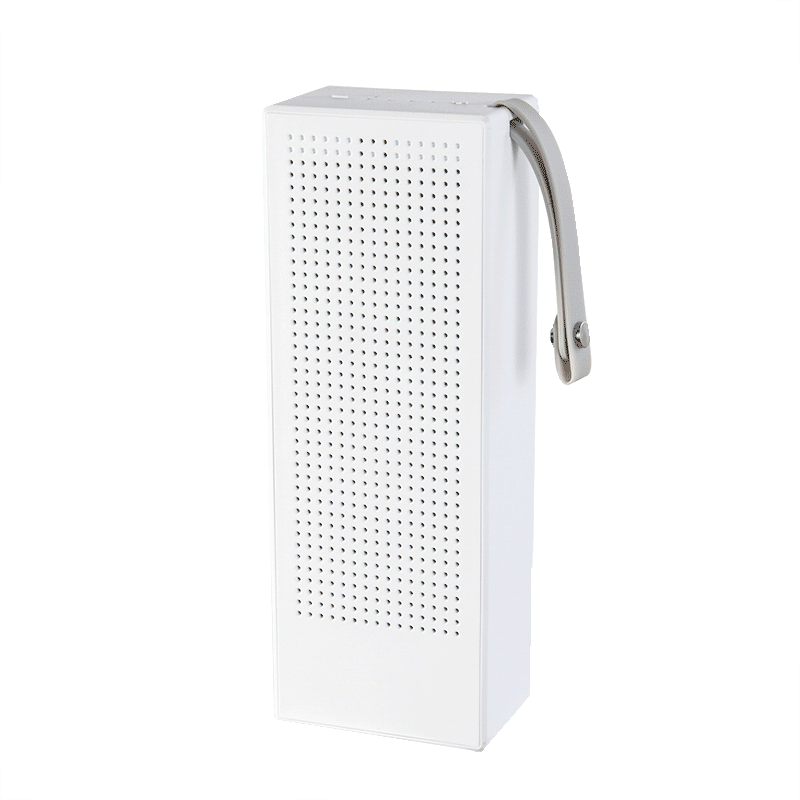 Portable Rechargeable Air Purifier RAP-02Battery-powered 3.5W unit with H12 HEPA and carbon filter, 50 m³/h CADR, and three speeds for small rooms or pet sleeping areas.View Product →
Activated carbon has a finite capacity. Once saturated, it can release trapped odor compounds back into the room, especially when humidity rises. In a pet home, inspect the pre-filter weekly and clean or replace it as the manufacturer allows. Replace the carbon stage every three to six months in a busy household. Use the return of odor as a signal, not only the indicator light. HEPA media often lasts six to twelve months, but hair and dust loading can shorten that.
Do not mask pet odor with fragrance. It adds volatile compounds and can make the air smell more crowded. Do not vacuum a HEPA filter unless the manufacturer permits it. And do not assume a higher fan speed is always better. If noise makes you turn the unit off, the effective air changes per hour are zero.
Pet odor is a filter architecture problem, not just a fan and a plastic shell. The carbon bed needs enough depth, the filter frame needs a good gasket, and the pre-filter must be easy to remove because pet hair loads quickly. Cixi Xiatian Electrical Appliances has produced air purifiers since 2011 and works with overseas buyers on OEM and ODM projects. Its company profile describes in-house tooling, injection molding, and testing, which are useful when a buyer needs changes to sealing, filter access, or carbon capacity.
For importers, the practical question is not whether a sample removes odor in a demo room. It is whether production units keep the same airflow, gasket fit, and carbon mass after six months of shipping and use. Ask for filter change instructions, replacement filter part numbers, and a clear statement of ozone compliance.
Air purifiers do help with pet odor, but only as part of a system. Use true HEPA for dander and hair, a real carbon stage for odor gases, and a unit sized for the room at a speed you can tolerate. Clean the source, place the unit where air reaches it, and replace carbon before it saturates. Compare carbon mass, sealed airflow, CADR, noise, and filter cost. That is how a purifier makes a pet household smell fresher, not just cleaner on paper.

@2020. CIXI XIATIAN ELECTRICAL APPLIANCES CO.,LTD. All rights reserved. Wholesale High-End Electric Fans Manufacturers

 English
 한국어