

Content
An Air Purifier works by drawing indoor air through one or more filtration stages, removing airborne particles, gases, and biological contaminants before returning clean air to the room. The most effective units combine a True HEPA filter, which physically captures at least 99.97 percent of particles 0.3 microns in diameter, with an activated carbon layer that adsorbs gases, odors, and volatile organic compounds that a HEPA filter alone cannot remove (Source: Peak Primal Wellness, HEPA Filter vs. Activated Carbon Filter). A fan drives the entire cycle, and the rate at which a unit cleans a defined volume of air is measured by its Clean Air Delivery Rate, or CADR. Research published in ScienceDirect confirms that air purifiers effectively control indoor PM2.5 and can reduce population health damage by 43.47 to 86.46 percent, demonstrating that when a purifier is matched to the right room size and pollutant type, the health impact is substantial (Source: ScienceDirect, The effect of air purifiers on the reduction in indoor PM2.5 concentrations and population health improvement, 2021).
People spend approximately 90 percent of their time indoors, yet indoor air can contain concentrations of pollutants that are two to five times higher than outdoor levels (Source: RAPIDS Study, Reduction of Outdoor and Indoor PM2.5 Source Contributions via Portable Air Filtration Systems, NIH). The sources of indoor pollution are numerous: cooking fumes, cigarette smoke, pet dander, dust mites, mold spores, pollen carried in through open windows, and volatile organic compounds off-gassed by furniture, cleaning products, and building materials all accumulate in enclosed spaces with limited natural ventilation.
Fine particulate matter smaller than 2.5 microns, commonly referred to as PM2.5, poses particular risk because particles at this scale bypass the body's upper respiratory defenses and penetrate directly into the alveoli of the lungs. Annual premature deaths driven by indoor air pollution are considered comparable in scale to those caused by outdoor ambient air pollution (Source: NIH, The Actual Efficacy of an Air Purifier at Different Outdoor PM2.5 Concentrations in Residential Houses with Different Airtightness). An air purifier addresses this risk directly by continuously removing those particles from the breathing zone before they are inhaled.
Regardless of which filtration technology is inside, nearly all air purifiers follow the same basic airflow sequence. HouseFresh describes it clearly: mechanical air purifiers use a fan to pull in air from the room, pass it through HEPA and activated carbon filters that trap the pollutants, and then release a clean airflow back into the space (Source: HouseFresh, Air Purifier vs Ionizer: Key Differences).
The fan is the engine of this cycle. Its speed determines how many times per hour the total air volume of the room passes through the filter stages, a figure known as the air changes per hour or ACH. Most standards for effective purification recommend a minimum of four to five air changes per hour in the target room. The CADR figure printed on a purifier's specification label tells you how many cubic feet or cubic meters of clean air it delivers per minute at a defined speed setting, allowing you to match unit capacity to room size before purchase.
Most multi-stage purifiers begin with a washable pre-filter that captures large visible particles such as hair, lint, and large dust clumps. This stage extends the life of the more expensive HEPA and carbon layers behind it by preventing them from clogging prematurely with debris that a simple screen can remove.
Air then passes into the HEPA layer, which is the primary particle removal stage. The filter consists of a dense mat of randomly arranged glass or synthetic fibers through which particles are captured by three distinct physical mechanisms: impaction, where larger particles cannot change direction fast enough and collide directly with fibers; interception, where mid-sized particles following the airflow still brush against fibers and stick; and diffusion, where the smallest ultrafine particles move erratically due to Brownian motion and are captured through random contact with fibers (Source: Peak Primal Wellness, How HEPA Filters Work: The Science Behind 99.97 Percent Particle Capture). ScienceDirect confirms this four-mechanism description from the academic side, listing interception, inertial impaction, diffusion, and sieving as the physical capture methods used in HEPA filtration (Source: ScienceDirect, Assessing effectiveness of air purifiers for controlling indoor particulate pollution, 2021).
The 0.3 micron specification for True HEPA is intentional. Particles at exactly this diameter are the hardest to capture because they are too large for diffusion to dominate and too small for impaction and interception to work at peak efficiency. By setting the standard at this most-penetrating particle size, the True HEPA designation guarantees that all particles both larger and smaller are captured at an even higher rate than 99.97 percent.
After the HEPA layer, air passes through an activated carbon filter, which handles the pollutant categories that physical fiber filtration cannot address: gases, odors, and volatile organic compounds. Activated carbon is processed to create an enormous internal surface area, often measured in hundreds of square meters per gram, that adsorbs gaseous molecules as they pass through. University of Reading research confirms that activated carbon filters effectively adsorb formaldehyde, benzene, ammonia, and similar VOCs (Source: Air Purifier First, HEPA vs Carbon Filters, citing University of Reading research). For households with gas stoves, a peer-reviewed study published in Toxics in 2025 found that HEPA and carbon combined air purifiers reduced indoor PM2.5 by 45 percent and indoor NO2 by 36 percent across 67 low-income homes over a 12-month monitoring period (Source: NIH, Effectiveness of HEPA and Carbon Filter Air Purifier in Reducing Indoor NO2 and PM2.5 in Homes with Gas Stove Use, 2025).
HEPA stands for High-Efficiency Particulate Air and is a performance standard rather than a brand or material. To carry the True HEPA designation, a filter must capture at least 99.97 percent of particles that are 0.3 microns in diameter. For perspective, a single human hair is approximately 70 microns wide, meaning a True HEPA filter captures particles roughly 233 times smaller than a human hair (Source: Peak Primal Wellness, How HEPA Filters Work).
True HEPA filtration is highly effective against the following categories of particles:
What HEPA cannot remove are gases and VOCs. Odors, formaldehyde, benzene, and other chemical vapors pass straight through HEPA fiber layers without interacting with the physical capture mechanisms. This is the reason high-quality air purifiers always combine a HEPA layer with an activated carbon stage (Source: Peak Primal Wellness, HEPA Filter vs. Activated Carbon Filter).
The Detroit RAPIDS intervention study, a double-blind randomized crossover trial, found that HEPA-type portable air filtration units reduced median indoor PM2.5 concentrations by 58 percent, and True HEPA units achieved a 65 percent reduction. The same study found that three days of air filtration decreased average systolic blood pressure by 3.2 mmHg in older adult participants, demonstrating measurable cardiovascular benefit alongside pollution reduction (Source: NIH, Reduction of Outdoor and Indoor PM2.5 Source Contributions via Portable Air Filtration Systems, 2024).
Activated carbon works through a chemical process called adsorption, where gaseous molecules bond to the enormous internal surface of the carbon structure rather than being trapped in a physical mesh. The material is derived from carbon-rich sources such as coconut shells or coal that are treated with heat and steam or chemical activation to open millions of micropores, creating surface areas of 500 to 1,500 square meters per gram of material.
Carbon filters have finite adsorption capacity. Once the available surface sites are occupied, the filter cannot accept additional gaseous molecules and must be replaced. The lifespan depends on pollutant concentration in the environment and the weight of carbon in the filter. A thicker carbon layer extends capacity but can slow airflow if not balanced correctly, which reduces overall purification efficiency. Air Purifier First notes that activated carbon filters are generally more expensive and have a shorter lifespan than HEPA filters (Source: Air Purifier First, HEPA vs Carbon Filters). Filter replacement schedules provided by the manufacturer should be followed, typically every three to six months for activated carbon in standard residential environments.
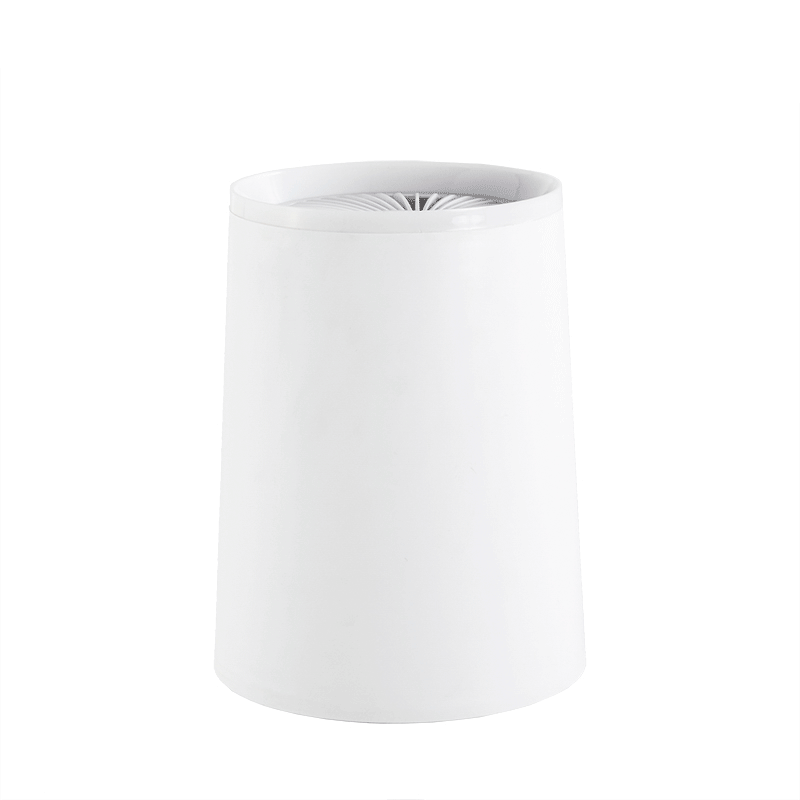
Beyond HEPA and activated carbon, several additional technologies appear in air purifiers, each addressing specific pollutant categories with their own strengths and limitations.
Ionizers release negatively charged ions into the room air, which attach to airborne particles and give them a charge that causes them to be attracted to surfaces or to a collection plate inside the unit. Powerscale explains the key distinction: unlike HEPA filtration, which physically removes particles from the room entirely by locking them in a filter, ionizers do not remove particles from the room but instead cause them to settle onto surrounding surfaces, which then require cleaning to truly eliminate the pollutants (Source: Powerscale, Air Ionizers: How They Work vs HEPA Filters). Additionally, ionizers are not effective against VOCs or gaseous odors, as they only affect physical particles (Source: Powerscale). Some ionizer designs produce trace amounts of ozone as a byproduct, which at elevated concentrations can irritate the respiratory system.
UV-C germicidal lamps are used in some purifiers to kill or inactivate biological contaminants including bacteria, viruses, and mold spores that pass through the UV exposure zone. The effectiveness of UV-C depends on the contact time between the microorganism and the lamp, and the wavelength and intensity of the light used. UV-C does not address particles or gases and is typically used as a supplementary stage alongside HEPA and carbon filtration rather than as a standalone technology.
Photocatalytic oxidation uses a UV light source in combination with a titanium dioxide catalyst to generate reactive oxygen species that decompose organic gases and VOCs. Patent literature confirms that photocatalytic technology decomposes formaldehyde, toluene, and other VOCs into water and carbon dioxide through the generation of high-oxidizing photo-plasma (Source: USPTO Patent 12435899, Air Purifier for Preventing Air Pollution). Like UV-C, this technology is more effective as a supplementary stage than as a primary purification method.
| Technology | Removes Particles | Removes Gases and VOCs | Key Limitation |
| True HEPA filter | Yes, 99.97% at 0.3 microns | No | Cannot capture gases or odors |
| Activated carbon filter | No | Yes, including formaldehyde and benzene | Finite capacity, requires regular replacement |
| Ionizer | Partially, settles on surfaces not removed | No | Does not physically remove particles, possible ozone byproduct |
| UV-C light | No, but inactivates bacteria and viruses | No | Effectiveness depends on exposure time |
| Photocatalytic oxidation | No | Yes, decomposes VOCs into water and CO2 | Best as supplementary stage, not standalone |
The Clean Air Delivery Rate is the standardized metric for measuring an air purifier's output. It represents the volume of clean air the unit delivers per unit of time, typically expressed in cubic feet per minute or cubic meters per hour, at a given speed setting. ScienceDirect notes that the filtering efficacy of air purifiers is directly proportional to the CADR value: the higher the CADR, the higher the filtering efficiency for a given room volume (Source: ScienceDirect, Assessing effectiveness of air purifiers for controlling indoor particulate pollution, 2021).
A commonly cited guideline from air quality organizations is that a purifier's CADR should be at least two-thirds of the room's square footage in feet, for rooms with standard ceiling heights of around 2.4 meters. For a 25 square meter room, this translates to approximately a CADR of 165 cubic meters per hour or higher. Selecting a unit that is rated for a room significantly smaller than the actual space results in insufficient air changes per hour and meaningfully reduced pollutant removal efficiency.
An air purifier is only as effective as its filters. A HEPA filter that has reached its loading capacity will restrict airflow and may release trapped particles back into the room rather than retaining them. Replacement intervals vary by model and environment, but typical manufacturer guidance suggests replacing HEPA filters every 12 to 18 months in standard residential use, and activated carbon filters every 3 to 6 months. Pre-filters should be cleaned or replaced more frequently, typically every month, since they are the first barrier and accumulate debris fastest.
Selecting an effective air purifier comes down to matching the unit's technology and capacity to the specific pollutants present and the size of the space being treated.
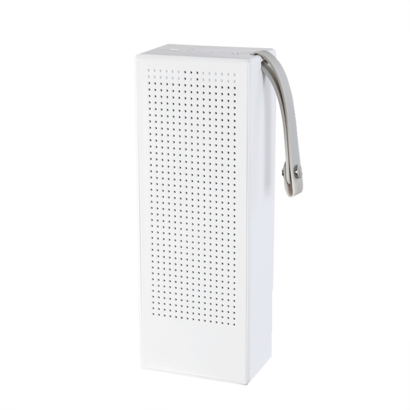
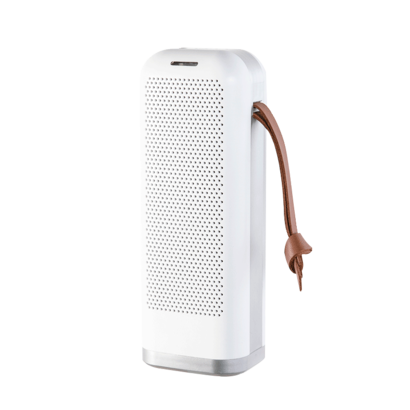
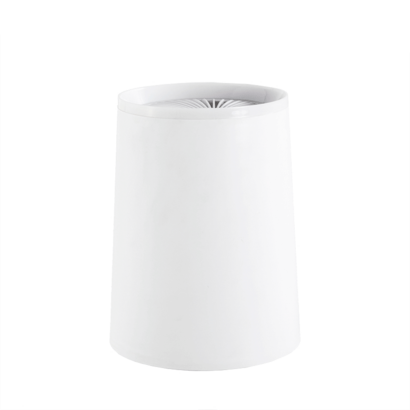
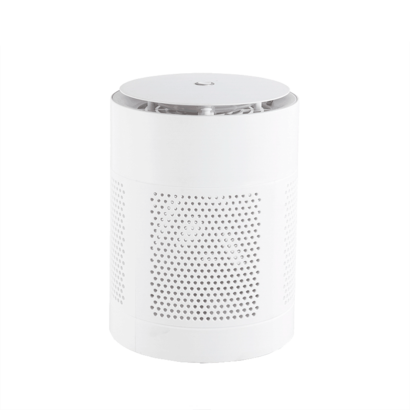
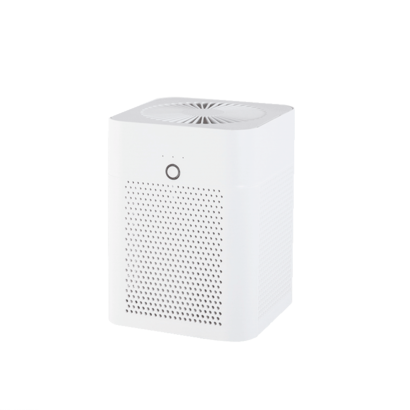
The Xiongwei Air Purifier range is designed with this multi-stage filtration principle in mind, combining True HEPA particle capture with activated carbon gas adsorption to address both particulate and chemical indoor pollutants, giving households a practical and evidence-backed solution for improving the air quality of the spaces where they spend the most time.

@2020. CIXI XIATIAN ELECTRICAL APPLIANCES CO.,LTD. All rights reserved. Wholesale High-End Electric Fans Manufacturers

 English
 한국어
한국어