

In the cold season, choosing an efficient, safe, and energy-saving heater is crucial. In recent years, ceramic heaters (also known as PTC heaters) have become the preferred choice for winter heating in more and more homes and offices due to their unique heating technology and significant advantages.
Content
The core technology of ceramic heaters lies in their internal PTC ceramic heating element. PTC is an abbreviation for "Positive Temperature Coefficient." This special semiconductor material is key to achieving its efficient heating and automatic temperature control.
Material Composition: Unlike ordinary ceramics, PTC elements are mainly sintered from conductive materials such as barium titanate, and undergo special doping to give them semiconductor properties.
Electrothermal Conversion: When current passes through PTC ceramic, the movement of electrons within the material generates friction and collisions, efficiently converting electrical energy into heat energy. This is the basic principle of electric heaters, but PTC elements add an intelligent temperature response mechanism on top of this.
The most unique and important characteristic of PTC elements is their positive temperature coefficient, meaning their resistance increases with temperature. This characteristic endows ceramic heaters with excellent automatic temperature control capabilities, enabling them to achieve constant temperature without the need for complex external thermostats.
Rapid Heating Phase: At low ambient temperatures, the resistance of the PTC element is very low, allowing current to flow smoothly and generate a large amount of heat, thus achieving rapid heating and providing warmth quickly.
Critical Temperature Response: When the surface temperature of the PTC element rises and approaches its set specific "Curie point," microscopic changes occur in its internal crystal structure.
Automatic Power Adjustment: Once the temperature reaches or exceeds this critical point, the resistance of the PTC element increases sharply. The high resistance immediately limits the current flowing through the element, significantly reducing its heating power. As the power decreases, the element temperature also drops.
Dynamic Balance: This cycle of "resistance increasing with temperature and then decreasing with current" allows the PTC element to dynamically maintain its temperature within a preset, constant, and safe range, effectively preventing overheating. This is its unique overheat protection mechanism.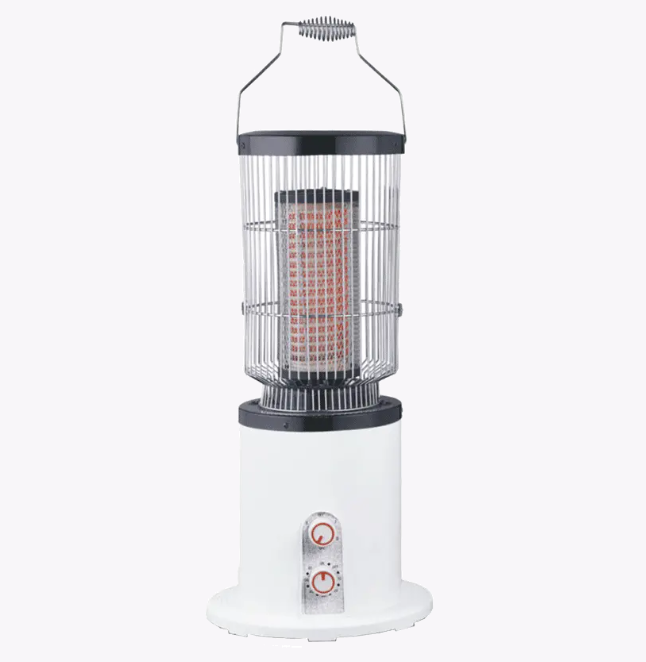
With its advanced PTC technology, the ceramic heater boasts several significant advantages over other household heating devices, making it an ideal choice for modern home heating:
Highly Efficient and Rapid Heating: The PTC element heats up rapidly in a short time, providing instant heat without long waits.
Superior Safety Performance: The built-in automatic temperature control function ensures that the PTC element never reaches excessively high temperatures, fundamentally eliminating the risk of fire caused by overheating and ensuring safe heating.
A Model of Energy Saving and Environmental Protection: Once the set temperature is reached, the PTC element's heating power automatically decreases, avoiding the energy waste caused by traditional heaters operating at continuous high power, effectively achieving energy savings.
Durable Design: PTC heating elements operate without open flames or oxygen consumption, and the components are less prone to oxidation and damage, resulting in a lifespan far exceeding that of ordinary resistance wire heaters.
Quiet and Comfortable Experience: Most portable heaters distribute heat evenly through a fan, operating with low noise and eliminating bright light and unpleasant burning smells, providing a more comfortable temperature setting and environment.
A typical ceramic heater usually consists of the following core components:
PTC Ceramic Heating Element: As the primary heat source, it converts electrical energy into heat energy.
Aluminum Heat Sinks: These fins are tightly bonded to the PTC element, greatly increasing the heat exchange area and ensuring efficient heat transfer to the surrounding air.
Blower (Fan): Responsible for forcing the heated air out, accelerating heat circulation and distribution within the room, thus achieving rapid and even indoor heating.
Casing and Control System: The casing protects the internal components and ensures user safety, while the control panel provides functions such as power on/off, temperature setting adjustment, and timer.
Ceramic heaters, based on the unique working principle of PTC ceramic heating elements, achieve a highly efficient, safe, and intelligent heating experience. Their numerous advantages, such as automatic temperature control, energy saving, environmental friendliness, and long lifespan, make them a highly popular household heating device in today's winter heating market.

@2020. CIXI XIATIAN ELECTRICAL APPLIANCES CO.,LTD. All rights reserved. Wholesale High-End Electric Fans Manufacturers

 English
 한국어
한국어