

To choose the right cordless rechargeable vacuum cleaner, focus on five core factors: suction power (measured in watts or air watts), battery life and charge time, weight and ergonomics, filtration system quality, and the attachments included for your specific cleaning needs. Getting these five factors right for your home type, floor surfaces, and lifestyle will determine whether your cordless vacuum becomes an indispensable daily tool or an underperforming appliance that collects dust in the corner.
The cordless rechargeable vacuum cleaner market has expanded dramatically, with options ranging from lightweight handheld models weighing under 1 kg to full-size stick vacuums capable of deep-cleaning carpets. Understanding the technical specifications behind the marketing language — and knowing which numbers actually matter for your use case — is the difference between a well-informed purchase and a costly mistake.
This guide breaks down every meaningful selection criterion with concrete benchmarks, so you can evaluate any cordless vacuum model on objective terms rather than manufacturer claims alone.
Content
Before evaluating specific specifications, it is important to match the vacuum type to your primary cleaning scenario. Cordless rechargeable vacuums fall into several distinct categories, each optimized for different tasks:
Stick vacuums are the most versatile cordless option for whole-home cleaning. They combine a motorized floor head with an upright handle, allowing users to cover large areas without bending. Most stick vacuum models weigh between 2.5 and 4 kg and deliver suction power sufficient for both hard floors and low-to-medium pile carpets. Higher-end models convert into handheld units by detaching the wand, giving them a dual-use advantage.
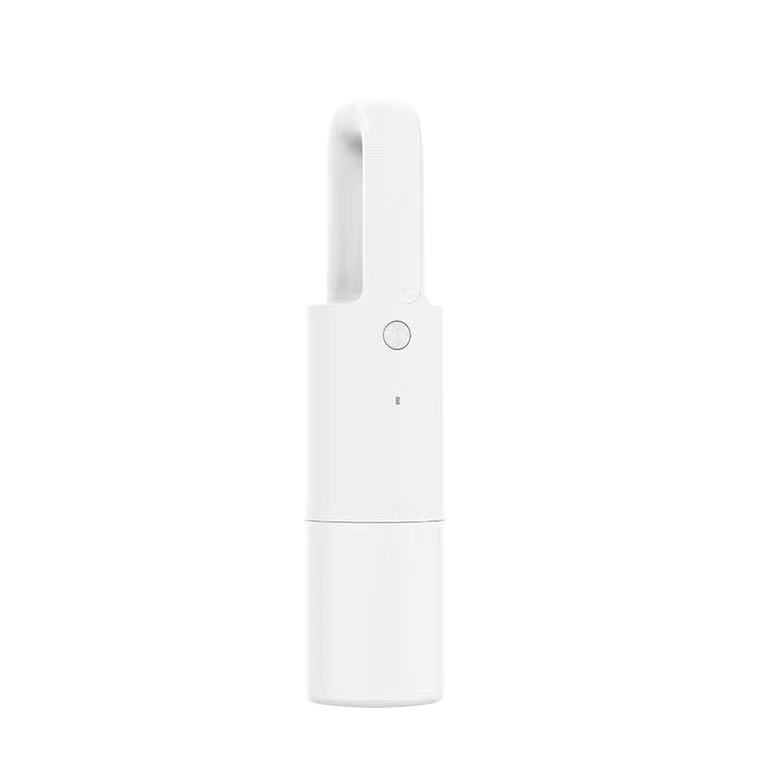
Compact and highly portable, handheld cordless vacuums typically weigh between 0.5 and 1.5 kg. They excel at spot cleaning, car interiors, upholstery, stairs, and tight spaces. Battery life is shorter — usually 10 to 20 minutes per charge — but rapid-charge technology on some models (as fast as 6 minutes for partial top-ups) compensates for this limitation in quick-clean scenarios. They are not designed for whole-room floor cleaning.
Robot vacuums automate floor maintenance and return to their charging base independently. While technically cordless and rechargeable, they require a dedicated charging dock and are best suited as a supplement to a primary vacuum rather than a replacement. Their suction power is generally lower than stick or upright models, and they cannot handle stairs or above-floor cleaning tasks.
Designed to handle both dry debris and liquid spills, wet-dry cordless vacuums are particularly useful in kitchens, workshops, garages, and commercial environments. They are generally heavier and bulkier than standard dry-only models, but their versatility makes them a strong choice for households with children, pets, or frequent spill situations.
Suction power determines what the vacuum can actually lift and how effectively it cleans different surfaces. This is the specification where marketing language most frequently misleads buyers, so understanding the correct metrics is essential.
Manufacturers frequently advertise motor wattage, but this figure describes power consumption — not suction effectiveness. Air watts (AW) is the more meaningful measurement, as it reflects the actual work the vacuum performs at the nozzle. For context:
If air wattage is not listed, look for Pascal (Pa) ratings as an alternative suction measurement. A cordless vacuum rated at 20,000 Pa or higher delivers performance comparable to most corded household vacuums on hard floors.
Higher suction settings consume battery capacity at a faster rate. Many cordless vacuums offer multiple power modes — typically an eco or standard mode and a boost or max mode. Running on maximum suction can reduce battery runtime by 40–60% compared to the standard mode. This trade-off is important to understand when evaluating runtime specifications, since manufacturers typically advertise the runtime at the lowest power setting.
The battery system is one of the most consequential aspects of cordless vacuum ownership — both in terms of daily usability and long-term cost. A vacuum that runs for only 12 minutes cannot clean a medium-sized home in a single session, while one with a 60-minute runtime and a 4-hour recharge time requires planning around its availability.
| Home Size | Floor Type | Recommended Minimum Runtime | Ideal Runtime |
|---|---|---|---|
| Studio / 1-bedroom apartment | Hard floor only | 15–20 minutes | 25–30 minutes |
| 2–3 bedroom home | Mixed hard floor and carpet | 30–40 minutes | 45–60 minutes |
| 4+ bedroom home | Mostly carpet | 45–60 minutes | 60+ minutes or swappable battery |
| Commercial space | Hard floor, large open areas | 60 minutes | Swappable battery system |
| Car interior / spot cleaning | Upholstery and tight spaces | 10–15 minutes | 20 minutes with rapid charge |
Standard cordless vacuums take between 3 and 5 hours to fully recharge from empty. Models with fast-charge technology can reach a usable partial charge in as little as 6 minutes — sufficient for a targeted clean without waiting for a full cycle. For users who need extended runtime without interruption, look for models that offer swappable battery packs, allowing a fully charged spare to be inserted when the first pack is depleted.
Lithium-ion (Li-ion) batteries are the current standard in quality cordless vacuums. They hold charge better than older nickel-based batteries, do not suffer from memory effect, and maintain consistent suction output throughout the discharge cycle rather than fading as the charge depletes. Avoid models that use nickel-cadmium (NiCd) or nickel-metal hydride (NiMH) batteries, as these technologies are outdated and deliver inferior performance.
Lithium-ion batteries in cordless vacuums typically retain 80% capacity after 300–500 charge cycles, which translates to roughly 2–4 years of daily use before noticeable capacity degradation. Before purchasing, verify that replacement batteries are available and check their cost. Replacement battery packs for some models can cost 30–60% of the original vacuum's purchase price. Models that use proprietary battery formats with limited availability become effectively disposable once the battery fails.
A cordless vacuum that is physically uncomfortable or tiring to use will be used less frequently, regardless of its technical performance. Weight and ergonomic design are especially important for users who clean for extended periods, have limited upper body strength, or need to navigate stairs frequently.
Look for a handle with a soft-grip material and a trigger or button that can be operated without repositioning your hand. Some models require constant trigger pressure to maintain suction, which causes hand fatigue during long sessions — a simple on/off switch or lock-on mode is preferable for extended use.
The floor head's maneuverability is equally important. A pivot joint that allows 180-degree steering lets the vacuum glide around furniture legs and chair bases without requiring the user to reposition constantly. Soft rubber wheels protect hard floors from scratching.
An integrated LED light on the floor head is a practical feature that illuminates dust and debris in shadowed areas beneath furniture — a detail that significantly improves cleaning completeness without requiring additional effort from the user. This feature is particularly valuable in rooms with low ambient lighting or in households where thorough cleaning under beds and sofas is a priority.
The filtration system determines what the vacuum retains and what it releases back into the air. For households with allergy sufferers, asthma patients, or pets, filtration quality is a non-negotiable selection criterion.
HEPA (High Efficiency Particulate Air) filters are certified to capture 99.97% of particles as small as 0.3 microns, including dust mite allergens, mold spores, fine pet dander, and pollen. Standard foam or mesh filters capture larger debris but allow fine particulates to pass through the exhaust air stream and re-enter the room.
For allergy and asthma sufferers, a sealed HEPA filtration system — meaning the entire vacuum is engineered to prevent unfiltered air from bypassing the HEPA filter through gaps in the housing — is the recommended minimum standard. A vacuum with a genuine HEPA filter but poor housing seals delivers far less benefit than the filter rating implies.
Washable and removable filters reduce the long-term running cost of the vacuum significantly. Most washable filters should be rinsed under cold water and allowed to dry for 24 hours before reinsertion — inserting a damp filter restricts airflow and can damage the motor. Replaceable filter cartridges typically cost between $10 and $30 per replacement and should be changed every 6–12 months depending on usage intensity.
A well-designed easy-clean filter system — one that can be removed, tapped clean, and rinsed in under two minutes — dramatically increases the likelihood that users will maintain the filter properly, preserving suction performance over the vacuum's lifespan.
Dustbin capacity affects how frequently the vacuum must be emptied during a cleaning session. A too-small dustbin interrupts cleaning workflow and reduces suction as it fills. A too-large dustbin adds unnecessary weight to the unit.
Prefer models with a one-press or bottom-release emptying mechanism that allows the dustbin to be emptied directly into a trash bin without contact with the collected debris. This is a hygiene and convenience feature that becomes particularly valuable in pet-owning households where the dustbin frequently contains allergens and fine particles.
The floor head and available attachments determine which surfaces and tasks the vacuum can handle effectively. A well-specified attachment set transforms a single vacuum into a multi-surface, multi-task cleaning system.
Verify that attachments are stored on the vacuum itself or on the included charging dock rather than in a separate bag. Attachments that are stored separately are frequently lost or unused, negating their value.
Variable suction settings allow the vacuum to be tuned for different surfaces. Delicate surfaces such as curtains, lamp shades, and thin area rugs require lower suction to avoid damage or the fabric being sucked against the nozzle. Maximum suction is appropriate for embedded dirt in carpet but may scatter lightweight debris on bare floors. A minimum of two suction levels — standard and boost — is necessary for a versatile cleaning tool.
The following comparison summarizes the typical specification ranges across the main cordless rechargeable vacuum categories to help buyers set realistic expectations before evaluating specific models:
| Specification | Handheld | Stick (Standard) | Stick (High Performance) | Commercial Grade |
|---|---|---|---|---|
| Suction Power | 20–60 AW | 60–100 AW | 100–200+ AW | 80–150 AW |
| Battery Runtime | 10–20 min | 20–40 min | 40–80 min | 60–90 min |
| Weight | 0.5–1.5 kg | 2–3 kg | 2.5–4 kg | 2.5–4 kg |
| Dustbin Capacity | 150–500 ml | 400–700 ml | 600 ml–1 L | 1–2 L |
| Charge Time | 1–3 hours | 2–4 hours | 3–5 hours | 3–5 hours |
| HEPA Filtration | Uncommon | Some models | Common | Common |
| Best Use Case | Spot cleaning, cars | Apartments, daily maintenance | Whole-home, pets, carpets | Offices, retail, large spaces |
Pet hair presents unique challenges for cordless vacuum performance. It wraps around brush rolls, clogs filters rapidly, and embeds deeply in carpet pile. Households with one or more shedding pets should evaluate the following features specifically:
Cordless vacuums generally operate at lower noise levels than their corded counterparts due to smaller motor sizes, but there is still considerable variation between models. Noise levels for cordless vacuum cleaners typically range from 65 to 85 decibels (dB) at normal operating settings.
For households with infants, light sleepers, or shared wall apartments, noise is a meaningful selection criterion. Models operating below 70 dB are suitable for use during nap times without causing significant disturbance in adjacent rooms. At 85 dB, the vacuum is comparable to a busy street or a food blender in terms of noise exposure — acceptable for standard daytime use but potentially disruptive in noise-sensitive environments.
If noise level is a priority, check whether the manufacturer publishes measured dB figures. In the absence of published data, cordless stick vacuums with smaller motor units (under 350W input) tend to be quieter than those with high-power motors, which is a useful proxy when exact dB data is unavailable.
A cordless vacuum that is awkward to store or charge will be used less consistently. Practical storage and charging design is a frequently overlooked but meaningful quality-of-life feature:
Rather than searching for the "best" vacuum in abstract terms, use the following decision framework to identify the right combination of features for your specific home and lifestyle:
By working through these six questions systematically, most buyers can identify a specification target that narrows the field from dozens of options to a handful of well-matched candidates — making the final comparison straightforward rather than overwhelming.

@2020. CIXI XIATIAN ELECTRICAL APPLIANCES CO.,LTD. All rights reserved. Wholesale High-End Electric Fans Manufacturers

 English
 한국어
한국어