

A musty smell in a basement almost always has three sources working at once: moisture pushing through concrete, fine dust settling out of still air, and odors released by stored cardboard, paint cans, carpet and particleboard shelving. An air cleaner can deal with two of those three, but only if it moves enough air and carries enough carbon to matter.
For a basement of 300 to 700 square feet, the practical answer is a HEPA unit rated at 200 CFM CADR or higher, with at least 4 pounds of activated carbon, running continuously on low speed. If relative humidity in that space stays above 60 percent, spend the money on a dehumidifier first. Damp air keeps feeding the problem no matter how good the filter is.
Everything below explains why those numbers matter, how to size a unit to your actual floor area, and which mistakes waste money on a basement that still smells.
Content
Basements sit below grade, so the air is typically 3 to 8 degrees cooler than the rest of the house. Cooler air is denser, it holds odors longer, and it does not circulate on its own. Most basements have a single stairwell acting as the only return path, which means a full air exchange can take hours instead of minutes.
That combination is why a purifier that works well in a bedroom can feel useless downstairs. The unit has to handle odor, not just particles, and it has to keep working around the clock.
A true HEPA filter rated H13 or better captures particles down to 0.3 microns, which covers dust, pollen and most airborne mold spores. Carbon is where most budget units fall short. A thin carbon mesh handles odors for a few weeks; 4 to 8 pounds of granular carbon keeps working for months. Check whether the carbon stage is separate from the HEPA filter. If they are bonded together, you end up replacing an expensive filter just to fix a smell.
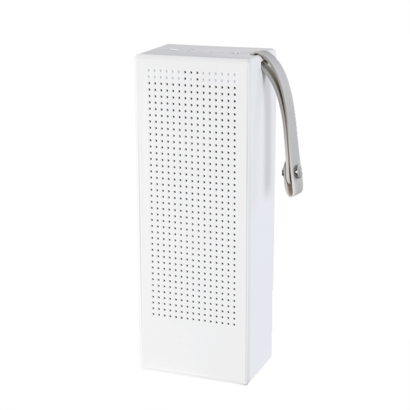
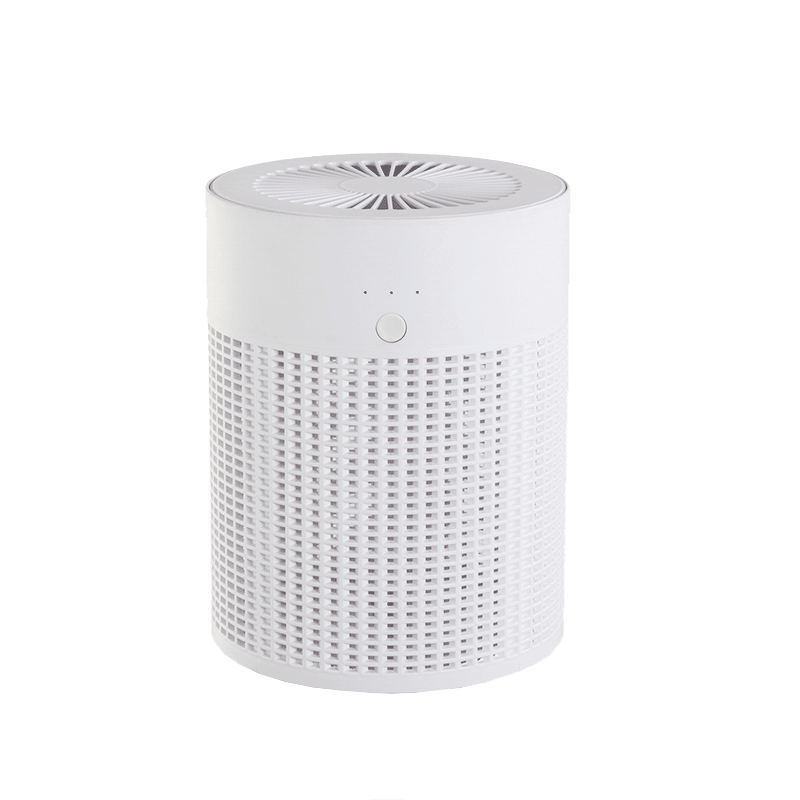 AP-01A Portable Mini Air PurifierCompact H12 HEPA purifier with three speeds; its 25 CFM CADR covers only about 40 sq ft, so verify it suits your room.View Product →
CADR, or clean air delivery rate, tells you how much filtered air the unit moves per minute. A finished basement of 400 square feet with an 8 foot ceiling holds roughly 3,200 cubic feet of air. Hitting four air changes per hour in that space requires about 215 CFM of clean air output, which is a higher target than most bedroom recommendations of two air changes per hour.
If a listing gives only a recommended room size, look for the CADR number in the specification sheet. Room size claims are usually written for low ceilings and a two air change target, which is not enough for a basement where odors linger.
No purifier removes water. If walls are damp or the floor stays cold and clammy, mold grows on joists, drywall and carpet regardless of how clean the air is. Filtration reduces the spores floating in the air, but it does not stop the surface growth that keeps producing them.
Because a basement unit should run 24 hours a day, low-speed noise matters more than the maximum fan setting. A unit that sits around 25 to 30 dB on low speed will not be audible through the floor above. Power draw in the 20 to 45 watt range is typical, which is roughly the cost of a light bulb running continuously. Ask what a year of replacement filters costs before buying, not just the purchase price.
Use the floor area you actually want cleaned, not the total square footage of the house. If the basement is divided into a finished room and a separate storage area with a closed door, treat them as two zones or leave doors open and size for the combined volume.
| Basement floor area | Suggested smoke CADR | Carbon weight | Typical use |
|---|---|---|---|
| Up to 250 sq ft | 130 to 160 CFM | 2 to 3 lb | Storage room, small laundry corner |
| 250 to 450 sq ft | 180 to 220 CFM | 4 to 5 lb | Finished office, home gym |
| 450 to 700 sq ft | 260 to 320 CFM | 6 to 8 lb | Open finished basement |
| 700 sq ft and above | 350 CFM or two units | 8 lb and above | Multi-room open plan, workshop |
Think of it as an order of operations rather than a choice. Get relative humidity into the 45 to 55 percent range first, because that single step removes the food source for mold and dust mites. A dehumidifier with a continuous drain hose is worth more in a wet basement than any filter upgrade.
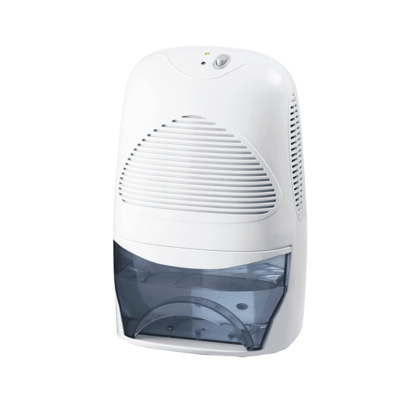
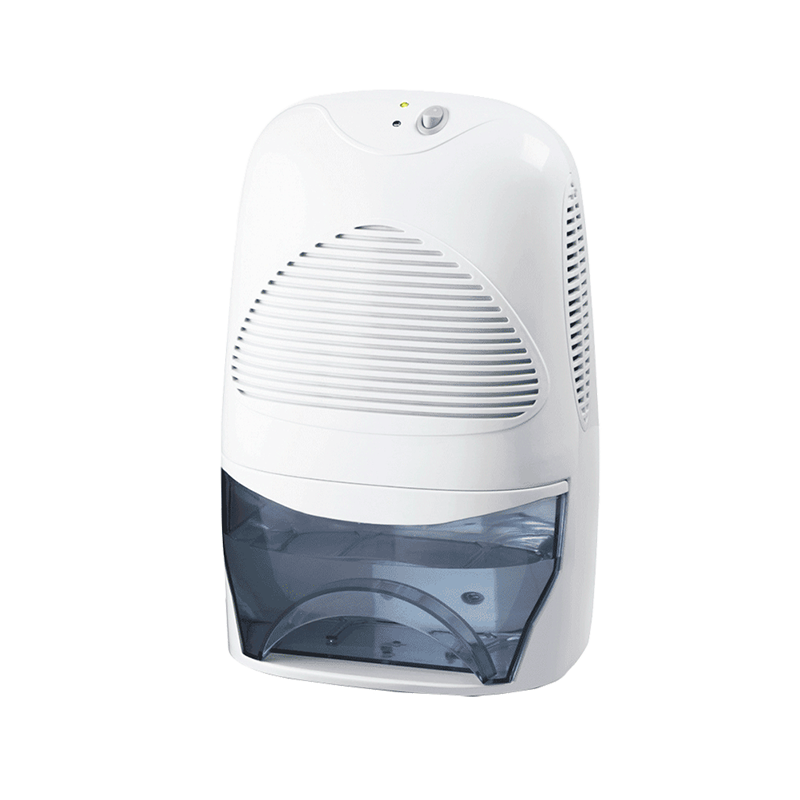 LG-203 Compact Thermo-Electric DehumidifierA 600 ml/day thermo-electric dehumidifier with a 2 L tank, suited to beginning humidity control in small damp spaces before an air cleaner handles remaining spores and odors.View Product →
Once moisture is under control, an air cleaner handles what is left: airborne spores, dust from the floor above, and the odor molecules that cling to stored items. In many basements the two machines together cost less than replacing water-damaged drywall and insulation after a mold problem spreads.
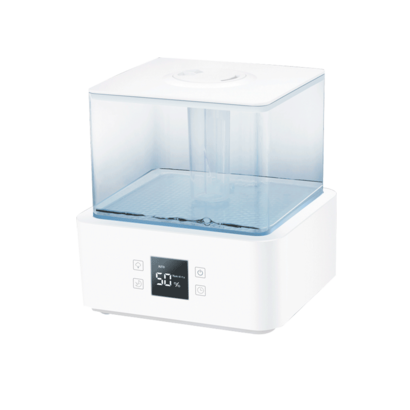
An air washer, which combines water-based washing with filtration, can work in a basement that is dry but dusty. In a genuinely damp basement, adding water to the air is counterproductive.
For a single room such as a basement office, craft corner or guest space under 250 square feet, a compact unit is often the better fit than a large floor model with a long cord and a heavy footprint. Look for a low profile design that can sit on a shelf or in a corner without blocking the airflow path, and check that the filter is still easy to source.
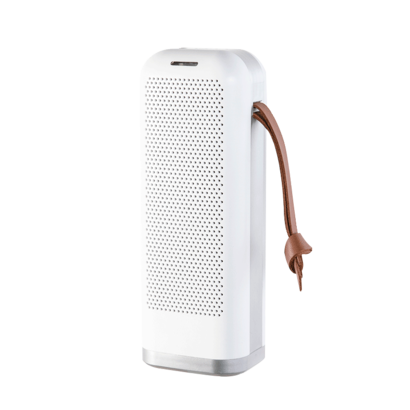
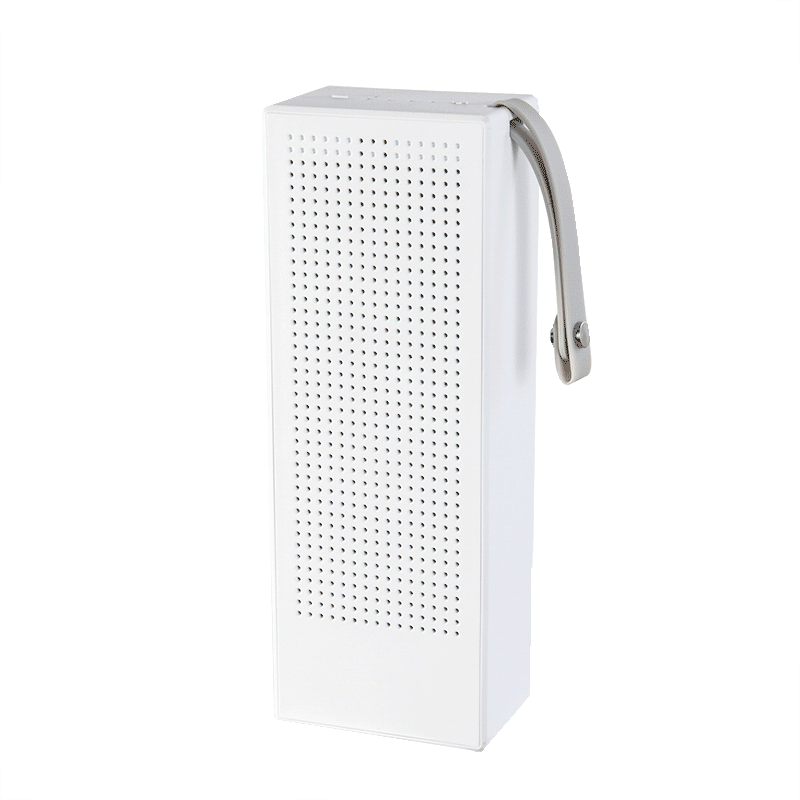 RAP-02 Portable Rechargeable Air PurifierA rechargeable H12 HEPA and carbon purifier with 50 m³/h CADR and 0.8 kg build; suited to small rooms where portability matters.View Product →
If the space is rented or you may move, portability matters. A rechargeable or easily carried unit can follow you to the next home, while a large dehumidifier usually stays with the building.
Brand owners and importers often need more than a finished catalog item. Basement-focused products usually require a specific filter configuration, a particular noise ceiling and a housing that suits a low, damp installation. Working with a manufacturer that controls its own tooling, injection molding and stamping makes those changes faster and cheaper than sourcing a standard model and adapting it afterward.
Cixi Xiatian Electrical Appliances, based in the small appliance manufacturing base in Ningbo, Zhejiang, builds air purifiers, air washers, dehumidifiers, fans and heaters on a 30,000 square meter site with a team of 60 engineers and an annual air purifier capacity of one million units. The air purifier range covers mini, portable and full-size formats, and custom development from drawings or samples is part of the standard offer. More background on the factory, testing lab and client base is available on the company profile page.
It can reduce it significantly if the unit carries enough activated carbon, generally 4 pounds or more, and runs continuously. Odors absorbed into carpet, cardboard and bare wood will keep releasing until those items are removed or cleaned.
They capture airborne spores and reduce how many circulate through the house, but they do not kill mold or remove it from surfaces. Moisture control and cleaning the affected material are still required.
Continuously, at low speed. Intermittent use lets odor and humidity build back up between cycles, and the unit has to reprocess the same volume of air each time it restarts.
In the open floor area closest to the source of moisture and odor, several feet from walls, positioned so the air path reaches the stairwell that connects to the rest of the house.
If a hygrometer reads above 55 percent relative humidity, yes. Fix the water problem first, then let filtration handle spores, dust and odor.
Choosing the best air cleaner for a basement comes down to three checks: enough CADR for the actual volume, enough carbon for odor, and a moisture level low enough that the filter is not fighting a losing battle. Get those three right and a modest unit will outperform a large one placed in a damp corner.

@2020. CIXI XIATIAN ELECTRICAL APPLIANCES CO.,LTD. All rights reserved. Wholesale High-End Electric Fans Manufacturers

 English
 한국어