

With the dry winter climate and widespread use of air conditioning, humidifiers have become essential small appliances for many homes and offices. However, if used improperly, humidifiers may not only fail to moisturize the air but could also become a "hidden killer" of indoor health.
Content
Currently, the mainstream humidifiers on the market are mainly divided into two categories:
To maximize the effectiveness of a humidifier, the following details are crucial:
For most ultrasonic humidifiers, it is recommended to use purified or distilled water. Tap water contains calcium and magnesium ions (commonly known as white powder) and residual chlorine, which, when sprayed into the air with the mist, not only pollute indoor air but may also irritate the lungs with long-term inhalation.
Higher humidity is not always better. Studies show that the most comfortable indoor relative humidity for the human body is between 40% and 60%.
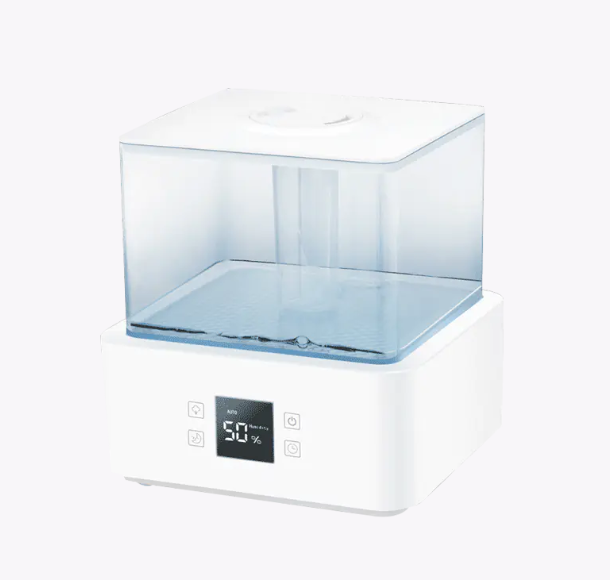
The water tank and base of a humidifier are breeding grounds for bacteria and mold. It is recommended to follow these cleaning frequencies:
When using a humidifier, please avoid the following pitfalls:
The key to using a humidifier correctly is "scientific humidity control" and "frequent cleaning." Only by choosing the right water source, controlling the usage time, and keeping the equipment clean can the humidifier truly improve air quality and protect your respiratory health.
A: It is not recommended to add tap water directly. Minerals in tap water (such as calcium and magnesium ions) will produce a "white powder" after atomization, which can deposit on furniture and pollute indoor air; the chlorine content may also irritate the respiratory tract. It is recommended to use purified water or distilled water first.
A: It's not recommended to use it continuously for extended periods. Prolonged use can lead to excessively high indoor humidity (over 65%), promoting mold and dust mites. It's recommended to turn it off and ventilate the room every 2-3 hours, or use a device with an "automatic humidity control" function to maintain humidity between 40% and 60%.
A: This is a serious health misconception. Vinegar or disinfectants, after being atomized by a humidifier, become extremely small particles that can enter the lungs. High concentrations or irritating chemical components can cause chemical pneumonia or allergic reactions. Perfume and essential oils should also be avoided by adding them directly to the water tank unless the machine has a special aromatherapy box.
A: To prevent bacterial growth, it's recommended to change the water daily and ensure that stale water is not used. The water tank and base should be deep-cleaned every 3-5 days. Rinse with clean water or wipe away internal scale with a soft cloth.
A: The humidifier should be placed on a stable, flat surface 0.5 to 1.5 meters above the ground. This allows the mist to circulate and distribute better with the air. Keep it away from wooden furniture, electrical appliances, and power outlets to prevent moisture damage.

@2020. CIXI XIATIAN ELECTRICAL APPLIANCES CO.,LTD. All rights reserved. Wholesale High-End Electric Fans Manufacturers

 English
 한국어
한국어