

Your bedroom window is fogged at 7 a.m., the air still feels heavy by mid afternoon, and a fresh layer of dust settles on the shelf two days after you wipe it. Those are three separate problems, and no single appliance solves all of them.
The short answer: a humidifier adds moisture to dry air, a dehumidifier takes excess moisture out, and an air purifier filters particles out of the air without touching humidity at all. If a room feels dry, a humidifier is the tool. If it feels damp or smells musty, a dehumidifier is the tool. If it feels dusty, stuffy or sets off allergies, an air purifier is the tool. Most homes need one of the three first, then add the others only when a second problem shows up with a measurement behind it.
Content
The three are often sold side by side, sit in similar housings and use similar fans, which is exactly why buyers mix them up. Inside, the hardware is completely different: one adds water, one removes water, and one only moves air through a filter stack.
Dry air shows up in small, specific ways. Static shocks from door handles, creaking wooden furniture joints, a sore throat every morning, curling wallpaper seams, and houseplants with brown leaf tips. Heated rooms in winter often drop below 30 percent relative humidity, and that is the condition a humidifier is built for. Comfort generally sits between 40 and 60 percent, with 45 to 50 percent a practical target for living rooms and bedrooms.
Build type matters more than most shoppers expect. Ultrasonic units are quiet but can leave a fine white dust on furniture if the water is hard. Evaporative or wick units are self limiting, because output falls as humidity rises, but they add a little fan noise. Warm mist units raise humidity fastest and use more energy. In every case, the risk sits above 60 percent: over humidifying encourages mold growth and dust mites, so a unit with a built in humidistat or a separate hygrometer is worth the small extra cost.
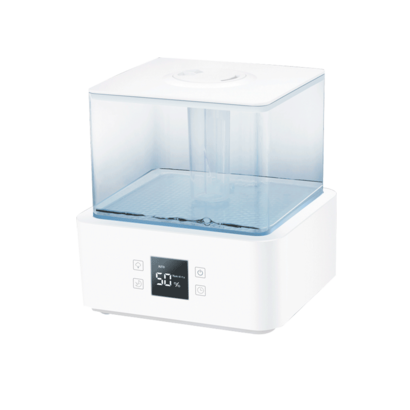
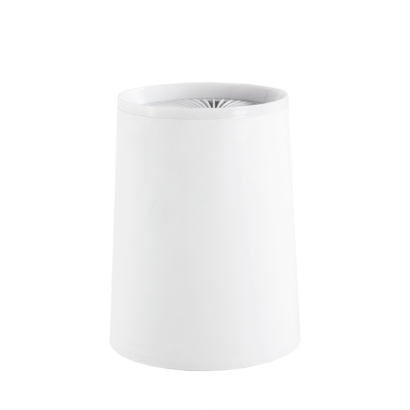
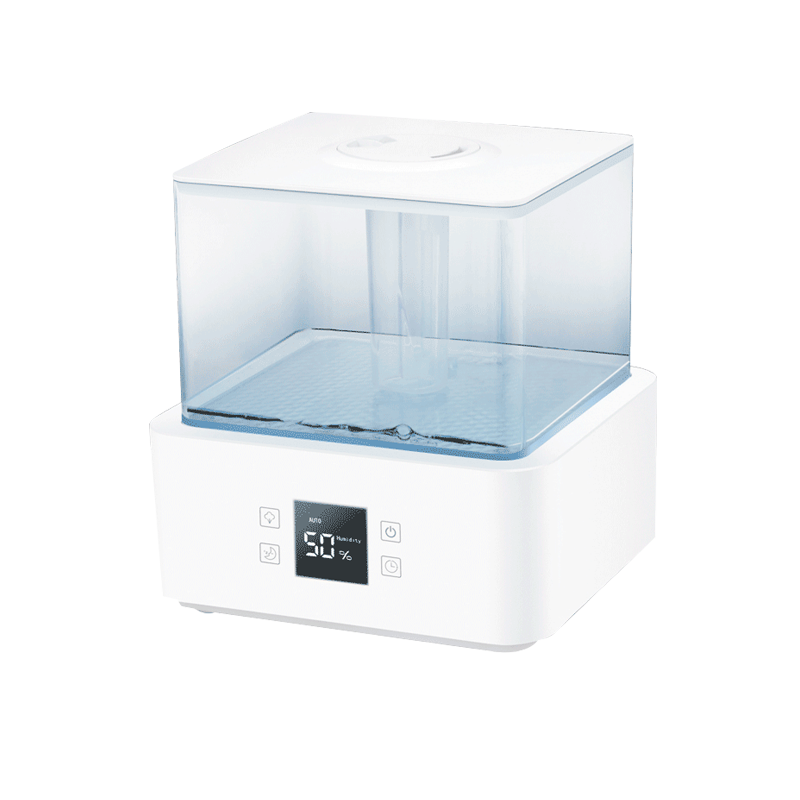 HM-01 Ultrasonic Portable Humidifier for Rooms Up to 28 m²A 45 W ultrasonic model with 2.5 L tank and 300 ml/h output for rooms up to 28 m², with listed certifications.View Product →
For a family home, a 3 to 5 liter tank usually covers one bedroom for a full night. Larger open plan spaces need either a bigger output rating in milliliters per hour or two smaller units placed at opposite ends of the room.
Above roughly 60 percent relative humidity, moisture problems start compounding. Windows and mirrors condense, walls feel cool and clammy, wardrobes develop a musty smell, laundry takes two days to dry indoors, and dust mites multiply. A dehumidifier draws room air across cold coils, condenses the water and collects it, so a closed room steadily drops in humidity.
Sizing is usually quoted in liters per day of extraction. A small bedroom or wardrobe area may need 10 to 12 liters per day, while a damp basement needs considerably more. Tank size decides how often you empty it, and a continuous drain hose solves that problem entirely if a floor drain is nearby. Working temperature range is the specification buyers overlook most: compressor models lose efficiency below about 15 degrees Celsius, so an unheated garage in winter needs a desiccant type instead. Run the unit with doors and windows closed, otherwise it keeps chasing moisture from outside.
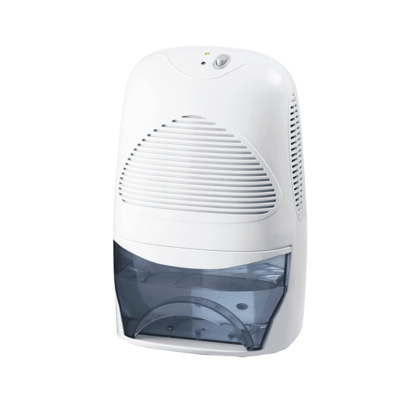
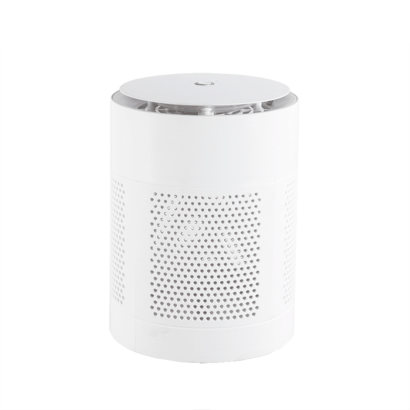
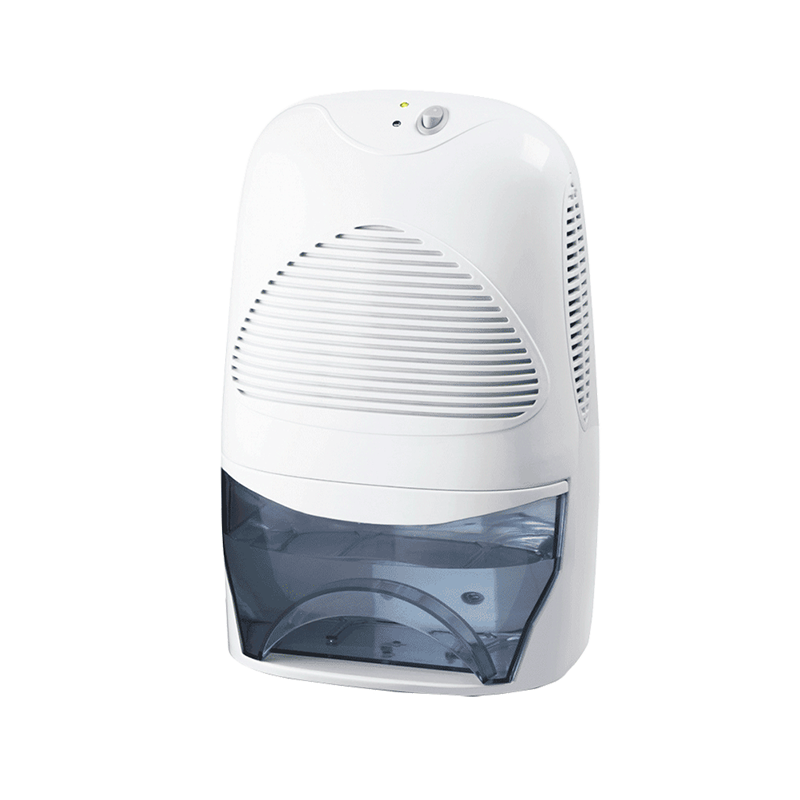 LG-203 Portable Thermo-Electric Dehumidifier with 2 L TankA compact Peltier dehumidifier removing about 600 ml per day at 30°C and 80% RH, with a 2 L tank and 16–35°C range.View Product →
An air purifier handles particles and gases, not moisture. A prefilter catches hair and lint, a HEPA stage captures fine particles such as pollen and pet dander, and a carbon layer reduces odors and volatile organic compounds. It does not raise or lower humidity, it does not cool a room, and it does not replace ventilation. If the air in a room is both damp and dusty, a purifier alone will still leave you with a damp room.
Compare models on clean air delivery rate, filter life in months, noise at the lowest speed and power draw. A unit with a strong airflow figure but a thin filter clogs quickly, so the two year cost of replacement filters often matters more than the purchase price. For a bedroom, noise below 30 decibels on the sleep setting is the practical threshold.
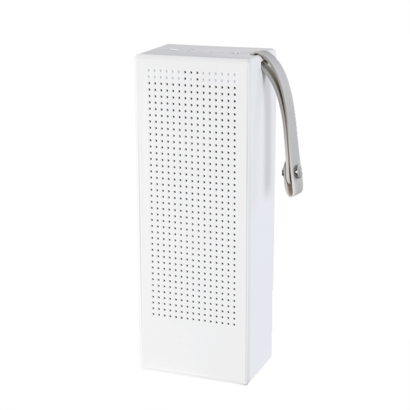
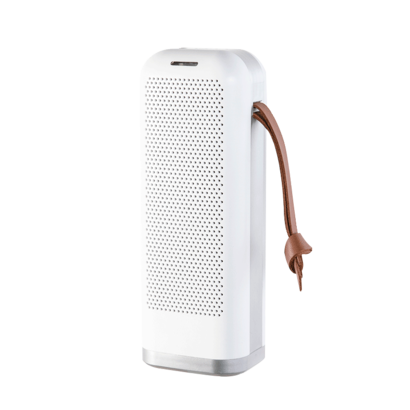
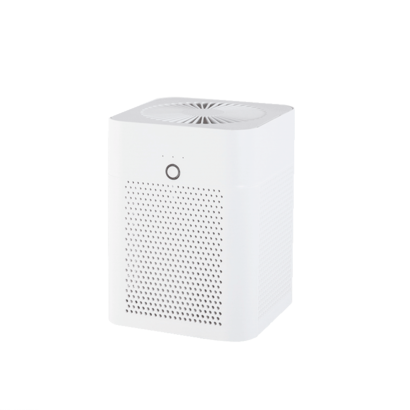
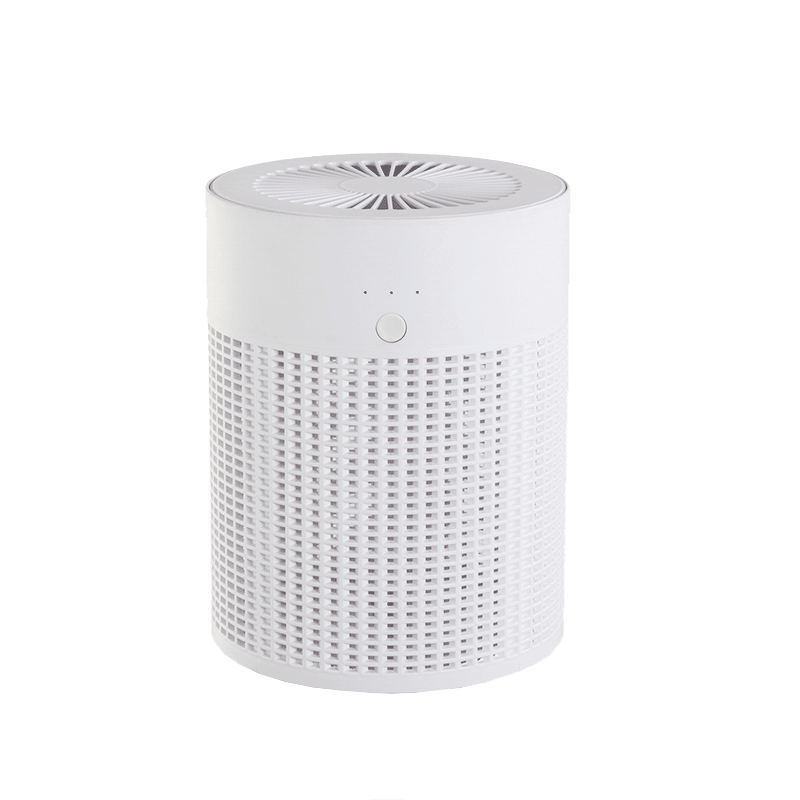 AP-01A Portable Mini Air Purifier with H12 HEPA FilterA 5 W mini purifier with H12 HEPA filtration, 25 CFM CADR and three speeds for spaces around 5 m².View Product →
| Device | What it changes | Typical sign you need it | Specification to compare |
|---|---|---|---|
| Humidifier | Adds moisture, raises relative humidity | Static shocks, dry throat, humidity under 30 percent | Tank volume, output per hour, noise level |
| Dehumidifier | Removes moisture, lowers relative humidity | Condensation on windows, musty smell, humidity above 60 percent | Extraction rate per day, tank size, working temperature range |
| Air purifier | Filters particles and gases, humidity unchanged | Dust on surfaces, allergy symptoms, cooking or pet odors | Clean air delivery rate, filter stages, filter life, noise |
Placement decides whether the combination works or fights itself. Keep an air purifier at least 30 centimeters from the wall and out of corners, so it can draw air from all sides. Set a dehumidifier on a flat surface with clear space around the grilles, and keep it away from the purifier intake, because dumping moist exhaust into a filter does neither unit any favors. Aim a humidifier mist away from the purifier, walls and wooden furniture.
Seasonally, the humidifier and dehumidifier normally take turns: dry heated months for one, humid months or damp basements for the other. The air purifier can run all year, and its filter should be checked more often in a humid room where dust binds together and clogs media faster.
For brand owners, importers and retail buyers, the functional differences turn into different test and compliance requirements. Humidifiers involve permanent water contact, so tank material, anti microbial treatment, leak testing and ingress protection all belong on the checklist. Dehumidifiers involve refrigerant or desiccant systems, condensate drainage and performance ratings measured at defined temperature and humidity conditions. Air purifiers involve filter efficiency claims, clean air delivery rate testing and noise data at each speed.
Anyone reviewing our air treatment product range will notice that the three categories share housing styles but almost nothing else internally, which is why tooling, testing and documentation are usually handled as separate projects. Questions about minimum order quantities, labeling and sample lead times are collected in our FAQ section. Practical checkpoints before confirming an order include: rated performance at the voltage and frequency of the destination market, filter or coil serviceability, spare part availability for tanks and filters, packaging drop test results, and whether the factory can supply a full test report for each production batch.
The clearest way to remember the difference between a humidifier, a dehumidifier and an air purifier is to ask what the room is failing at. Too dry means add water. Too damp means remove water. Too dusty means filter the air. Measure first, buy second, and add the remaining devices only when a second measurement proves they are needed.
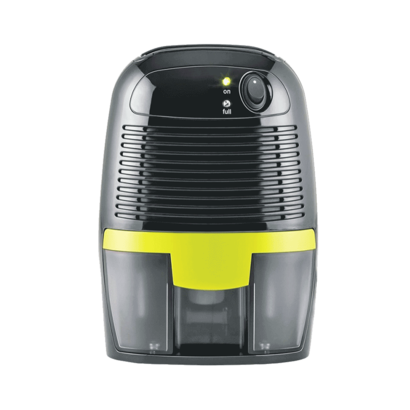

@2020. CIXI XIATIAN ELECTRICAL APPLIANCES CO.,LTD. All rights reserved. Wholesale High-End Electric Fans Manufacturers

 English
 한국어