

A color appointment can leave a salon with more than a fresh client. It leaves fine hair clippings, styling mist, ammonia, and fragrance in the air, often in a room with the door closed and dryers running. The best air purifier for a hair salon is not the largest unit in the catalog. It is a sealed HEPA and carbon machine sized for the room, with enough carbon to treat chemical vapors and a prefilter that catches hair before it reaches the main filter. That combination matters more than a long feature list.
If you get only one decision right, get this one: buy for particles and gases at the same time, then size the unit for at least five air changes per hour in the salon space. A purifier that only handles dust will leave the color bar smelling of chemicals. A purifier with a thin odor sheet will stop working long before the busy season ends.
Content
A home purifier is usually asked to handle dust, pollen, and the occasional cooking odor. A salon adds a steady stream of fine hair, styling product residue, and chemical vapors from color, bleach, relaxers, and smoothing treatments. Those pollutants behave differently, and they peak at different times of the day.
That is why a salon purifier should be judged on real room performance, not on a decorative shell or a remote control. The unit has to move enough air, hold enough carbon, and stay quiet enough that staff leave it running.
For most salons, the short answer is a sealed True HEPA unit with a large activated carbon stage, a washable or low-cost prefilter, and a CADR rating that matches the room at five to six air changes per hour. Use the table below to screen sales claims before you request a quote or a trial unit.
| Feature | What to look for | Why it matters in a salon |
|---|---|---|
| Main filtration | Sealed True HEPA, H13 or equivalent, with gaskets and no visible bypass | Captures fine hair, styling mist, and particles that settle on surfaces |
| Carbon stage | A deep activated carbon bed with published weight and replacement guidance | Reduces ammonia and other chemical vapors that HEPA cannot remove |
| Prefilter | Washable or inexpensive, easy to reach without tools | Stops hair and lint from blinding the HEPA filter |
| Airflow | CADR published for the unit, with a number for high and medium speed | Lets you calculate air changes for the actual salon volume |
| Noise | Quiet enough for continuous use on medium, roughly 50 to 55 dB or lower if possible | Staff are more likely to keep it on during appointments |
| Filter supply | Replacement filters and part numbers available before purchase | Prevents a good purifier from becoming dead stock after six months |
A HEPA filter only performs well when air cannot slip around it. Look for a gasketed frame, a close-fitting filter slot, and a housing that feels solid. A cheap cabinet with a good filter and a poor seal will send some dirty air straight back into the room.
Ozone generators are the wrong choice for an occupied salon. Ozone can irritate the lungs, and it does not replace HEPA and carbon filtration for hair particles or chemical vapors. Some ionizers produce a small amount of ozone as a byproduct, so ask for clear documentation if a unit uses ionization.
Square-foot ratings are easy to print and easy to misread. They often assume a standard ceiling height, a low pollution load, and a higher noise level than you will tolerate in a salon. A better method is to calculate the room volume and the CADR you need.
Use this formula: room volume in cubic feet x target air changes per hour divided by 60 equals the minimum CADR in cubic feet per minute. For a salon, use five air changes per hour as a floor and six when color work, blow-drying, or chemical services are heavy.
| Room size | Room volume | 5 air changes per hour | 6 air changes per hour |
|---|---|---|---|
| 10 ft x 12 ft x 8 ft | 960 cubic feet | 80 CFM | 96 CFM |
| 12 ft x 15 ft x 9 ft | 1,620 cubic feet | 135 CFM | 162 CFM |
| 20 ft x 20 ft x 10 ft | 4,000 cubic feet | 333 CFM | 400 CFM |
If the calculation points to 300 CFM and the quiet unit you like delivers 150 CFM on high, two units running at medium speed may be the better installation. Two well-placed purifiers can also cover dead zones near the color bar and the blow-dry station better than one large unit in a corner.
Activated carbon removes gases by adsorption. It has a finite capacity, and in a salon it faces a steady diet of solvents, fragrance, and ammonia. A thin carbon cloth may handle a light cooking odor, but it is not designed for a full day of color and bleach work. Ask for carbon weight, bed depth, and a realistic replacement interval in writing. If a supplier cannot answer those questions, keep looking.
Carbon also has a real operating cost. A unit with cheap filters that need changing every few weeks may cost more than a better-built unit with a larger carbon load. Keep one spare filter set on the shelf so service does not stop when odors return. If the smell comes back before the calendar says it is time, the carbon is telling you something.
A purifier cannot fix a room with no air movement. Place the unit where it can draw salon air across the intake, ideally near the color bar or between styling stations rather than in a closet or behind a curtain. Keep at least 12 to 18 inches of clearance around the intake and exhaust. Run it continuously during the shift, and use a higher speed for 30 minutes before and after chemical work.
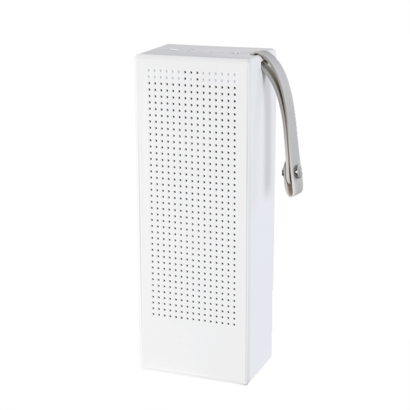
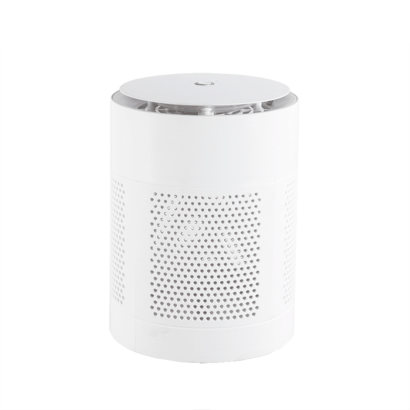
For a fixed position near the color bar, the AP-02 is one floor-standing model to compare against your measured CADR and carbon requirements. Ask for the airflow, noise, and filter data before ordering.
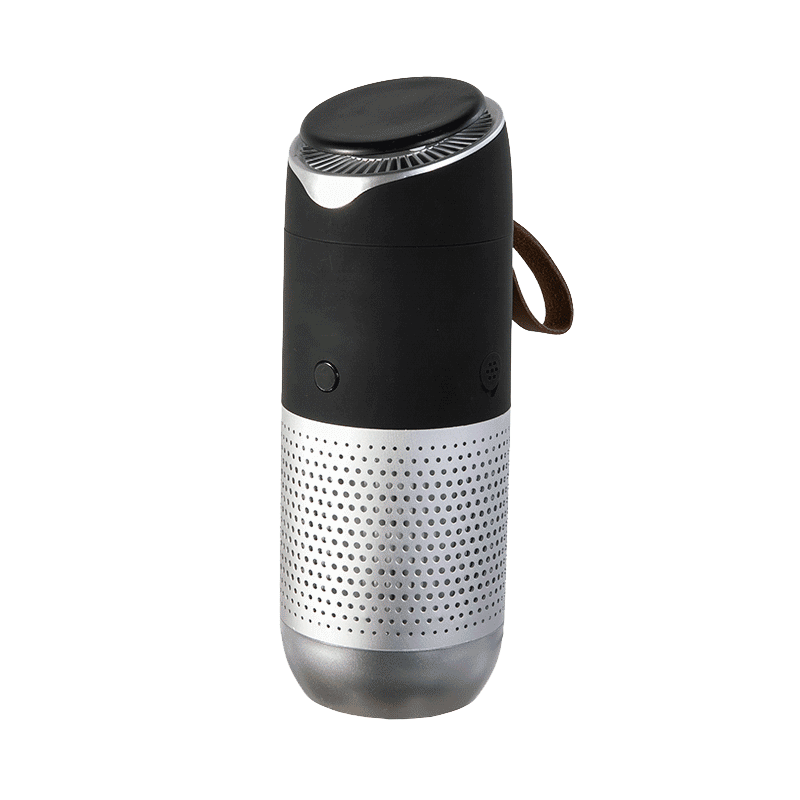 Air Car Purifier Smart for Small SpacesA compact 2.5W unit with 25 CFM CADR and H12 HEPA; check airflow, noise, and filter data against your room needs.View Product →
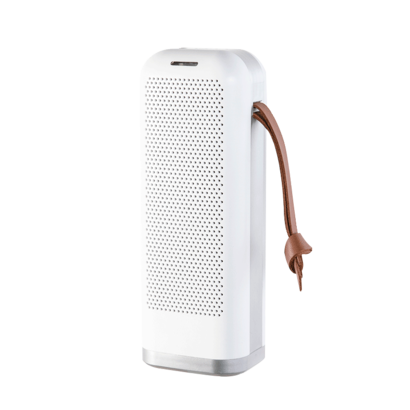
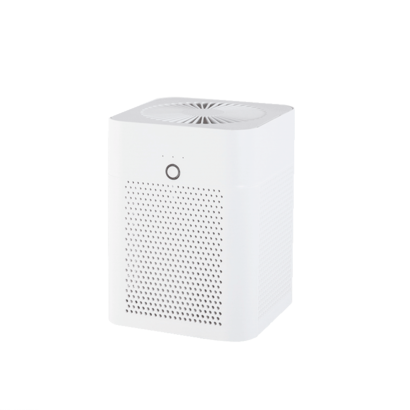
For a small treatment room or a second station, the AP-05 is another model to review, but size it from the room volume and the CFM number, not from the product photo.
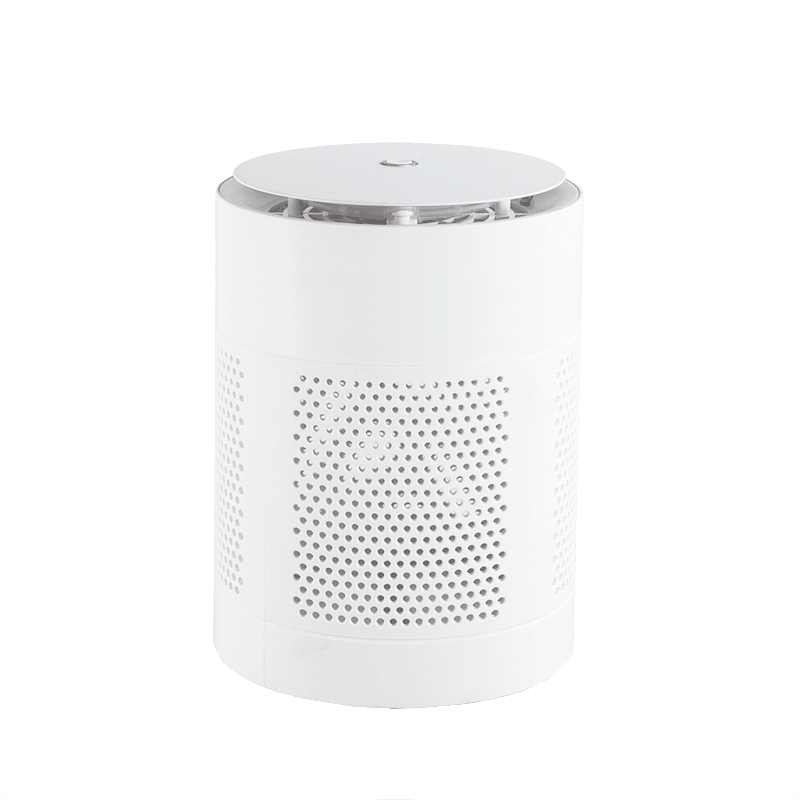 Portable Mini Air Purifier for Home UseCompact 5W H12 HEPA purifier with 25 CFM CADR; before a volume order, confirm filter availability, replacement part numbers, and test reports.View Product →
If you are fitting several locations, or sourcing units for a salon brand, ask for filter availability, replacement part numbers, and test reports before placing a volume order. A purifier is only as good as the filter you can actually buy next year. Xiatian's team describes its workshop, tooling, and customization process on its about page, and you can request specifications through the contact page. Keep the conversation practical: room volume, hours of chemical work per week, noise limit, and filter budget.
The best air purifier for a hair salon is the one that keeps running during a full appointment book, not the one with the longest feature list. Match the filter to the particles and gases in the room, size it with air changes rather than a square-foot sticker, and place it where the air actually moves. When the unit is quiet enough to stay on and the filters are easy to replace, the salon smells cleaner, the air feels lighter, and the staff stops opening the door for a break.

@2020. CIXI XIATIAN ELECTRICAL APPLIANCES CO.,LTD. All rights reserved. Wholesale High-End Electric Fans Manufacturers

 English
 한국어