

The best air purifier for cigarette smoke is not the one with the loudest claim on the box. It is a unit with a sealed HEPA stage, a substantial activated carbon stage, enough smoke CADR for the room, and a filter replacement budget you can live with. That combination matters more than a stylish shell or a smart app. If you are comparing formats, start with the air purifier range and judge each model by the data that affects smoke, not by a vague HEPA claim.
Content
Cigarette smoke has two problems. The particles are small enough to slip deep into the lungs, and the gases that carry odor and irritation are not particles at all. A HEPA filter captures particles. Activated carbon adsorbs gases. A purifier that relies on HEPA alone may reduce smoke haze while leaving the stale smell behind. A purifier with a token carbon mat may remove the smell for a few weeks and then fade.
The practical target is a three-stage design: a pre-filter for lint and tar, a true HEPA filter for smoke particles, and a carbon bed with enough mass and dwell time to handle gases. Look for smoke CADR, not only dust CADR. Check carbon weight or bed depth, replacement interval, and the cost of a full filter set.
| Filter stage | What it handles | What to check | Common weak point |
|---|---|---|---|
| Pre-filter | Larger ash, tar, lint | Washable or low-cost replacement | Clogs quickly and cuts airflow |
| True HEPA | Smoke particles and fine dust | Smoke CADR and sealed frame | Does not remove odor gases |
| Activated carbon | Odor and some gases | Carbon mass, depth, and filter life | Thin carbon mats saturate fast |
| Optional post-filter | Fine carryover | Low pressure drop | Cannot rescue a weak carbon stage |
Smoke is not a single pollutant. It includes fine particles, tar, nicotine, carbon monoxide, and a changing mix of organic gases. Some of these gases cling to soft furnishings, curtains, and clothing. That is why a room can smell of smoke even after the air looks clear. A purifier can lower the airborne load, but it cannot clean residue from walls, upholstery, or a smoker's jacket.
Smoke also loads filters quickly. Tar is sticky. A pre-filter that is easy to wash or replace protects the HEPA stage and keeps airflow from falling. If someone smokes indoors every day, expect shorter filter life than in a home with only occasional smoke. The best unit for a heavy smoker is often the one with the lowest long-term filter cost, not the one with the highest single-day airflow claim.
Use smoke CADR as the first filter. A unit with a high dust CADR may still be weak on smoke if the airflow path, filter seal, or carbon stage is poorly designed. Match the rating to room volume, not just floor area. A 10 by 12 foot room with an 8 foot ceiling holds 960 cubic feet. A 200 cubic feet per minute smoke CADR unit gives about 12.5 air changes per hour at perfect mixing, but real rooms are not perfect. Use that estimate as a starting point, not a guarantee.
Carbon is where many smoke purifiers fall short. A thin cloth with a carbon coating can handle light cooking odor. Cigarette smoke needs more. Ask for carbon mass, bed depth, and the recommended replacement interval. Then price a year of filters. If a full set costs half the purchase price, the low upfront price is misleading.
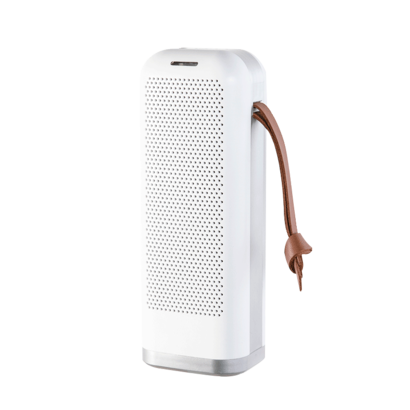
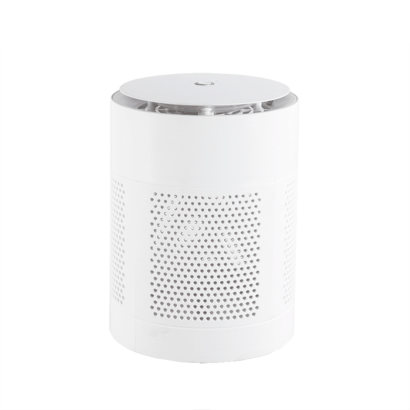
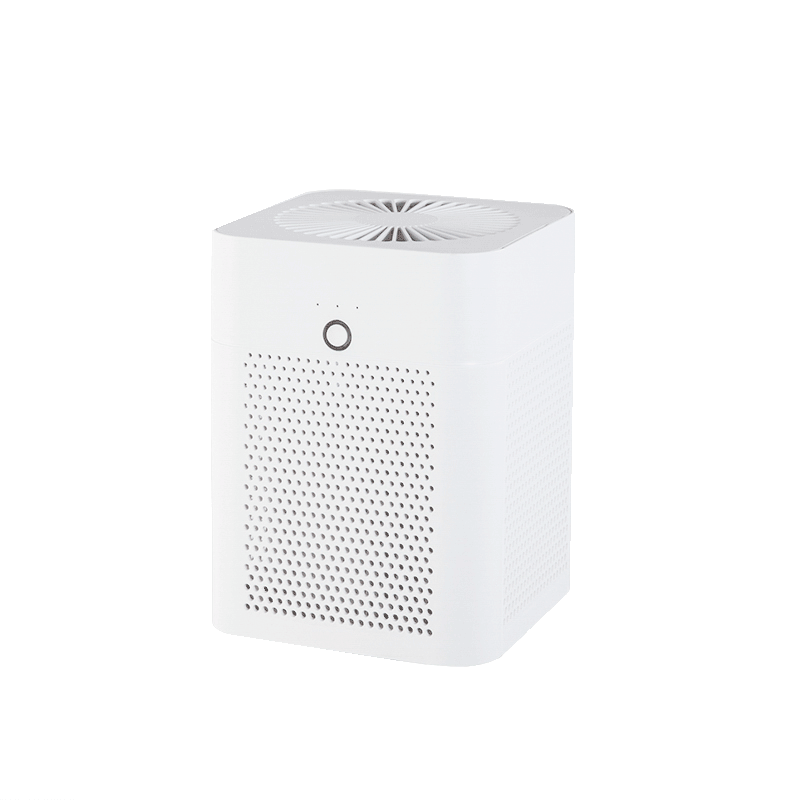 AP-03 Household Air Purifier with H12 HEPA FilterCompact 5W H12 HEPA purifier rated 25 CFM for about 40 sq ft; compare smoke CADR, carbon details, noise, and filter costs before buying.View Product →
The AP-03 is one model in the AP range. Treat its current data sheet as a starting point, then compare smoke CADR, carbon weight, noise, and filter cost against your room. If those figures are not published, ask for them before you buy.
Smoke control works best when the purifier runs continuously. That makes noise a buying factor, not a luxury. A unit that is too loud for the living room will be switched off, and a switched-off purifier has zero CADR. Look for a low setting that still moves air, and a boost mode you can use after a cigarette.
Avoid ozone generators and any purifier that markets ozone as a cleaning benefit. Ozone can irritate the lungs and does not solve the source of smoke residue. For homes with asthma, children, or older adults, choose a filter-based design with a sealed HEPA path and no intentional ozone output.
A single room with one occasional smoker has different needs from a daily indoor smoker in an open-plan home. For a bedroom, place the unit between the smoker and the rest of the room, run it on a higher setting during and after smoking, and keep the bedroom door closed. For a living room, two smaller units can sometimes work better than one large unit because they create fewer dead zones.
Portable formats can help in small rooms, but size has a cost. Check capacity before you trust a compact unit for a full bedroom.
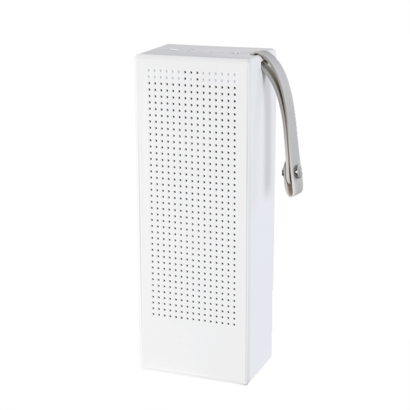
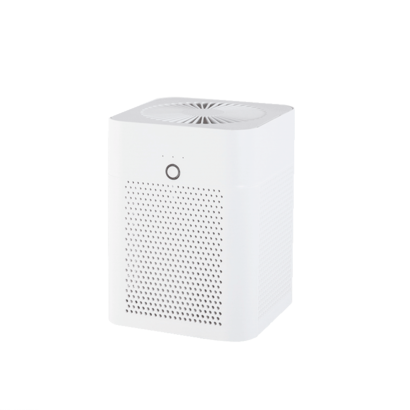
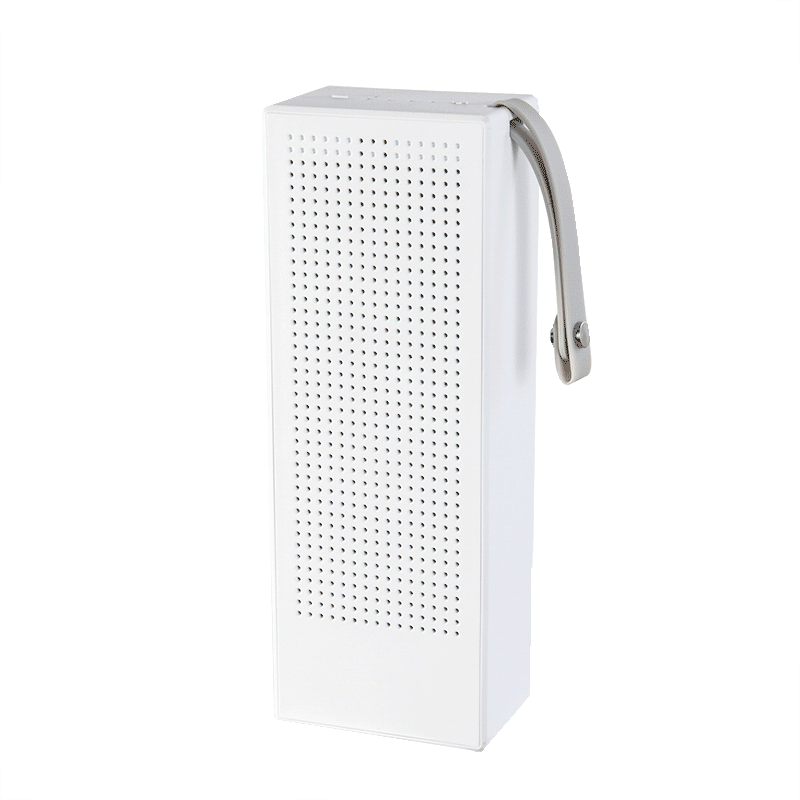 RAP-02 Portable Rechargeable Air Purifier for Small RoomsA 0.8 kg rechargeable unit with 50 m³/h CADR, H12 HEPA and carbon, sized for 8–10 m² spaces; check room volume and filter interval.View Product →
The RAP-02 is a portable option in the range. It may suit a desk area, a small guest room, or a rental where space is tight. It is not a shortcut for a large, open living area. Compare its smoke CADR with the room volume and accept a shorter filter interval if it runs all day.
Whatever model you choose, treat the room as a system. A purifier on one side of a sofa does not clean the air behind the sofa. Airflow, door position, and filter condition all matter.
Placement is free performance. Keep the unit off the floor, away from curtains, and at least a hand span from the wall so it can draw air. Do not hide it in a corner behind furniture. If the room has a ceiling fan or air circulator, use it on low to mix the air, but do not blow smoke directly into the purifier intake. That can load the pre-filter faster without improving overall capture.
Run the purifier before the cigarette, during it, and for a while after. A common mistake is to switch it on only when the smell is strong. By then, the gases have spread. A boost mode for 30 to 60 minutes after smoking, followed by a lower continuous setting, is more effective than short bursts. Open a window when outdoor air is clean, but do not rely on ventilation alone if the smoker continues indoors.
Clean or replace the pre-filter often. Wipe hard surfaces. Wash curtains and cushion covers on the schedule the fabric allows. A purifier cannot remove nicotine film from a wall, and no filter will make a smoky room smell neutral if the source keeps adding residue.
If you are sourcing for a brand, put those points into the request for quotation. Ask for the test method behind the smoke CADR figure, the carbon specification, the noise data at each speed, and the filter life under real smoke load. A supplier that can answer with numbers is easier to compare than one that answers with adjectives. You can also ask for current test data and sample terms before committing to a container order.
The best air purifiers for cigarette smoke are not defined by one feature. They are defined by a complete filter stack, honest smoke CADR, enough carbon to handle gases, and a maintenance cost that supports daily use. Choose for the room you have, place the unit where it can breathe, and run it long enough to do the job. If smoke is a daily habit in the home, pair the purifier with ventilation and surface cleaning. The purifier is one part of the control plan, not a licence to ignore the source.

@2020. CIXI XIATIAN ELECTRICAL APPLIANCES CO.,LTD. All rights reserved. Wholesale High-End Electric Fans Manufacturers

 English
 한국어