

You shut the bedroom window at midnight, woke at six with a blocked nose anyway, and now you are looking at the thin yellow film on the sill and wondering whether the purifier humming in the corner is doing anything at all. The short answer is yes, a correctly matched air purifier does lower airborne pollen indoors, and field studies of HEPA filtration during pollen season show measurable drops in indoor grain counts alongside fewer reported symptoms. It will not make pollen season disappear, and it will not clean the grains already sitting on your duvet. What it does is reduce the dose you breathe through the night, and that is usually the part people feel most.
Content
Pollen grains are large by filtration standards. Grass pollen typically measures 20 to 40 micrometers across, ragweed sits near 20, and pine can pass 50. A true HEPA filter is rated at 99.97 percent capture for particles of 0.3 micrometers, so grains of this size are trapped in the media rather than slipping through. Capture is rarely the weak point in a well built unit. Airflow is.
A purifier only cleans the air that actually reaches it, which is why the clean air delivery rate matters more than the filter class printed on the carton. A good filter paired with a weak fan cleans a large room slowly, and slow cleaning feels like no cleaning when you need relief before bedtime.
Pollen also gets indoors by more than one route. Open windows and doors are the obvious one. Hair, clothing, pet coats, shoes, and laundry dried outside all carry grains in and shed them for hours afterward. A purifier intercepts none of that traffic. It continuously removes grains that have already become airborne, which is why it works best as one layer in a set of habits rather than as a standalone fix.
Buyers tend to compare filter grades and skip sizing, and that is the single most common reason a new purifier disappoints. A workable rule for allergy use is to choose a unit whose CADR in cubic feet per minute is at least two thirds of the room floor area in square feet, which delivers roughly 4.8 air changes per hour at maximum fan speed. The table below converts that into room sizes with a normal 2.5 meter ceiling.
| Room floor area | Typical room | Minimum CADR in cubic meters per hour | Minimum CADR in cubic feet per minute |
|---|---|---|---|
| 10 to 15 square meters | Small bedroom or study | 180 | 105 |
| 15 to 25 square meters | Main bedroom | 300 | 175 |
| 25 to 40 square meters | Open living area | 480 | 285 |
| 40 to 60 square meters | Living plus dining | 720 | 425 |
| 60 to 80 square meters | Open plan floor | 960 | 565 |
Two practical notes. Rated CADR is usually measured at maximum output, while most people sleep at the lowest setting, so check the noise figure at that lowest step before you commit. Then measure the floor area instead of estimating it from a photo, because odd room shapes and furniture placement change how quickly the air actually turns over.
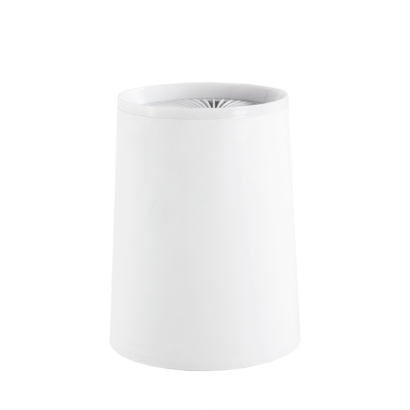
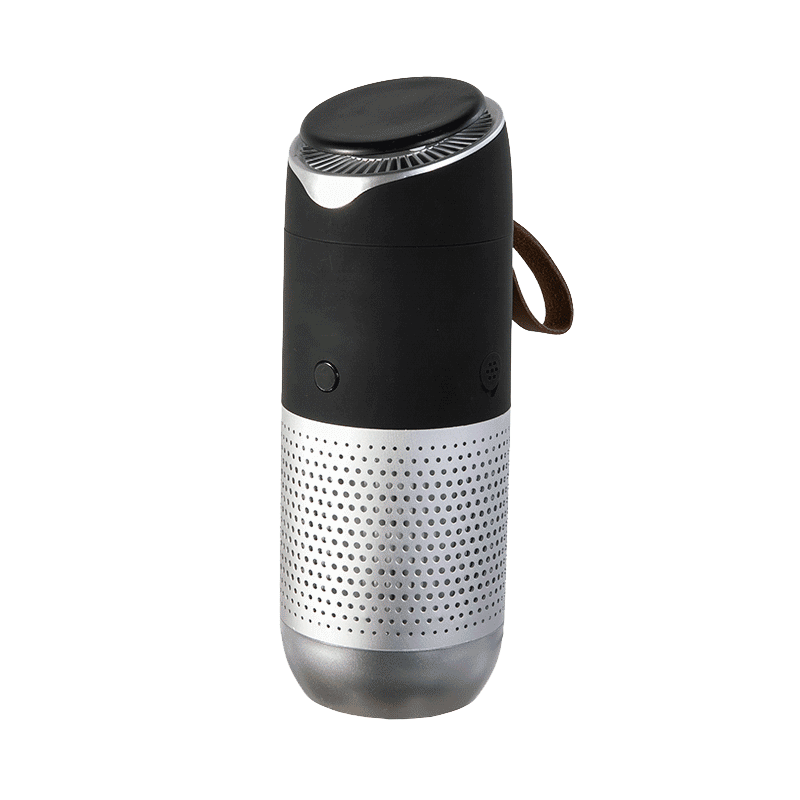 Air Car Purifier Smart with H12 HEPACompact 2.5W car air purifier with three speeds, H12 HEPA filtration and a 5 m² coverage area for small spaces.View Product →
Filter stacks vary widely and the labels rarely explain what each stage contributes. For pollen specifically, the coarse stage and the HEPA layer do almost all of the work. Everything else is a supporting player, or in one case a reason to walk away.
| Filter stage | Effect on pollen | What to verify before buying |
|---|---|---|
| Washable pre-filter | Traps larger grains, lint and dust so the HEPA layer does not load up in weeks | Removable without tools and genuinely washable |
| True HEPA H13 or H14 | Captures pollen grains with high efficiency through interception and electrostatic attraction | Independent test report and the particle size that was tested |
| Activated carbon | Little direct effect on pollen, useful for traffic fumes and cooking odors | Actual carbon weight, not just the word carbon on the box |
| Ionizer or electrostatic stage | Charges particles so they cling to plates or surfaces, may help with fine dust | Ozone test result measured at maximum output |
| Ozone generator | Adds nothing for pollen and introduces an airway irritant | Best avoided in rooms people occupy |
That last row matters more than it looks. Ozone is sometimes marketed as an air cleaning feature, but pollen is removed by physical capture, so any ozone output is unnecessary exposure for a household that already has irritated airways.
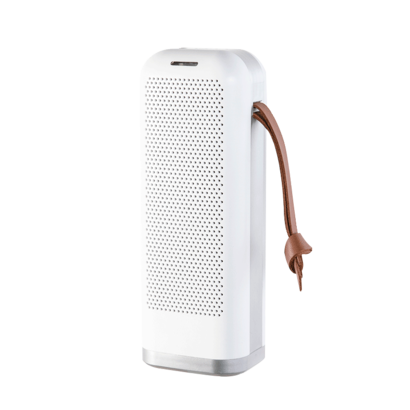
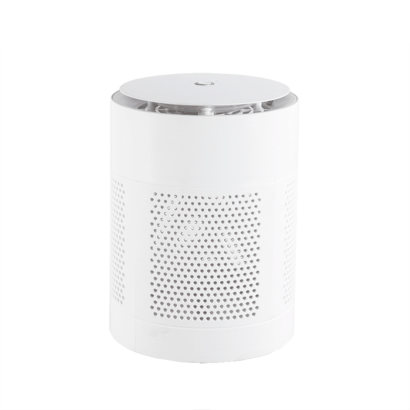
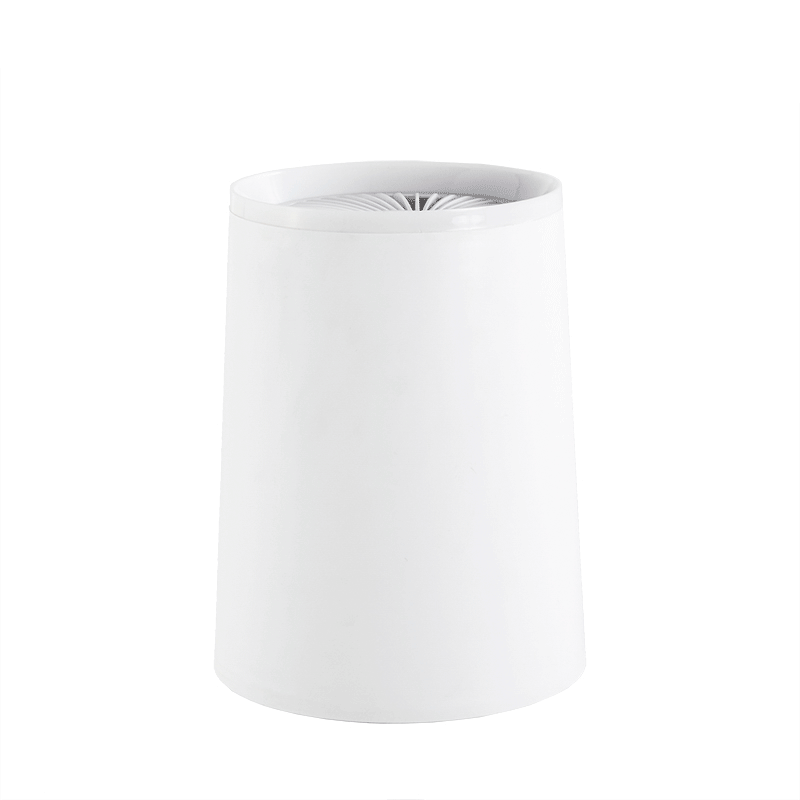 OEM Small Air Purifier with H12 HEPA FilterCompact OEM air purifier for small spaces, with three speeds and an H12 HEPA filter; its size suits moving between bedroom, office and child’s room.View Product →
A single large unit in the living room does not help a closed bedroom down the hall. For small rooms, a compact model that can be carried between the bedroom, the home office and a child's room often covers more real exposure than one bigger machine left in place.
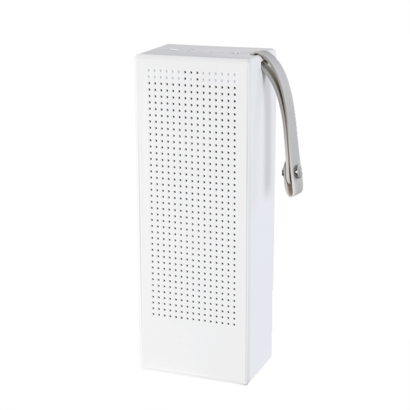
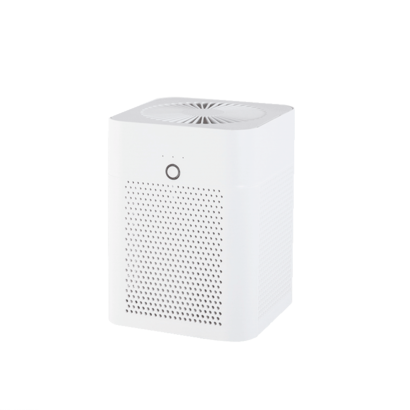
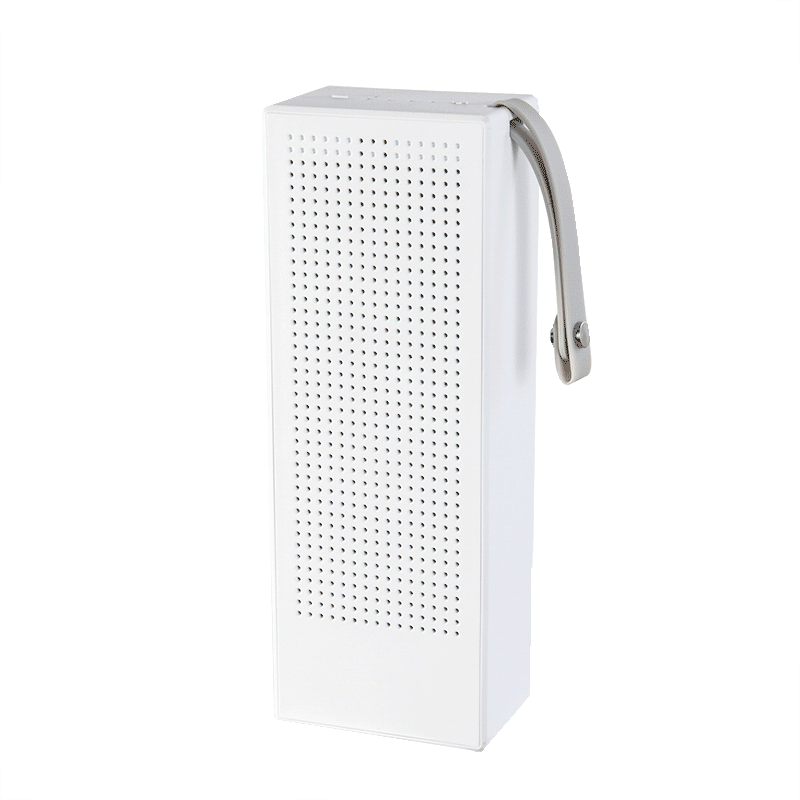 Portable Rechargeable Air Purifier RAP-02Battery-powered H12 HEPA and carbon purifier for 8–10 m² personal spaces, with three modes and 0.8 kg portability between rooms.View Product →
Settled pollen is a surface problem, not an air problem. Vacuum with a sealed HEPA machine, damp wipe sills and hard floors, and wash bedding weekly in hot water. A purifier running in a room with an open window on a windy day is refilling faster than it can clean, no matter how good the filter is. Doors and windows closed during peak hours, a mat at the entrance and a change of clothes after time outdoors usually deliver more relief per dollar than upgrading to a larger purifier.
If the home has a ducted system, a filter rated MERV 11 to 13 protects the air handler and removes a share of pollen, but ducted filtration runs only when the fan runs, so it complements a room unit rather than replacing it.
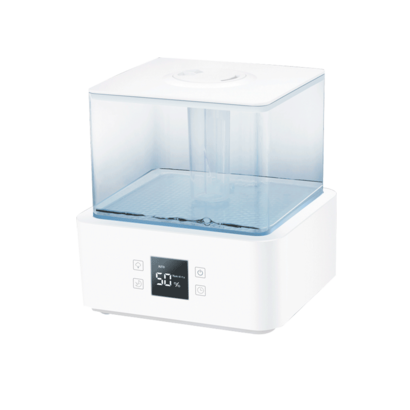
These three get confused constantly. A purifier with a HEPA stage removes grains from the air. An air washer passes air through water and traps particles on a wet surface while adding some moisture. A humidifier adds moisture and removes nothing. For pollen, the purifier is the relevant device. Humidity matters only as a secondary factor: dry air aggravates irritated nasal passages, while very damp air encourages dust mites and mold, so keep indoor relative humidity between 30 and 50 percent and treat that as a comfort setting rather than a treatment.
For brand owners and importers sourcing for markets with a long grass pollen season, the specification conversation should start with CADR and noise rather than appearance. A manufacturer with in house tooling, injection and testing can adjust filter stack depth, fan curves and housing geometry to hit a target CADR for a specific room size, then verify it in a lab before mass production. The air purifier range here covers compact, portable and room sized formats built in a 30,000 square meter facility with its own test equipment, and the FAQ answers the common questions about filter life and customization.
So the answer holds, with one condition attached. An air purifier helps with pollen allergies when the filter is a true HEPA layer, the clean air delivery rate suits the room, and the machine runs long and quietly enough to matter. Get those three right and the pollen count outside becomes a smaller part of how you sleep. Get them wrong and you own an expensive fan.
@2020. CIXI XIATIAN ELECTRICAL APPLIANCES CO.,LTD. All rights reserved. Wholesale High-End Electric Fans Manufacturers

 English
 한국어