

Yes, an air circulator can effectively cool your home — but not in the same way an air conditioner does. An air circulator lowers your perceived body temperature by 3°F to 8°F (1.7°C to 4.4°C) through increased airflow and evaporative cooling, without actually reducing room temperature. When used strategically alongside your AC or natural ventilation, it can cut energy costs by up to 30% while maintaining comfort.
Content
An air circulator is a high-velocity fan engineered to project a focused column of air across a room. Unlike traditional fans that simply push air forward in a wide, gentle arc, air circulators create a vortex-like airflow pattern that moves air throughout the entire room — including ceilings, walls, and floor-level dead zones.
The key cooling mechanisms include:
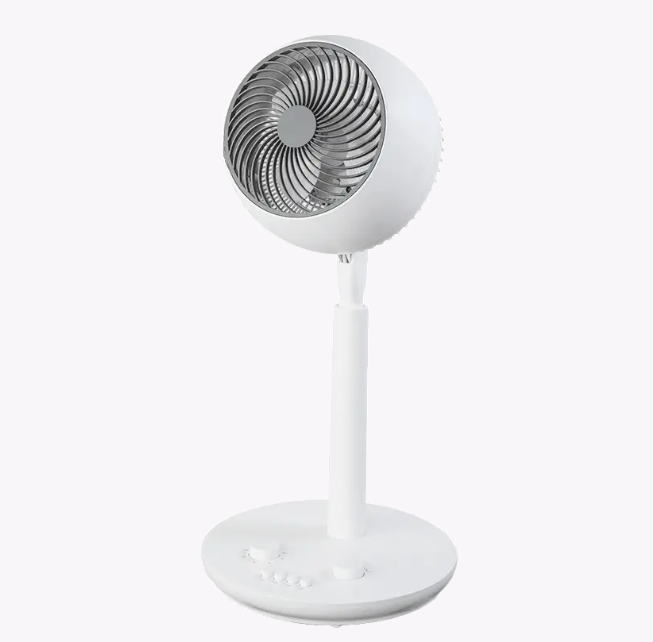
Where you place your air circulator determines how effective it will be. Poor placement wastes electricity and provides little relief; smart placement can make a room feel significantly cooler within minutes.
When outdoor temperatures drop below indoor temperatures — typically after 9 PM in summer — place the circulator facing inward from an open window. This pulls cool night air deep into the room. Outdoor air as low as 65°F (18°C) can cool a room by 5–10°F within 20–30 minutes using this method. Open a window on the opposite side of the room to create a clear airflow path.
Place the circulator in a corner, angled diagonally across the room. This creates a circular airflow pattern that covers more surface area than a straight-line setup. It's ideal for living rooms and open-plan spaces where you need whole-room circulation without windows nearby.
Position the circulator across the room from your air conditioner's output vent, aimed at the vent's direction. This pushes conditioned air further into the room instead of letting it concentrate near the AC unit. This configuration can allow you to raise your AC thermostat by 4°F (2.2°C) without losing comfort, saving approximately 8–10% on cooling energy per degree raised.
Many homeowners use these terms interchangeably, but they perform very differently when it comes to home cooling.
| Feature | Air Circulator | Traditional Fan |
|---|---|---|
| Airflow range | Up to 30–40 ft (9–12 m) | 5–10 ft (1.5–3 m) |
| Room coverage | Full room | Directional zone only |
| Best use case | Whole-room cooling, AC assist | Personal, spot cooling |
| Energy consumption | ~25–50W | ~35–75W |
| Night ventilation | Highly effective | Moderate |
| Noise level | Low (at similar airflow) | Moderate to high |
If you don't have air conditioning, follow this method to maximize cooling with a circulator alone:
Pairing an air circulator with an air conditioner is one of the most cost-effective home cooling strategies available. According to the U.S. Department of Energy, using fans alongside AC allows homeowners to set the thermostat 4°F higher while maintaining the same comfort level — translating directly into energy savings.
Practical tips for AC + circulator pairing:
A single air circulator can cool more than one room when used intelligently. For multi-room setups:
Place one circulator at one end of a hallway, aimed toward the far end. Open bedroom doors along the hallway to create a channeled airflow that draws air through multiple rooms. This works especially well in single-story homes with a central corridor.
Hot air naturally rises to upper floors. In a two-story home, place an air circulator at the top of the stairs, aimed downward. This disrupts the thermal stack effect and pushes accumulated ceiling heat back down, where it can mix with cooler floor-level air. This technique can reduce upper-floor temperatures by 3–6°F without any additional equipment.
Using two circulators on opposite sides of a large room or open floor plan creates a figure-eight airflow pattern. This eliminates stagnant zones and provides much more even temperature distribution than a single unit. Cixi Xiatian's dual-unit configurations are specifically designed for this type of deployment in large living spaces.
It's important to set realistic expectations. An air circulator will not reduce actual air temperature — it creates a cooling sensation through airflow. There are situations where it will fall short:
Not all air circulators perform equally. When selecting one for home cooling, prioritize these specifications:
| Feature | What to Look For | Why It Matters |
|---|---|---|
| Airflow range | At least 30 ft (9 m) | Ensures whole-room coverage |
| Speed settings | 3 or more | Allows fine-tuning for day vs. night |
| 360° pivot / tilt | Full vertical + horizontal | Enables precise airflow targeting |
| Noise level | Below 45 dB on low setting | Critical for bedroom overnight use |
| Timer function | 1–8 hour programmable timer | Automates night ventilation without manual operation |
| Energy consumption | Under 50W at max speed | Keeps operating costs minimal |
One of the most compelling reasons to use an air circulator is the cost difference compared to air conditioning. A typical central air conditioner uses 3,000–5,000 watts per hour, while a quality air circulator uses only 25–50 watts — roughly 1% of the energy.
For a homeowner running AC 8 hours per day during a 90-day summer, the comparison looks like this:
Even if you still need air conditioning during peak heat, combining it with a circulator provides meaningful savings on an annual basis.

@2020. CIXI XIATIAN ELECTRICAL APPLIANCES CO.,LTD. All rights reserved. Wholesale High-End Electric Fans Manufacturers

 English
 한국어
한국어