

With the arrival of winter, finding efficient and comfortable heating equipment has become a common need for many homes and offices. Among the many electric heater products, convection heaters are widely popular due to their unique heating principle and excellent comfort.
Core Principle: Natural Heat Convection
The core working principle of a convection heater is heat convection. It typically has a built-in heating element (such as a heating tube or heating element). When the heater is turned on:
Content
The heating element heats the surrounding cold air.
The heated air becomes less dense and naturally rises, exiting from the air outlet at the top of the machine.
Simultaneously, the air inlet at the bottom draws in cooler indoor air, creating a continuous air circulation.
This continuous heat convection process drives airflow and mixing throughout the room, achieving uniform and rapid room heating.
Unlike traditional fan-type heaters (which rely on a fan to force airflow), convection heaters offer a more natural and quieter heating process because they typically don't rely on a fan to drive the air.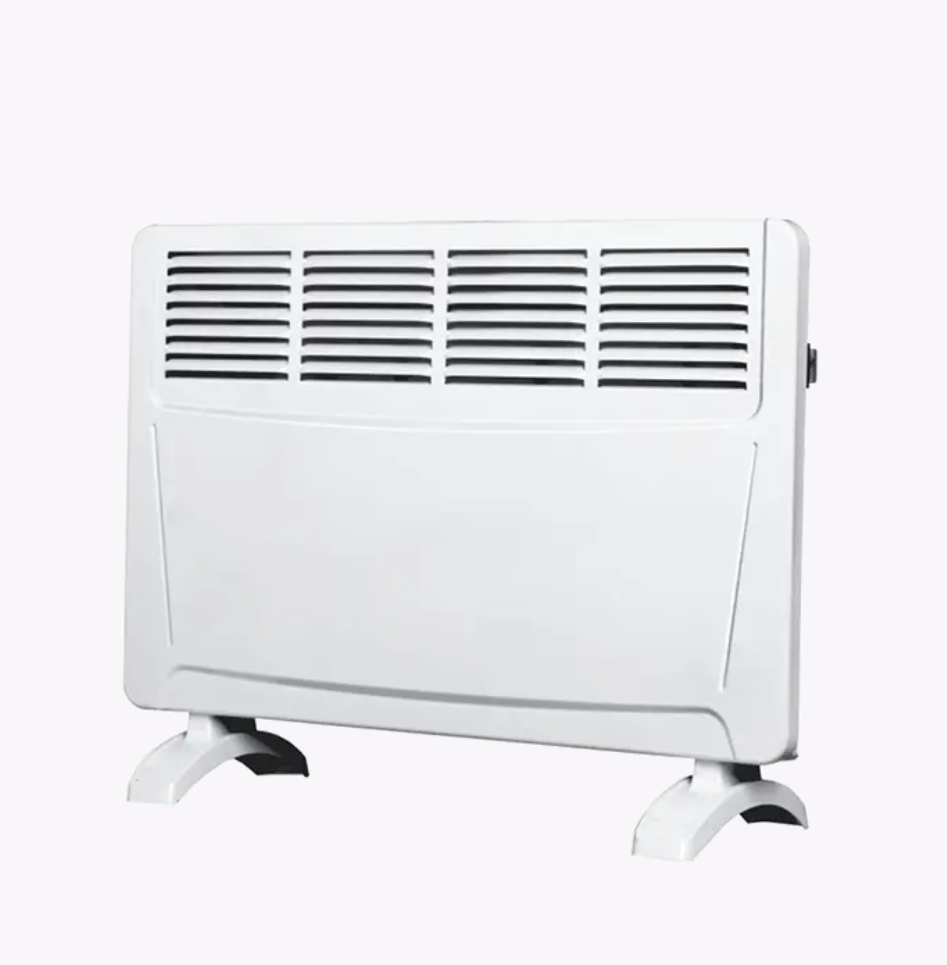
Choosing a convection heater will give you several key advantages:
Relying primarily on natural convection, many convection heaters operate with almost no noise, making them especially suitable for bedrooms, studies, or offices where a quiet environment is needed. They also don't produce an annoying "blowing" sensation, resulting in a more comfortable experience.
Continuous air circulation prevents localized overheating, resulting in a more even temperature distribution throughout the room.
Compared to some direct radiant heaters, convection heaters generally don't drastically change the air humidity, making the air feel gentler and less dry.
Simple and Aesthetically Pleasing Design
Many convection heaters feature a flat, slim design that can be wall-mounted or floor-standing, blending seamlessly into various home décor styles.
When purchasing a convection heater, consumers can pay attention to the following related terms and functions:
Convection heaters are ideal for those seeking comfort, quiet operation, and even heating. Understanding their heat convection principle will help you better utilize this device and spend a warm and comfortable winter.

@2020. CIXI XIATIAN ELECTRICAL APPLIANCES CO.,LTD. All rights reserved. Wholesale High-End Electric Fans Manufacturers

 English
 한국어
한국어