

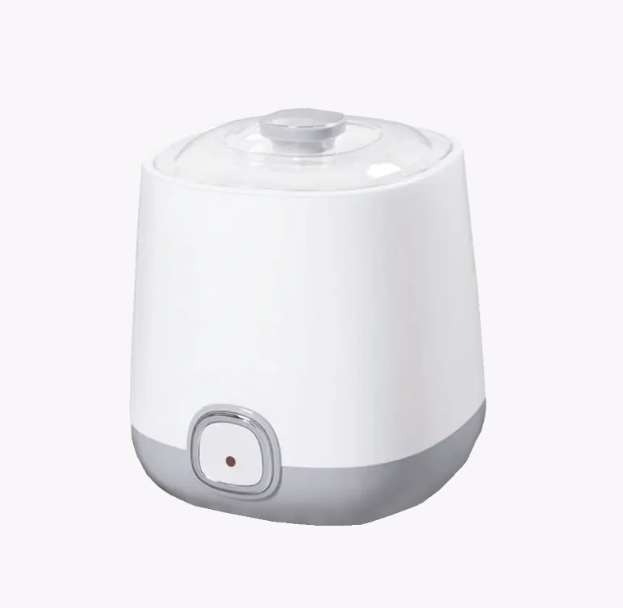
Choosing the right yogurt maker comes down to three core factors: capacity, temperature control precision, and ease of cleaning. If you make yogurt for one or two people, a compact single-jar model works perfectly. For families or meal preppers, a multi-jar or large-capacity unit is the smarter investment. Once you know your volume needs and whether you want set-and-forget simplicity or hands-on control, the decision becomes much clearer.
This guide breaks down every key consideration so you can confidently match a yogurt maker to your lifestyle, dietary preferences, and kitchen habits.
Content
Many home cooks attempt yogurt-making using an oven's pilot light, a slow cooker, or wrapped towels around a pot. While these methods can work, they rely on ambient temperature stability that is difficult to maintain. Yogurt cultures thrive between 40°C and 46°C (104°F–115°F); a drop of just 5°C can slow fermentation significantly, while exceeding 49°C kills the live cultures entirely.
A dedicated yogurt maker holds temperature within a tight ±1°C range throughout the entire fermentation window — typically 6 to 12 hours. The result is consistently thick, tangy yogurt with predictable texture, every batch. For anyone making yogurt more than once a month, the investment pays off quickly in both results and reduced effort.
Yogurt makers fall into several distinct categories. Understanding each type helps you avoid buying more — or less — machine than you actually need.
These are the most popular entry-level option. They typically include 6 to 8 individual glass jars (around 150–180 ml each), a warming base, and a transparent lid. Each jar can be used for a different flavor or strain. They are ideal for households of two to four people who want portion-ready servings without extra portioning work after fermentation.
These units hold a single container ranging from 1 to 2 liters, making them well suited for family use or batch prepping. Some pot-style models include a strainer insert for making Greek-style yogurt directly in the unit, eliminating the need for cheesecloth or a separate straining setup.
Higher-end units feature LCD displays, adjustable temperature settings (often ranging from 30°C to 50°C), and digital timers that automatically shut off after the set fermentation period. These are the best choice for making non-dairy yogurts, kefir, or cultured butter, which each require different temperature profiles. Temperature flexibility is the single biggest differentiator between a basic and a premium yogurt maker.
Many multicookers include a dedicated yogurt setting. While convenient if you already own one, these units require more steps (boiling, cooling, then fermenting in the same pot) and lack the portability and simplicity of a standalone yogurt maker. They work well for large batches but are less convenient for everyday use.
Not all features carry equal weight. The table below ranks the most commonly advertised features by practical importance for typical home users.
| Feature | Importance Level | Why It Matters |
|---|---|---|
| Temperature Control Range | Essential | Determines which cultures and milk types you can use |
| Total Capacity | Essential | Must match your household's weekly yogurt consumption |
| Automatic Timer / Shut-Off | High | Prevents over-fermentation if you forget to check |
| Container Material (Glass vs. Plastic) | Medium-High | Glass is more hygienic and odor-resistant long-term |
| Lid Seal Quality | Medium | Affects storage life once jars move to the refrigerator |
| Dishwasher-Safe Parts | Medium | Reduces time spent on cleanup between batches |
| Strainer Insert Included | Situational | Valuable only if you regularly make Greek-style yogurt |
| Wattage / Energy Use | Low | Most units use only 10–20W; running costs are minimal |
Capacity is the most common source of buyer regret. Underestimating leads to running the machine daily; overestimating means yogurt sitting in the fridge past its peak.
Use this as a rough guide:
Homemade yogurt typically stays fresh for 7 to 10 days refrigerated, so weekly batching works well for most households.
Most yogurt makers ship with either glass or BPA-free plastic jars. Both can produce excellent yogurt, but each has trade-offs worth knowing before you buy.
If your yogurt maker ships with plastic and you prefer glass, many models accept standard 150–180 ml glass preserve jars as compatible replacements — worth checking before purchasing.
Non-dairy yogurts made from oat, soy, coconut, almond, or cashew milk are increasingly popular, but they demand different fermentation conditions than cow's milk yogurt.
The two critical requirements for non-dairy success are:
If non-dairy use is a priority, look specifically for a programmable model with a temperature range starting at 30°C or lower and a timer that runs to at least 15 hours.
Yogurt makers with many small components, narrow jar necks, or non-removable inner trays quickly become tedious to clean. This seemingly minor point has a direct impact on whether you continue using the machine or push it to the back of a cabinet.
When evaluating cleaning convenience, check for:
Models with fewer moving parts and wide-mouth jars consistently score higher in long-term user satisfaction precisely because of cleaning ease.
Different fermented dairy products require meaningfully different conditions. Here is how to match machine capabilities to what you want to make:
| Product | Ideal Temp Range | Typical Duration | Machine Requirement |
|---|---|---|---|
| Traditional Dairy Yogurt | 42°C–46°C | 6–10 hours | Any standard model |
| Greek Yogurt | 42°C–46°C | 8–12 hours + straining | Standard model + strainer |
| Kefir | 20°C–25°C | 18–24 hours | Programmable with low-temp range |
| Non-Dairy Yogurt | 38°C–42°C | 10–16 hours | Programmable with adjustable temp |
| Skyr (Icelandic Style) | 38°C–40°C | 12 hours + heavy straining | Programmable + large-capacity strainer |
Before purchasing, run through these practical questions to narrow down your shortlist:
Answering these honestly will eliminate most unsuitable models before you spend time comparing detailed specs.
Even with the right machine, the first batch rarely comes out perfect. This is normal and expected. The most common first-batch issues and their fixes:
Most users find their preferred fermentation time after two to three batches, at which point the process becomes entirely routine.

@2020. CIXI XIATIAN ELECTRICAL APPLIANCES CO.,LTD. All rights reserved. Wholesale High-End Electric Fans Manufacturers

 English
 한국어
한국어