

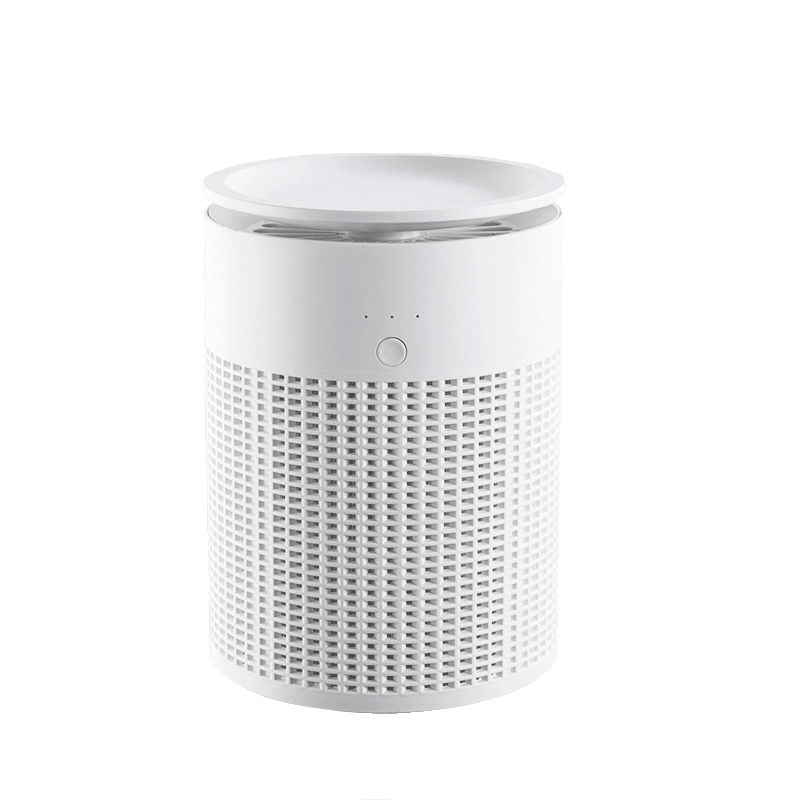
A dehumidifier removes excess moisture from the air, while an air purifier removes airborne particles and pollutants from the air. These are two fundamentally different problems that require two fundamentally different machines, and buying the wrong one will not solve your actual indoor air quality issue. An air purifier circulates room air through filters that physically trap contaminants, such as dust, pollen, pet dander, mold spores, smoke particles, and in some configurations, volatile organic compounds. A dehumidifier draws humid air over refrigerated coils, condenses the water vapor into liquid, and returns drier air to the room, lowering the relative humidity rather than filtering any particles at all. The U.S. Centers for Disease Control and Prevention recommends maintaining indoor relative humidity between 30 and 50 percent to discourage mold, dust mites, and pests, and a dehumidifier is the tool that achieves this. An Air Purifier addresses a different dimension of the same indoor environment, targeting the particles and gases that humidity control cannot touch. Understanding which problem is dominant in your space determines which device delivers real results.
Content
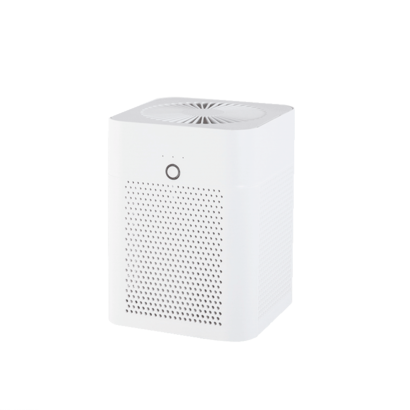
An air purifier draws room air through one or more filter stages using a fan, traps or neutralizes contaminants at each stage, and returns cleaner air to the room in a continuous cycle. The specific filter types used determine which pollutants the unit can address.
The HEPA filter is the industry benchmark for particle removal. A true HEPA filter is certified to capture 99.97 percent of particles as small as 0.3 microns, which covers dust mite debris, pollen, pet dander, mold spores, and many bacteria (sources: HouseFresh, 2024; Live Science, 2024). The 0.3 micron size is significant because it represents the most penetrating particle size, meaning particles both smaller and larger than this are actually captured at even higher efficiency. A HEPA filter does not kill or destroy particles, it physically traps them in a dense mat of glass fibers, which means the filter itself becomes a reservoir of captured pollutants over time and must be replaced regularly, typically every 6 to 12 months depending on use and air quality conditions.
Activated carbon filters address a category of pollutants that HEPA cannot: gases and odors. Volatile organic compounds (VOCs) such as formaldehyde, benzene, and cooking odors are gaseous molecules too small for a HEPA filter to capture. Activated carbon works through adsorption, where gas molecules bind to the large internal surface area of the porous carbon or charcoal substrate. Carbon filters are typically paired with HEPA in a multi-stage air purifier and generally need replacement every 3 to 6 months, more frequently in environments with heavy cooking, cleaning chemical use, or new furniture off-gassing.
The Clean Air Delivery Rate (CADR) is the standard measurement used to compare air purifier effectiveness. It provides three separate ratings for tobacco smoke, pollen, and dust, expressed in cubic feet per minute (CFM) of cleaned air delivered at full fan speed. A higher CADR means the unit can clean a larger room more quickly. When selecting a unit, matching the CADR to the room size is more meaningful than focusing on filter type alone, since a high-grade filter in an undersized unit will not adequately clean a large room (source: Town Appliance, 2024).
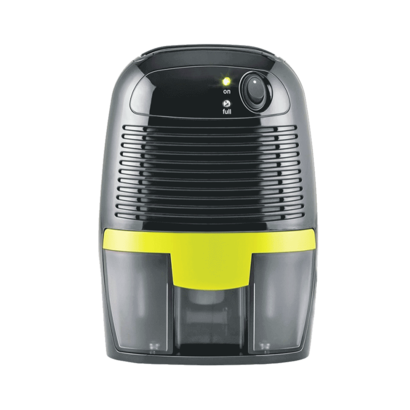
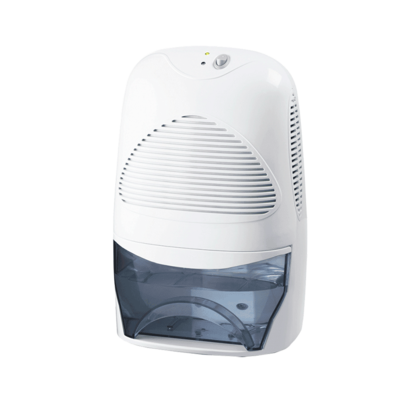
A dehumidifier pulls indoor air in using a fan and passes it over refrigerated coils. When warm, humid air contacts the cold coil surface, water vapor condenses into liquid droplets, which drip into a collection tank or drain away through a hose. The now-drier air passes over a warm coil to bring it back to room temperature before returning to the space. According to Johns Hopkins Medicine, home dehumidifiers can remove between 10 and 50 pints of water from the air per day, with capacity measured at 60 percent relative humidity and 80 degrees Fahrenheit. A built-in humidistat monitors relative humidity continuously, allowing the unit to cycle on and off automatically to maintain the target humidity level.
It is important to note that a dehumidifier does not filter particles from the air. A dehumidifier removes moisture, and by doing so it creates conditions that are less favorable for mold and dust mites to grow, but it does not capture or remove spores or allergen particles that are already airborne (source: PuroClean, 2026).
The table below summarizes the most practical differences between the two devices for a household decision-making context.
| Comparison Factor | Air Purifier | Dehumidifier |
| Primary function | Removes airborne particles and gases | Removes excess moisture from air |
| What it addresses | Dust, pollen, dander, smoke, mold spores, VOCs, bacteria | High relative humidity, condensation, damp conditions |
| Effect on humidity | None, does not change humidity levels | Lowers relative humidity to target range |
| Effect on particles | Traps or neutralizes airborne particles | Does not filter particles from air |
| Mold control method | Captures airborne mold spores already in the air | Removes moisture that mold needs to grow |
| Dust mite control | Captures airborne dust mite allergen particles | Creates dry conditions where dust mites cannot thrive |
| Ideal humidity symptom | Allergies, asthma, smoke exposure, odors | Condensation, musty smell, visible mold, damp walls |
| Byproduct | Captured particles in filter | Liquid water collected in tank, needs regular emptying |
| Main maintenance | Filter replacement every 3 to 12 months | Empty water tank, clean coils periodically |
| Energy use pattern | Fan runs continuously, relatively lower wattage | Compressor cycles on and off, higher peak draw |
Both devices can contribute to a healthier indoor environment for allergy and asthma sufferers, but they address the condition through different pathways and neither is a complete solution on its own.
A study published in the journal Allergologia et Immunopathologia in September 2021 found a reduction in dust mite allergens when a HEPA air purifier was used in a room. A 2024 meta-analysis published in the journal Indoor Air found that air purifiers can help ease symptoms of hay fever such as runny nose, sneezing, and watery eyes, though the same review noted the evidence for improving lung function or reducing reliance on allergy medication was less consistent (source: Live Science, 2024). For pet dander, tobacco smoke, and fine particulate matter, a HEPA air purifier provides measurable reduction in airborne particle concentration when sized correctly for the room.
Dust mites cannot survive well when relative humidity falls below 50 percent. Maintaining indoor humidity in the 30 to 50 percent range is a recommended environmental control measure for dust mite allergen reduction according to guidance from Johns Hopkins Medicine and the CDC. Mold also requires moisture to colonize, so lowering humidity below 60 percent significantly slows or stops mold growth on surfaces. A dehumidifier can address the root condition that allows these biological allergen sources to persist, whereas an air purifier can only capture what is already airborne from those sources.
The most complete approach for households dealing with both humidity and particle exposure is to use both devices together. The dehumidifier prevents the biological growth of mold and dust mites by maintaining a dry environment, while the air purifier removes the particles, spores, and gases that are already circulating regardless of humidity. According to Weining Wang, an associate professor of indoor air quality and aerosol technology at Virginia Commonwealth University, the two devices address different environmental variables and are complementary rather than substitutable (source: Live Science, 2024).
An air purifier is the appropriate choice when the primary indoor air quality concern involves particles or gases circulating in the room rather than excess moisture on surfaces or in the air. The following situations generally benefit most from an air purifier.
An Air Purifier is also relevant in any setting where a dehumidifier is already running but particles such as mold spores remain in circulation from a past moisture event, since the dehumidifier will stop new growth but will not remove the spores already in the air.
A dehumidifier is the appropriate choice when the primary problem is excess moisture causing condensation, mold growth, musty odors, or structural dampness. The following situations indicate that humidity is the root issue.
Both devices require ongoing maintenance to perform correctly, but the tasks and frequencies differ significantly.
A dehumidifier that is not emptied and cleaned regularly can itself become a source of mold contamination, which directly undermines its purpose. Johns Hopkins Medicine specifically advises regular cleaning of the water basin with bleach to prevent this outcome.
Matching the device to the room size is critical for either appliance to function as intended.
For air purifiers, the relevant metric is the CADR rating relative to room volume. A general rule of thumb from industry guidance is that the CADR value in CFM should be at least two-thirds of the room's square footage for the unit to turn over the room air adequately. For example, a 300 square foot bedroom would benefit from a unit with a CADR of at least 200 CFM. Placing the unit in a central location away from walls and furniture allows unrestricted airflow intake and distribution. An Air Purifier placed in a corner with its intake vents blocked will pull air from a much smaller effective zone than its rated capacity suggests.
For dehumidifiers, the unit capacity in pints per day should be matched to both the room area and the severity of the humidity problem. A lightly damp 500 square foot room may need a 30 pint unit, while a very wet basement of the same size could need 50 pints or more. Johns Hopkins Medicine notes that for whole-house coverage, a unit rated at 50 pints per day is generally preferred since it can be turned down as needed but provides headroom for severe conditions.
| Room Size | Recommended Air Purifier CADR (approx.) | Recommended Dehumidifier Capacity (typical damp condition) |
| Small bedroom, up to 150 sq ft | 100 CFM or above | 20 to 25 pints per day |
| Living room, 300 to 400 sq ft | 200 to 270 CFM | 30 to 35 pints per day |
| Open plan, 500 to 700 sq ft | 330 to 470 CFM | 40 to 45 pints per day |
| Large basement, 700 to 1,000 sq ft | 470 CFM or above, multiple units | 50 pints per day or above |
Note: CADR recommendations are approximations based on general industry guidance. Actual performance depends on ceiling height, air sealing, and pollution load. Dehumidifier sizing guidance is based on Johns Hopkins Medicine and general industry practice.
Both devices consume electricity during operation, but the energy profile of each is different and affects the running cost calculation significantly.
Air purifiers run their fans continuously at the chosen speed setting, typically drawing between 20 and 100 watts depending on fan speed and unit size. Because the fan does not cycle on and off based on a sensor reading, the power draw is consistent and predictable. Running a mid-size air purifier at medium speed for 12 hours per day at a typical residential electricity rate represents a modest ongoing cost.
Dehumidifiers draw more power than air purifiers because they operate an electric compressor in addition to a fan. A typical 30-pint residential dehumidifier draws 200 to 400 watts during the compressor cycle. However, a modern dehumidifier with a humidistat will cycle off once the target humidity is reached, so actual daily energy consumption depends on how frequently the compressor runs, which varies with outdoor humidity, room ventilation, and the gap between ambient humidity and the target setpoint. In very humid climates during summer months, a dehumidifier may run nearly continuously, making its daily energy cost substantially higher than an air purifier running for the same hours.
When calculating whether to run both devices simultaneously, the combined energy cost is typically manageable and justified where both humidity and air quality problems are present, since the alternative of running neither or only one means one category of indoor air quality problem remains unaddressed.

@2020. CIXI XIATIAN ELECTRICAL APPLIANCES CO.,LTD. All rights reserved. Wholesale High-End Electric Fans Manufacturers

 English
 한국어
한국어