

The purpose of an air washer humidifier is to simultaneously humidify indoor air and remove airborne contaminants — including dust, pollen, bacteria, fungi, odors, and other pollutants — in a single continuous operation. Unlike a standard humidifier that only adds moisture, or a standalone air purifier that only filters air, an air washer humidifier combines both functions into one unit, using water as both a humidifying agent and a natural filter medium to trap and neutralize particles as air passes through.
The result is a living environment that is healthier, more comfortable, and better protected against respiratory irritants year-round — particularly during dry winter months when indoor air quality typically declines sharply due to reduced ventilation and increased indoor activity. For households with children, elderly residents, allergy sufferers, or anyone prone to respiratory conditions, an air washer humidifier addresses multiple indoor air quality problems with a single device.
Content
The most fundamental purpose of an air washer humidifier is to add moisture to dry indoor air and maintain it within the range that is most beneficial for human health and comfort. Medical and environmental health organizations consistently recommend maintaining indoor relative humidity between 40% and 60% for optimal health outcomes.
During winter, when heating systems run continuously, indoor relative humidity frequently drops to 20–30% — or even lower in very cold climates. At these levels, the effects on occupants are wide-ranging and clinically well-documented:
An air washer humidifier sprays a fine mist of water into a stream of air drawn through the unit by a fan. The water droplets evaporate into the airflow, raising the relative humidity of the discharged air. Because the moisture output is released as a fine, well-distributed mist — often through a 360° rotation nozzle — coverage is broad and even, with quality units capable of effectively humidifying up to three rooms simultaneously without creating wet spots or excessive condensation on surfaces.
This natural evaporative process provides what is called "self-regulating" humidification — as ambient humidity rises toward saturation, the rate of evaporation automatically slows, preventing over-humidification without requiring complex sensors or manual adjustment.
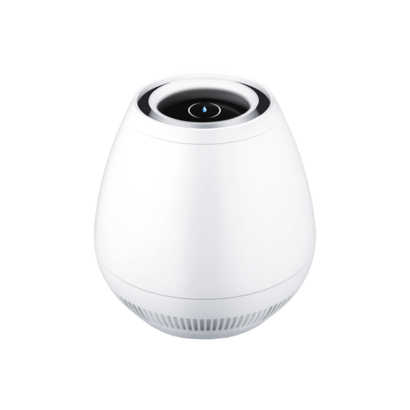
The "washer" component of an air washer humidifier refers to the unit's built-in air purification mechanism, which uses water as a natural filter to capture and remove airborne particles and pollutants as air passes through the device. This is a fundamentally different approach from conventional HEPA or activated carbon filter-based purifiers — the air washer uses the adhesive and absorptive properties of water to trap contaminants rather than passing air through a physical filter medium.
As room air is drawn into the air washer, it passes through or across a water medium — either a water curtain, rotating water-coated discs, or a fine mist chamber. Airborne particles including dust, pollen, pet dander, mold spores, smoke particles, and other contaminants collide with and adhere to water droplets or the water surface, effectively being washed out of the airstream and trapped in the water reservoir. The cleaned, humidified air is then discharged back into the room.
Studies on water-based air cleaning show that this mechanism is effective at capturing particles down to approximately 0.3–1 micron in size, covering the range that includes most pollen (10–100 µm), dust mite particles (0.5–50 µm), mold spores (1–30 µm), and many bacteria (0.5–5 µm). The water reservoir is periodically emptied and refilled, removing the trapped contaminants from the indoor environment entirely.
One of the most significant air purification purposes of the air washer humidifier is its ability to reduce concentrations of airborne bacteria, viruses, and fungi circulating in the indoor environment. Respiratory infections spread primarily through the inhalation of pathogen-containing aerosol droplets — reducing the concentration of these microbes in the air directly reduces transmission risk.
Maintaining indoor relative humidity above 40–50% also independently suppresses airborne pathogen survival — research published in environmental health journals has shown that influenza virus survival rates drop significantly at relative humidity above 50%, and that well-humidified indoor environments are associated with lower rates of respiratory infection transmission. The air washer addresses both vectors simultaneously: physically washing pathogens from the air and maintaining humidity levels that are inherently hostile to microbial survival.
The combined humidification and air purification functions of an air washer humidifier serve a unified health protection purpose — creating an indoor breathing environment that actively supports respiratory health and reduces the triggers and pathogens responsible for a wide range of common conditions.
| Condition | How Air Washer Helps | Primary Mechanism |
|---|---|---|
| Allergic rhinitis (hay fever) | Removes pollen and dust from circulating air | Water washing of allergen particles |
| Asthma | Reduces airborne triggers; maintains optimal humidity | Particle removal + humidity control |
| Dry cough and sore throat | Moistens airways; soothes irritated mucous membranes | Humidification |
| Influenza and colds | Reduces airborne virus survival; removes pathogen-carrying particles | Humidity + microbial reduction |
| Dry skin and eczema | Prevents moisture loss from skin surface | Humidification |
| Mold spore allergy | Captures spores in water; prevents recirculation | Water washing |
| Pet dander sensitivity | Removes dander particles from indoor air | Water washing of allergen particles |
The mucous membranes lining the nose, throat, sinuses, and bronchial passages serve as the respiratory system's primary physical barrier against inhaled pathogens. These membranes function optimally when they are adequately moist — they trap and neutralize pathogens through mucociliary clearance, the process by which cilia beat rhythmically to move mucus and trapped particles toward the throat for expulsion.
When indoor air is very dry, this system breaks down: mucous membranes dry out and become cracked, cilia beat less effectively, and the barrier against pathogen penetration is significantly weakened. By maintaining indoor humidity at 40–60% relative humidity, an air washer humidifier keeps the respiratory defense system functioning at full effectiveness — a purpose that is particularly important during cold and flu season and for immunocompromised individuals.
An additional but important purpose of the air washer humidifier is the neutralization and removal of indoor odors. As air passes through the water medium inside the unit, water-soluble odor-causing compounds — including volatile organic compounds (VOCs), cooking smells, pet odors, tobacco residues, and chemical off-gassing from furniture and building materials — are absorbed into the water and removed from the circulating air.
This water-based odor absorption is a continuous, passive process that requires no additional chemicals, fragrances, or filter replacements. The water in the reservoir gradually accumulates the dissolved odor compounds and is periodically refreshed, eliminating the absorbed contaminants entirely from the indoor environment rather than merely masking them with added fragrance.
Some advanced air washer models allow the optional addition of compatible essential oils or fragrance solutions to the water reservoir, allowing the device to serve simultaneously as a natural diffuser that disperses pleasant aromas throughout the room while continuing its purification and humidification functions.
To fully understand the purpose of an air washer humidifier, it is useful to compare it directly with a conventional humidifier. Many households still use basic ultrasonic or evaporative humidifiers that add moisture to the air but provide no purification benefit — and in some cases can actively worsen air quality by dispersing mineral deposits, mold, or bacteria from a poorly maintained water tank.
| Feature | Standard Humidifier | Air Washer Humidifier |
|---|---|---|
| Adds moisture to air | Yes | Yes |
| Removes dust and pollen | No | Yes |
| Reduces airborne bacteria and microbes | No | Yes |
| Neutralizes odors | No | Yes |
| Risk of dispersing mineral "white dust" | Yes (ultrasonic types) | Minimal (filtered water output) |
| Filter replacements required | Varies (some yes) | No (water is the filter medium) |
| Multi-room coverage | Single room typically | Up to 3 rooms |
| Replaces separate air purifier | No | Yes (built-in purification) |
The air washer humidifier's combined functionality makes it the more comprehensive and health-oriented choice. It effectively replaces two separate devices — a humidifier and an air purifier — with a single, more economical unit that addresses indoor air quality from multiple angles simultaneously.
Beyond direct health benefits, the air washer humidifier serves an important comfort and home environment purpose — creating a living space that simply feels better to inhabit throughout the year, particularly during the months when heating systems are in continuous use.
Humid air feels warmer than dry air at the same temperature because moisture slows the evaporation of perspiration from skin, reducing the cooling effect. Research indicates that raising indoor relative humidity from 25% to 45% at a constant temperature of 20°C produces a perceived temperature increase of approximately 1–2°C. This "humidity warmth effect" means that properly humidified indoor spaces feel comfortable at slightly lower thermostat settings — contributing to modest but real energy savings on heating bills during winter months.
Very dry indoor air causes progressive damage to wood-based materials, natural fabrics, leather, paper, and art. Hardwood floors shrink and develop gaps; wooden furniture joints loosen; leather sofas and book bindings crack; artworks and musical instruments warp or detune. By maintaining indoor humidity at the recommended 40–60% range, an air washer humidifier actively protects these household investments from the cumulative damage that low humidity causes over successive winters.
Many people experience poor sleep quality during winter months due to dry air — waking with dry, sore throats, nasal congestion caused by dried and irritated nasal passages, or persistent dry coughs. Running an air washer humidifier in the bedroom maintains the moisture level needed for comfortable, uninterrupted breathing through the night. The combined air purification function also reduces overnight exposure to dust and allergens that can trigger nighttime symptoms in sensitive individuals.
Understanding the operational mechanism of an air washer humidifier clarifies how it is able to fulfill all of its described purposes simultaneously and continuously. The core working principle is elegantly simple — it uses water, airflow, and the natural properties of water as a solvent and particle trap — but the engineering that optimizes this process for whole-room performance is sophisticated.
This filterless operation — using water rather than a physical filter medium — is one of the air washer's key practical advantages. There are no replacement filters to purchase or install, and the air cleaning medium (fresh water) costs essentially nothing and is always available. The ongoing maintenance requirement is simply regular water changes and periodic unit cleaning.
The air washer humidifier is purposefully designed for domestic indoor use, but its dual functionality makes it especially valuable in certain environments and situations where both air quality and humidity control are critical concerns.
For households where one or more members suffer from allergic rhinitis, asthma, or other respiratory conditions triggered by airborne allergens, the air washer humidifier directly addresses the primary environmental drivers of symptoms. By continuously reducing the concentration of pollen, dust, pet dander, and mold spores in indoor air while maintaining optimal humidity, it creates a consistently lower-trigger environment that can significantly reduce the frequency and severity of allergic and asthmatic episodes.
Children's developing immune and respiratory systems are more sensitive to both low humidity and airborne pathogens than those of healthy adults. Infants and toddlers spend most of their time indoors and breathe proportionally more air relative to their body weight. The air washer humidifier's purpose in these settings is protective — reducing the density of circulating pathogens and maintaining the humidity conditions in which the young respiratory system functions and defends itself most effectively.
Older adults are disproportionately vulnerable to respiratory infections and dry-air-related conditions — their immune responses are less robust, their mucous membranes become less effective with age, and they spend more time indoors. An air washer humidifier in an elderly person's living space or bedroom serves a meaningful protective health purpose, particularly through winter months when influenza and other respiratory illnesses pose the greatest risk.
A quality air washer humidifier with a 360° rotating output nozzle can effectively serve large open-plan living areas or provide useful humidity and air cleaning benefit across multiple adjacent rooms. This multi-room coverage capability — typically effective across areas up to 60–80 square meters depending on ceiling height and air circulation — means that a single well-positioned unit can serve the primary living areas of a typical family home without the need for multiple devices.
For an air washer humidifier to continue fulfilling its health and comfort purposes effectively, proper and regular maintenance is essential. Neglected water reservoirs can become breeding grounds for bacteria and mold, which would then be dispersed into the indoor air — directly counteracting the unit's intended purpose.
Using distilled or filtered water rather than hard tap water significantly reduces mineral scale buildup inside the unit, extending its operational lifespan and maintaining output quality — the fine mist dispersed into the room will contain far fewer mineral particles, preventing the white dust deposits on surfaces that are a known issue with poorly maintained ultrasonic humidifiers using hard tap water.
Cixi Xiatian Electrical Appliances CO., LTD is a professional manufacturer and supplier of air washer humidifiers and related indoor air quality products based in China. The company focuses on the research, development, production, and sales of high-tech products including air purifiers, dehumidifiers, high-end fans, and heaters. With an annual output of 1 million air purifiers, 3 million electric fans and heaters, and 250,000 air washing machines, Cixi Xiatian has the production scale to meet large and diverse customer capacity requirements.
The company's air washer humidifiers incorporate an advanced built-in air purifier system designed to reduce airborne microbes, irritants, and odors while delivering optimal moisture output across multiple rooms via a 360° rotation nozzle. Products are exported to Europe, North America, Japan, South Korea, the Middle East, and other international markets, reflecting the global confidence in the company's manufacturing quality and product performance standards.

@2020. CIXI XIATIAN ELECTRICAL APPLIANCES CO.,LTD. All rights reserved. Wholesale High-End Electric Fans Manufacturers

 English
 한국어
한국어