

When buying an air purifier, the most important factors to consider are the CADR rating relative to your room size, the type of filtration system used, ongoing filter replacement costs, noise level at different fan speeds, and energy consumption over continuous use. Getting these fundamentals right matters more than brand reputation or extra features, since an undersized or poorly filtered unit will underperform regardless of how advanced its display or app controls appear. Industry testing standards commonly used by air quality organizations recommend selecting a purifier with a CADR rating at least two-thirds of the room's square footage to achieve effective air exchange within a reasonable timeframe.
Content
The Clean Air Delivery Rate, or CADR, measures how effectively a purifier removes smoke, dust, and pollen from the air, and it is one of the most reliable specifications for comparing performance across different units and room sizes.
When comparing an air purifier for a specific room, checking the manufacturer's CADR specification against the actual square footage of the space helps avoid the common mistake of choosing a unit that looks compact but underperforms in a larger room.
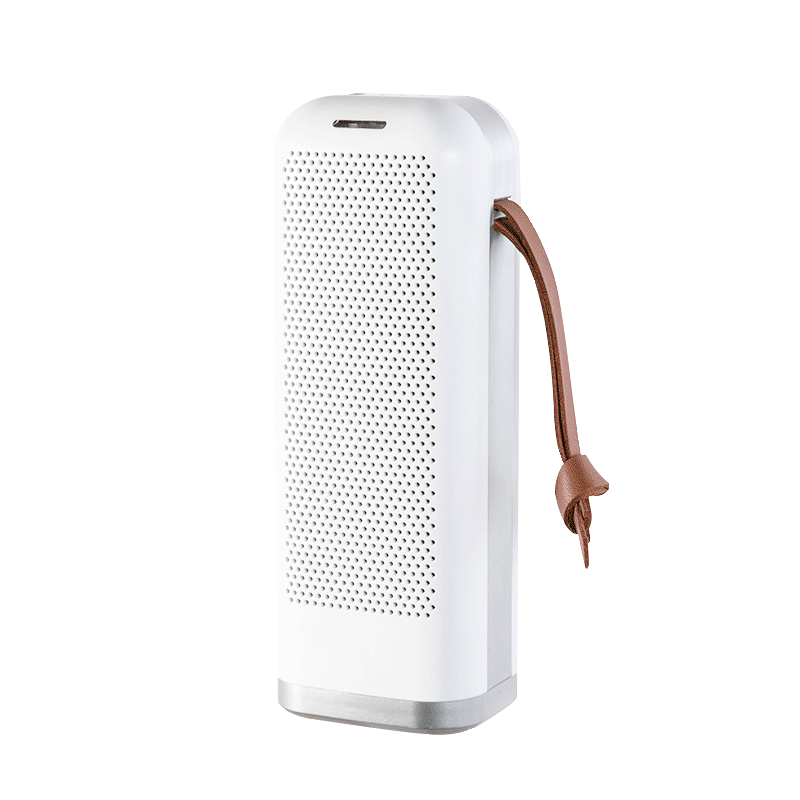
Not all air purifiers use the same filtration approach, and understanding these differences helps buyers match a unit to their specific air quality concerns, whether that involves allergens, odors, or fine particulate matter.
| Filter Type | Best For | Limitations |
| HEPA filter | Fine particles, allergens, dust | Does not remove gases or odors effectively |
| Activated carbon filter | Odors, smoke, volatile organic compounds | Limited particle capture on its own |
| Combination HEPA and carbon | Both particles and odors | Higher replacement cost due to dual media |
True HEPA filters, tested to capture at least 99.97 percent of particles down to 0.3 microns, remain the most widely recommended standard for allergy and asthma-related air quality concerns, according to specifications commonly referenced by indoor air quality researchers.
The upfront price of an air purifier is only part of the total cost of ownership. Filter replacement frequency and cost can significantly affect the long-term value of a unit, sometimes exceeding the original purchase price over a few years of use.
Buyers should check the manufacturer's recommended replacement interval and typical filter cost before purchasing, since a lower-priced unit with expensive or frequently replaced filters can end up costing more over time than a slightly higher-priced unit with lower ongoing costs.
Noise output varies significantly between air purifiers, and this factor becomes especially important for units placed in bedrooms or quiet workspaces where continuous fan noise could disrupt sleep or concentration.
Most air purifiers operate somewhere between 20 and 30 decibels on their lowest setting, comparable to a quiet library, while higher fan speeds can reach 50 to 65 decibels, similar to normal conversation or a running dishwasher.
For bedroom use, prioritizing a unit with a genuinely quiet low-speed setting matters more than maximum CADR performance, since the purifier will likely run on a lower setting overnight to avoid disturbing sleep.
Since air purifiers are often run continuously throughout the day, energy consumption contributes meaningfully to the overall cost of ownership, particularly for larger units with higher fan speeds.
Choosing a properly sized air purifier rather than an oversized unit that constantly runs at reduced power helps balance both performance and long-term electricity costs.
Many modern air purifiers include built-in sensors and app connectivity that allow the unit to automatically adjust fan speed based on real-time air quality readings, which can improve both efficiency and convenience.
Automatic mode allows the purifier to ramp up during high-pollution events, such as cooking or nearby outdoor pollution spikes, then reduce speed once air quality improves, avoiding unnecessary continuous operation at maximum fan speed.
For buyers on a tighter budget or those who primarily want consistent background filtration, a simpler unit with manual speed controls can deliver comparable filtration performance without the added cost of sensor and app integration.
Beyond filter replacement, some air purifiers require additional maintenance, such as cleaning pre-filters or wiping down sensor components, which affects how much ongoing attention the unit needs to maintain peak performance.
Washable pre-filters typically need cleaning every two to four weeks to prevent large particles from clogging the main filter prematurely, while air quality sensors may require occasional cleaning to maintain accurate readings over time.
Buyers with allergies or asthma should prioritize true HEPA filtration and adequate CADR rating above other features, since particle removal effectiveness directly impacts symptom relief. Those concerned primarily with odors from cooking, pets, or smoke should look closely at activated carbon filter capacity. For bedroom placement, low-speed noise level deserves the most attention, while households running units continuously in larger spaces should weigh energy consumption and filter replacement costs as part of the long-term budget for owning an air purifier.

@2020. CIXI XIATIAN ELECTRICAL APPLIANCES CO.,LTD. All rights reserved. Wholesale High-End Electric Fans Manufacturers

 English
 한국어
한국어