

From a combined perspective of energy efficiency and real-world performance, heat pump heaters (such as air-source heat pumps) are currently the most electricity-saving heating systems. They are followed by oil-filled radiators and convection heaters. If we look only at “electricity consumption per unit of heating effect”, traditional electric coil heaters and infrared “sun” heaters actually have the lowest energy efficiency. They are more suitable for short-term, localized heating, rather than long-term space heating.
Energy efficiency ratio (COP value):How much heat is produced by 1 kWh of electricity.
Heating method:Radiant heating、Convection heating、Heat pump circulation heating.
Area coverage efficiency:Size of the heated space per unit of electricity.
Heat retention capability:Heat preservation duration after shutdown.
Continuous operating power consumption:Total accumulated electricity consumption during long-term use.
Heat pump heaters achieve heating by “transporting heat” rather than “generating heat,” which gives them much higher energy efficiency than traditional electric heaters.
Energy-saving reference data:
Ordinary electric heaters: 1 kWh ≈ 1 unit of heat (COP ≈ 1)
Air-source heat pump heaters: 1 kWh ≈ 3–4 units of heat (COP ≈ 3–4)
Actual performance: For the same heated area, heat pump systems can reduce electricity consumption by 50%–70% compared with conventional electric heaters.
Suitable scenarios: Whole-house heating、Long-duration continuous heating、Large-area space heating.
Oil-filled heaters are thermal storage heaters that release heat by heating thermal oil.
Energy-saving advantages: Low power required to maintain temperature after warm-up、Continuous heat release even after power-off、Stable temperature output、Smooth and stable energy consumption curve.
Power consumption comparison example: At a rated power of 1500 W, when operating in constant-temperature mode, the actual average power consumption of an oil-filled heater can drop to 800–1000 W.
Suitable scenarios: Bedroom heating、Long-duration night-time heating、Household constant-temperature needs.
Convection heaters warm air through natural air circulation, resulting in uniform heat distribution.
Characteristics: No direct hot air blowing on the body、Even indoor temperature distribution、Suitable for enclosed spaces.
Although their instantaneous power is not low, under constant-temperature operation their energy consumption remains stable, making them suitable for continuous heating in small to medium-sized spaces.
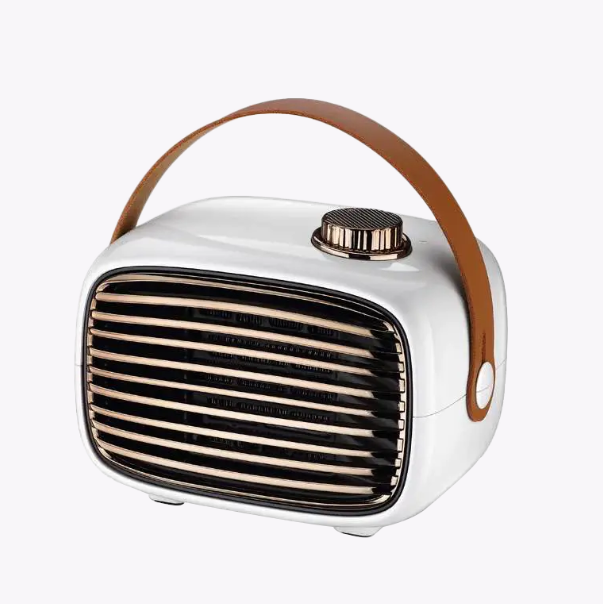
Heater types more suitable for short-term heating Not recommended when energy saving is the goal: Infrared “sun” heaters、Electric coil heaters、Halogen tube heaters、Quartz tube heaters
Reasons: Concentrated heat output、Fast heat dissipation、Rapid cooling after shutdown、Frequent on/off operation required、High electricity consumption per unit of heat output.
Comparison table of energy-saving performance of different heater types
| Heater Type | Energy Efficiency Performance | Suitable Usage Mode |
| Heat pump heater | COP ≈ 3–4 | Whole-house long-term heating |
| Oil-filled radiator | Thermal storage heating | Bedroom constant-temperature heating |
| Convection heater | Uniform heating | Small to medium-sized spaces |
| Infrared “sun” heater | Direct radiant heating | Local short-term heating |
| Electric coil heater | Instant heat, instant cooling | Temporary heating |
From a comprehensive energy-efficiency perspective, heat pump heaters are currently the most electricity-saving heating systems, followed by oil-filled radiators and convection heaters. If the goal is minimum long-term heating cost, a heat pump system should be the first choice.
For daily household heating, oil-filled radiators offer an excellent balance between comfort and energy efficiency. Choosing the right type of heater scientifically not only affects electricity costs, but also directly impacts living comfort and the long-term user experience.

@2020. CIXI XIATIAN ELECTRICAL APPLIANCES CO.,LTD. All rights reserved. Wholesale High-End Electric Fans Manufacturers

 English
 한국어
한국어